









Payloads: Cardinal Heart 2.0: A preservative was injected into each Cardinal Heart 2.0 tissue chamber and microscopy imagery was conducted for specific chambers. A previous investigation showed that four weeks of microgravity exposure caused significant changes in heart cell function and gene expression that could lead to long-term damage or cardiac muscle atrophy. Effect of …
Team Troubleshoots Propulsion for NASA’s Lunar Flashlight
Teams are continuing work to place NASA’s Lunar Flashlight CubeSat in an orbit that would allow flights over the Moon’s South Pole. The opportunity to place Lunar Flashlight in such an orbit extends through the end of April. Shortly after launch on Dec. 11, 2022, the operations team for NASA’s Lunar Flashlight determined that three …
TEMPO Arrives Safely in Florida

The satellite host of NASA's Tropospheric Emissions: Monitoring of Pollution (TEMPO) instrument recently arrived by aircraft at NASA's Kennedy Space Center ahead of its launch from Cape Canaveral Space Force Station in early April. From a geostationary, or fixed, orbit aboard the Maxar-built Intelsat 40e, TEMPO will be the first satellite instrument to make hourly …
Crew Focuses on Experiments and Equipment to Maintain Health While in Space

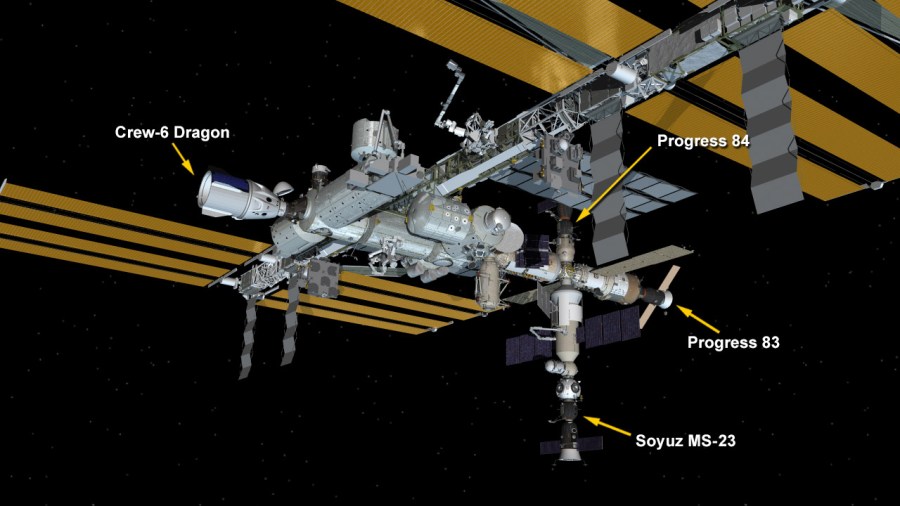
The Expedition 68 crew members conducted experiments and maintained equipment aboard the International Space Station while activities for cargo transfers continued. NASA Flight Engineer Frank Rubio performed microscopy and video recordings on eight BioCell tissue chambers for the Cardinal Heart 2.0 in the Life Sciences Glovebox. This investigation uses heart organoids to test whether clinically approved drugs reduce microgravity-induced changes in heart …
ISS Daily Summary Report – 3/22/2023
Payloads: Cardinal Heart 2.0: Microscopy and video recordings were performed on eight BioCell tissue chambers. A previous investigation showed that four weeks of microgravity exposure caused significant changes in heart cell function and gene expression that could lead to long-term damage or cardiac muscle atrophy. Effect of Microgravity on Drug Responses Using Heart Organoids (Cardinal …
The Journey of a Carbon Atom: From Space, NASA’s PACE Mission Detects Carbon in the Sky, Land, and Sea

Whether in plants or animals, greenhouse gases or smoke, carbon atoms exist in various compounds as they move through a multitude of pathways within Earth's system. That's why NASA's Plankton, Aerosol, Cloud, ocean Ecosystem (PACE) mission – scheduled to launch in January 2024 – was designed to peer down at Earth from space to see …
Crew Spends Day Investigating Biology and Continuing Cargo Operations

The Expedition 68 crew members are busy investigating biology and continuing to transfer the 6,200 pounds of research hardware and supplies between the International Space Station and the uncrewed SpaceX CRS-27, which arrived to the space station on March 16. NASA flight engineer Frank Rubio conducted the Cardinal Heart 2.0 media change and sample collection operations in the Life Sciences Glovebox, a …
ISS Daily Summary Report – 3/21/2023
Payloads: Cardinal Heart 2.0: A media change was performed for Samples 1B and 1A. A previous investigation showed that four weeks of microgravity exposure caused significant changes in heart cell function and gene expression that could lead to long-term damage or cardiac muscle atrophy. Effect of Microgravity on Drug Responses Using Heart Organoids (Cardinal Heart …
Dozens of Observatories Collected Data During Parker Solar Probe’s 15th Close Encounter

NASA's Parker Solar Probe completed its 15th close approach to the Sun on March 17, coming within 5.3 million miles of the scorching solar surface.