








Suggested Searches

Blogs

  • NASA’s Juno Mission Redefines Size, Shape of Jupiter

    An infographic titled “Jupiter: Smaller, Flatter” shows a line drawing of the planet, colored shades of gold against a black background. The text reads, “The giant planet’s size updated after NASA’s Juno mission,” and the illustration shows Jupiter’s equatorial radius as 71,492 kilometers “before Juno,” and 71,488 kilometers “after Juno.”

    Data from NASA’s Juno mission has revealed that the solar system’s largest planet is slightly smaller and more “squashed” than previously believed.  By analyzing radio occultation data from 13 flybys of Jupiter and incorporating the effects of zonal winds, mission scientists have determined that Jupiter is about 5 miles (8 kilometers) narrower at the equator and 15 miles (24 […]

  • Sun Releases Strong Flare

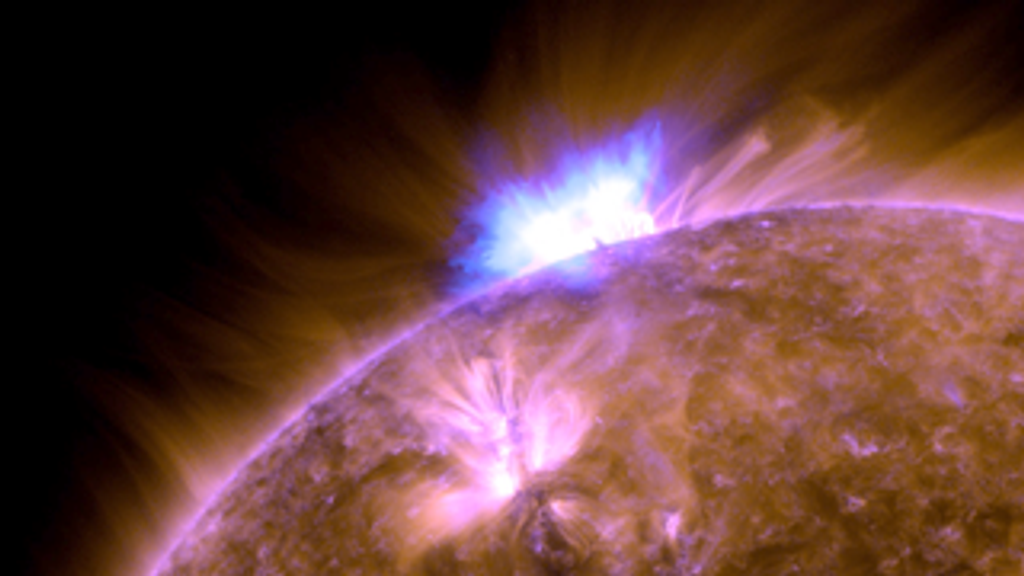
    The Sun against a black background. The Sun is colorized primarily in blue, with some brighter purple areas scattered across the star showing higher activity areas. Toward the upper center of the star, there is a bright flash in white and red, which looks like an X -- the solar flare.

    The Sun emitted a strong solar flare, peaking at 7:13 a.m. ET on Feb. 4. NASA’s Solar Dynamics Observatory, which watches the Sun constantly, captured an image of the event.  Solar flares are powerful bursts of energy. Flares and solar eruptions can impact radio communications, electric power grids, navigation signals, and pose risks to spacecraft […]

  • Biomedical Research, CubeSat Deployments Top Crew Schedule

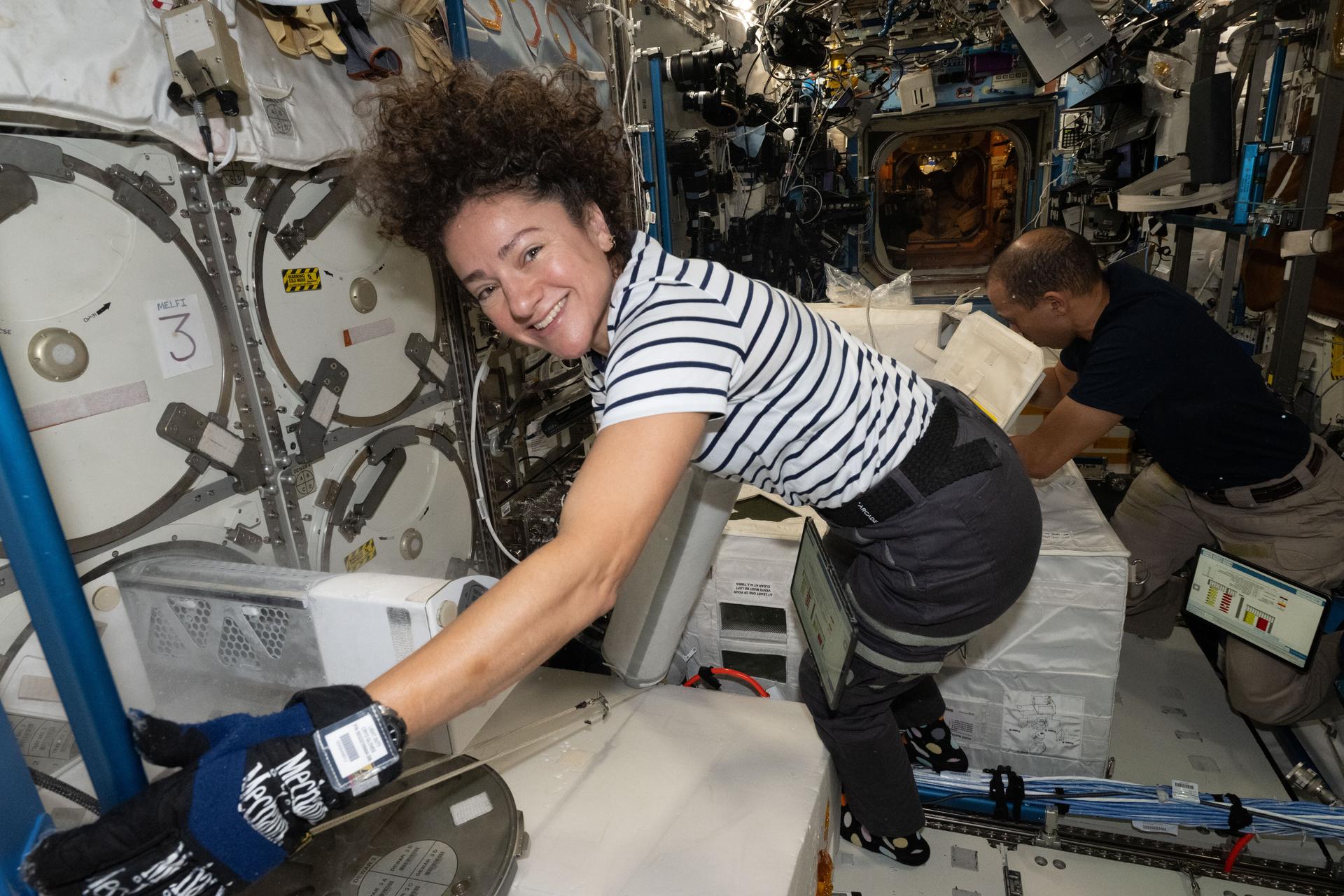
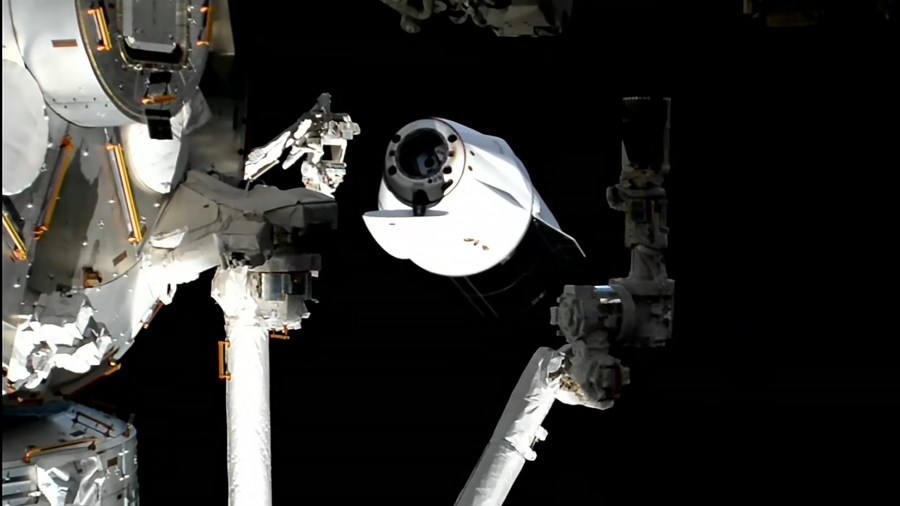
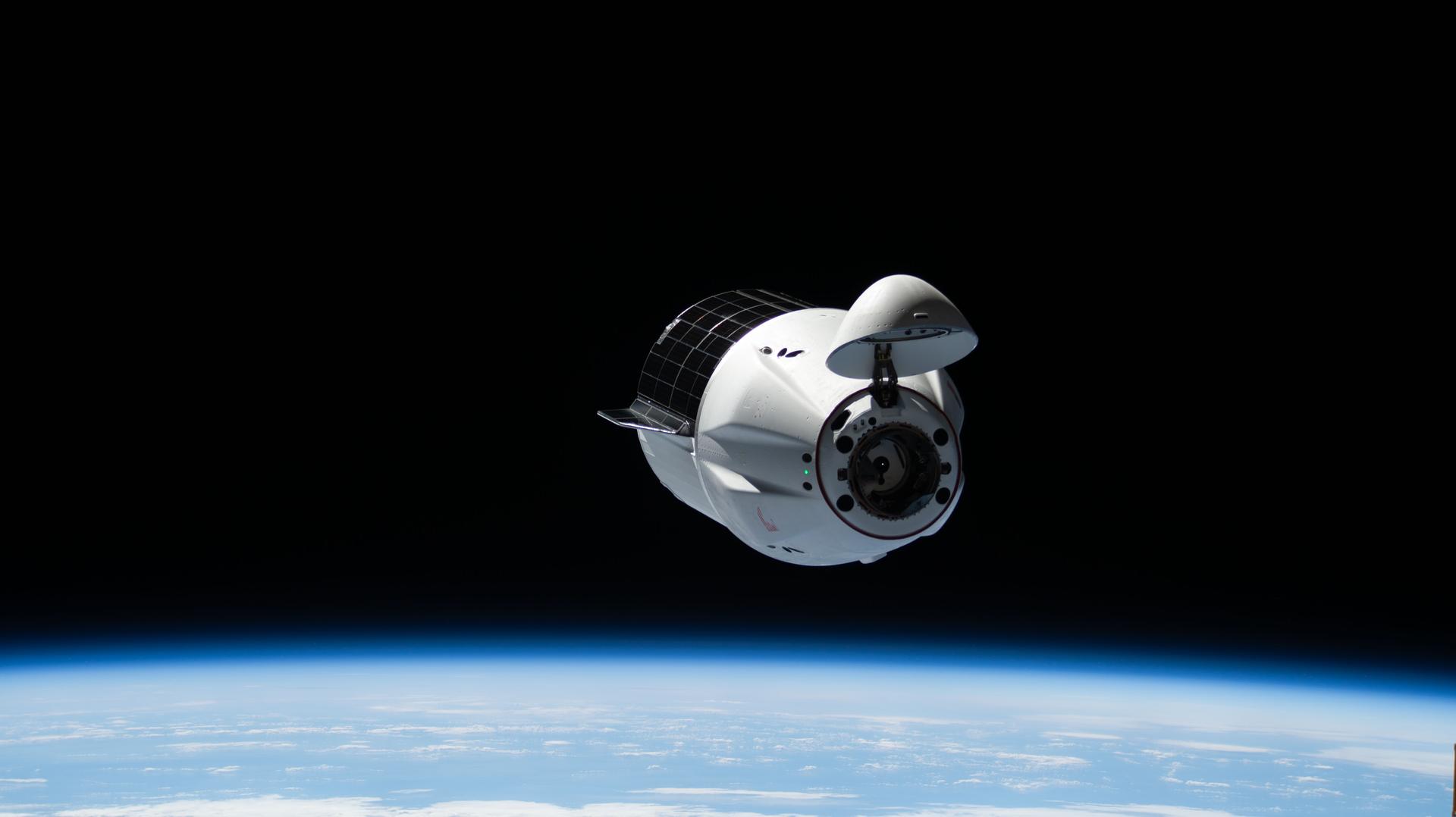
    Biomedical research to keep crews healthy and CubeSat deployments for educational research topped the science schedule aboard the International Space Station on Tuesday. The Expedition 74 crew also focused on cargo swaps and life support maintenance throughout the day.

  • Strong Flare Erupts from Sun

    An ultraviolet image of the Sun shows a surface scattered with darker and brighter regions, and the bright flash of a solar flare near the center of the Sun

    The Sun emitted a strong solar flare, peaking at 9:08 a.m. ET on Feb. 3. NASA’s Solar Dynamics Observatory, which watches the Sun constantly, captured an image of the event.  Solar flares are powerful bursts of energy. Flares and solar eruptions can impact radio communications, electric power grids, navigation signals, and pose risks to spacecraft […]

  • NASA Conducts Artemis II Fuel Test, Eyes March for Launch Opportunity  

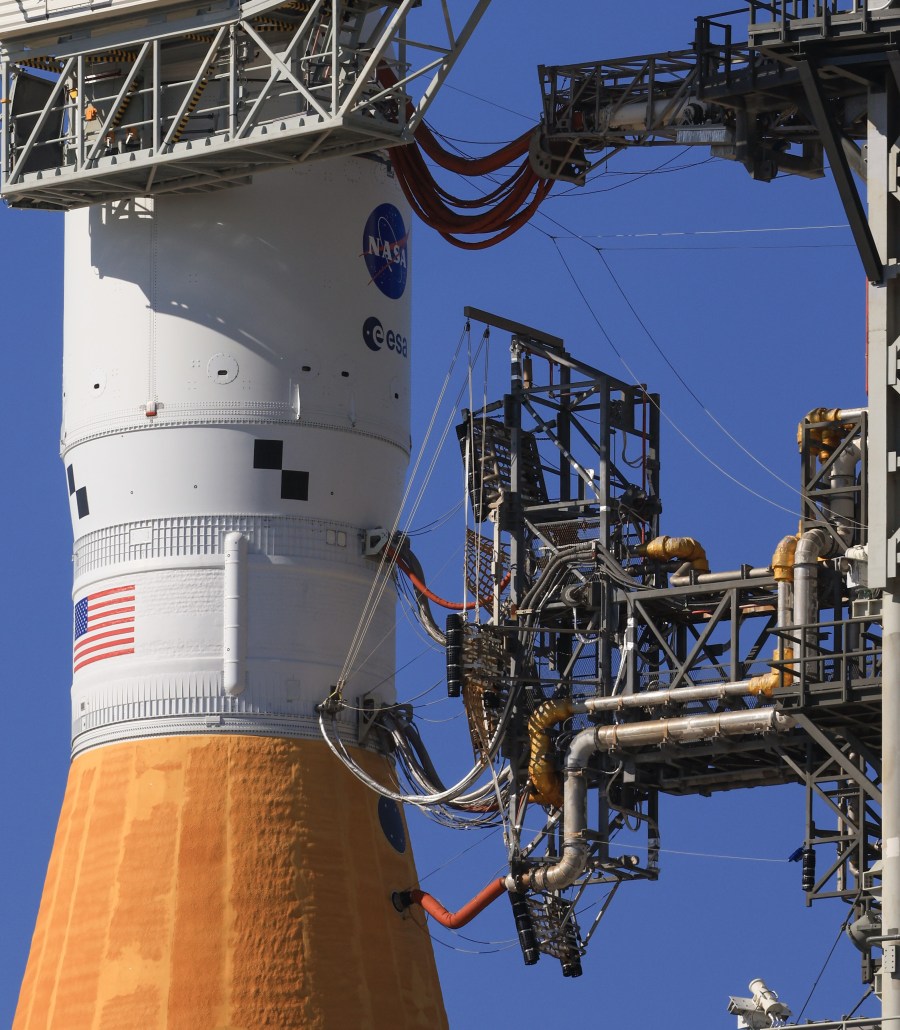
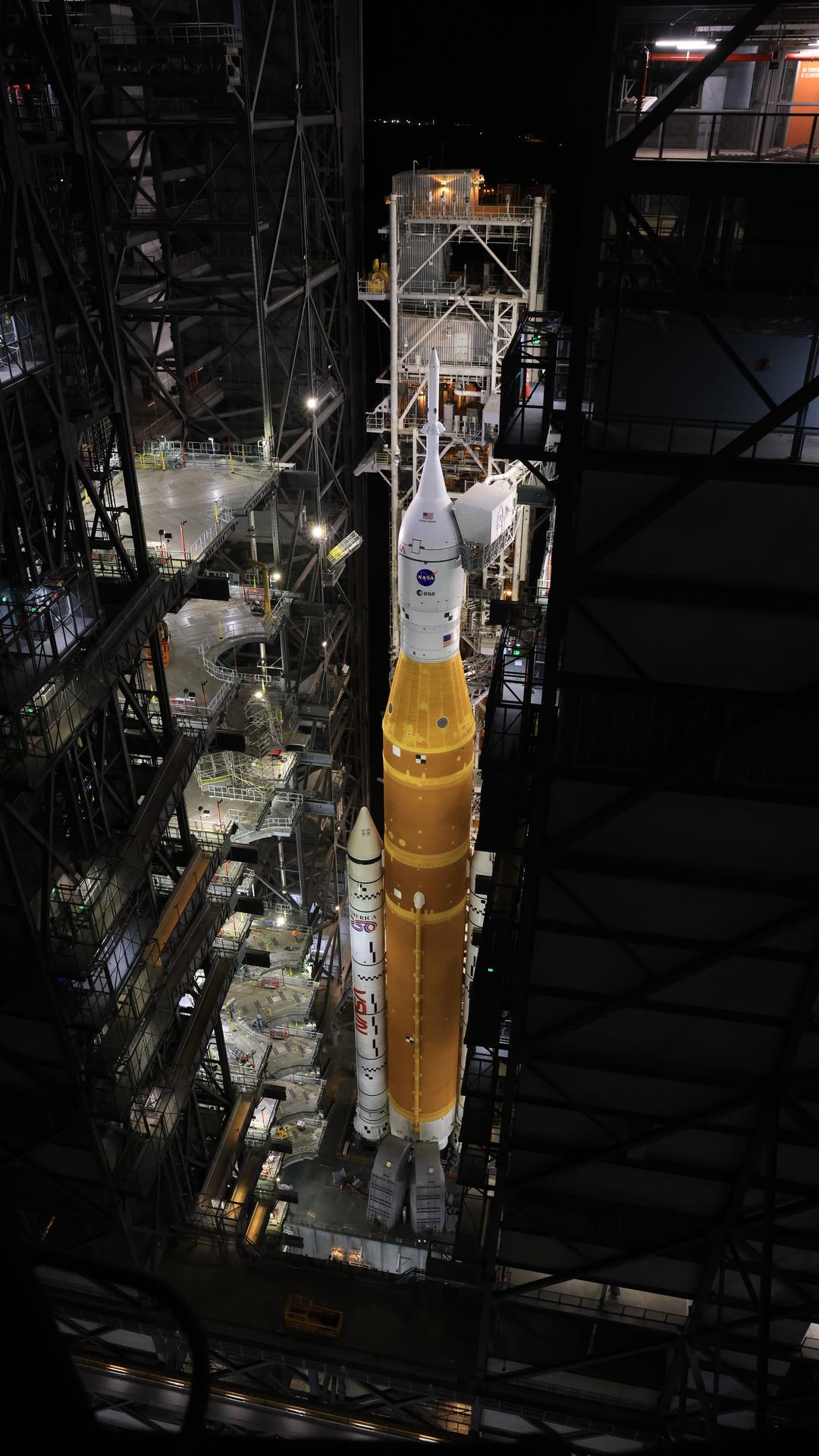
    NASA concluded a wet dress rehearsal for the agency’s Artemis II test flight early Tuesday morning, successfully loading cryogenic propellant into the SLS (Space Launch System) tanks, sending a team out to the launch pad to closeout Orion, and safely draining the rocket. The wet dress rehearsal was a prelaunch test to fuel the rocket, designed to […]

  • Artemis II Wet Dress Rehearsal: Test Terminated at T-5:15

    The Artemis II wet dress rehearsal countdown was terminated at the T-5:15 minute mark due to a liquid hydrogen leak at the interface of the tail service mast umbilical, which had experienced high concentrations of liquid hydrogen earlier in the countdown, as well. The launch control team is working to ensure the SLS (Space Launch […]

  • Artemis II Wet Dress Rehearsal: Entering Terminal Count at T-10 Minutes

    NASA teams officially entered the final 10 minutes of today’s Artemis II wet dress rehearsal countdown known as terminal count after Charlie Blackwell-Thompson, NASA’s Artemis launch director, gave the “go” to proceed.   During terminal count, automated systems take control of countdown operations, final checks of flight computers, engine bleed systems, and ground support equipment occur, and the rocket […]

  • Artemis II Wet Dress Rehearsal: Closeout Crew Departs Launch Complex 39B

    NASA’s Artemis II closeout crew has completed its critical tasks and departed NASA Kennedy’s Launch Complex 39B during the Artemis II wet dress rehearsal.   The departure of the closeout crew marks the transition to the final countdown phase, ensuring the launch pad is clear and safe for simulated liftoff procedures. Although the Artemis II astronauts did not […]