





















NASA’s PUNCH Spies Comet Lemmon
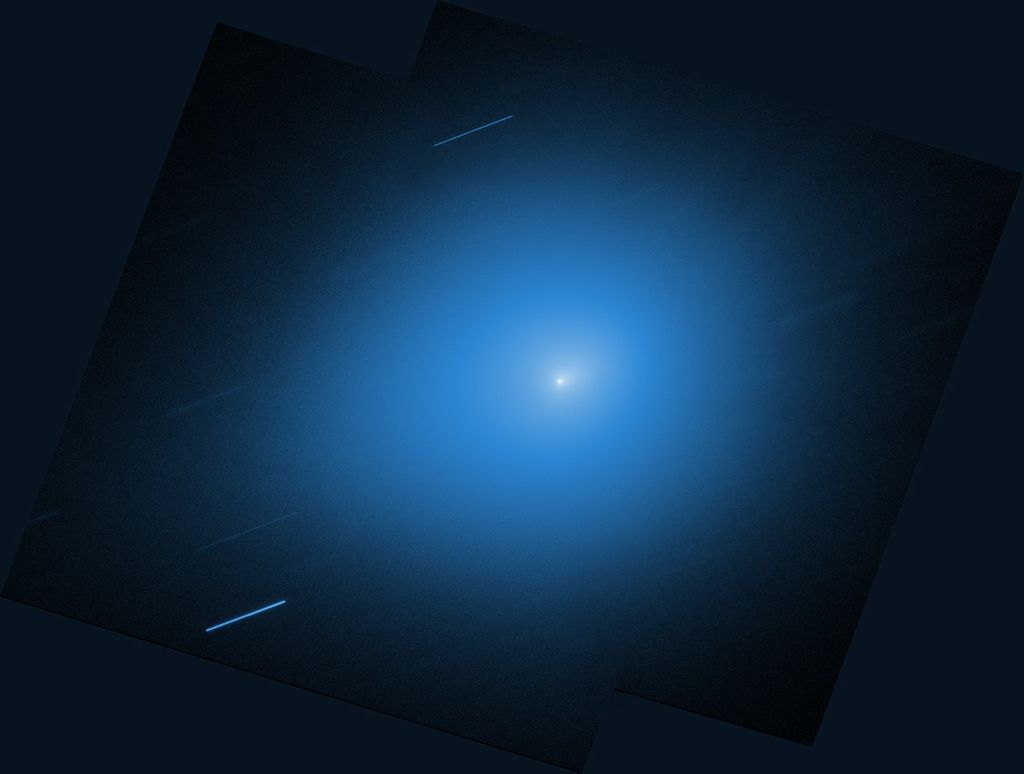
In late 2025, as comet Lemmon (C/2025 A6) swept past the Sun and brightened in Earth’s night skies, NASA’s Earth-orbiting PUNCH (Polarimeter to Unify the Corona and Heliosphere) mission was watching the comet blaze through its field of view, providing a natural tracer of the Sun’s effects across the inner solar system.
Discovered in January 2025 using a NASA-funded survey telescope on Mount Lemmon in Arizona, comet Lemmon first appeared in PUNCH’s view in October.
This movie, made from PUNCH images taken from Oct. 22 to Nov. 12, shows the comet’s movement against background stars and shows changes in the comet’s tail. Variations in the solar wind — a stream of particles that flows out from the Sun — affects the comet’s tail, with occasional solar outbursts causing more dramatic fluctuations in the tail. Twice, on Nov. 1 and Nov. 4, the comet’s tail appears to waver and break in response to solar activity. The tail shortens briefly but then regrows over the following days.
Comet Lemmon continues to be visible in PUNCH images, though it is now getting fainter with each passing day. Mission scientists expect it to leave PUNCH’s view by mid-January 2026 as it moves farther away from both the Sun and Earth.
Southwest Research Institute, based in San Antonio, leads the PUNCH mission and operates the mission’s four spacecraft from its facilities in Boulder, Colorado. The mission is managed by Space Science Mission Operations at NASA’s Goddard Space Flight Center in Greenbelt, Maryland, for the Science Mission Directorate at the agency’s headquarters in Washington.
by Vanessa Thomas
NASA’s Goddard Space Flight Center, Greenbelt, Md.
