

















NASA Aircraft Studies Tiny Particles with Atmospheric Impacts
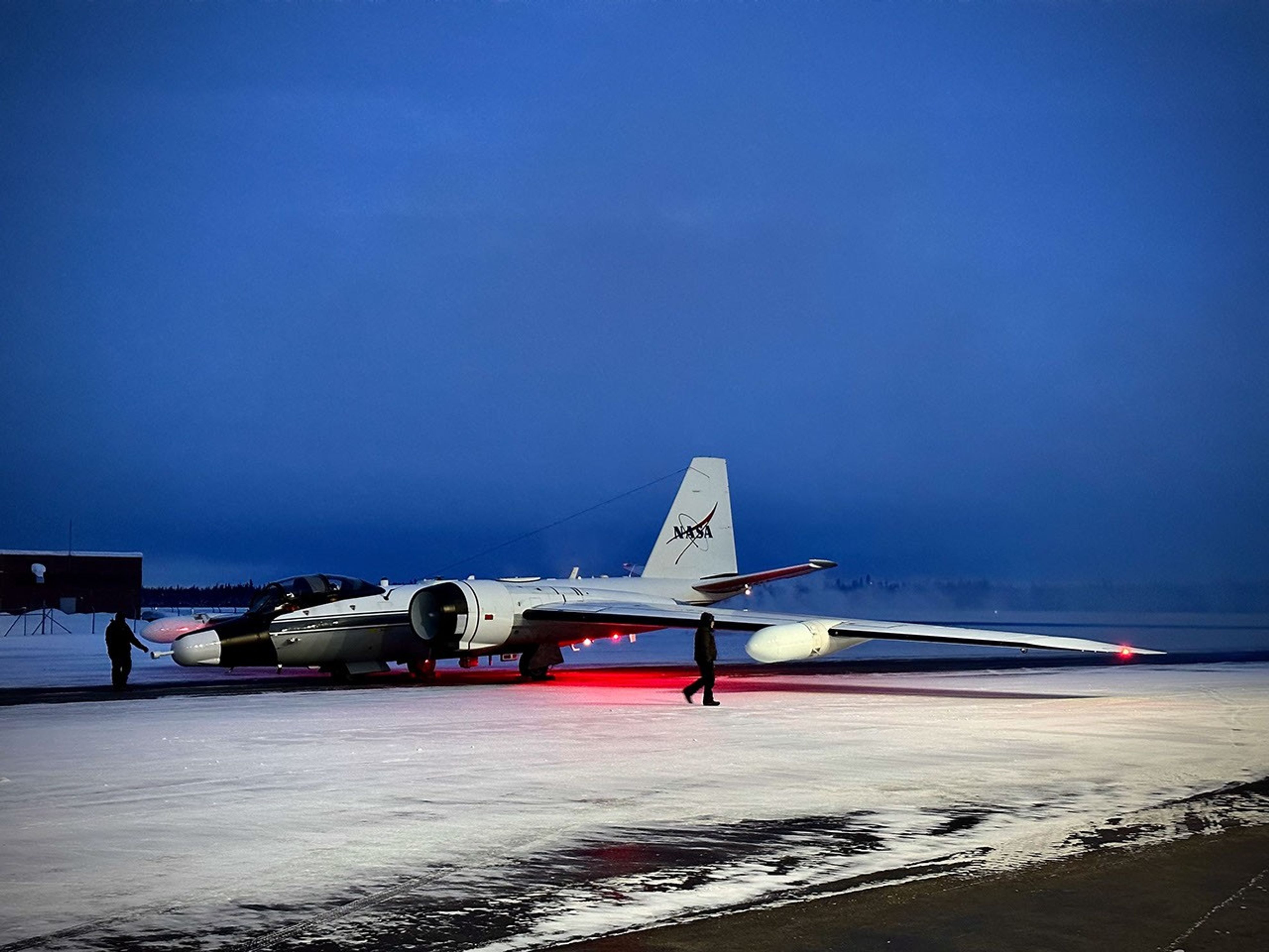
Scientists from NASA and the National Oceanic and Atmospheric Administration (NOAA) have turned to one of NASA’s high-altitude research planes to characterize a population of tiny particles in Earth’s lower stratosphere. Despite their small size, the study shows, the particles appear to play an outsized role in atmospheric chemistry.
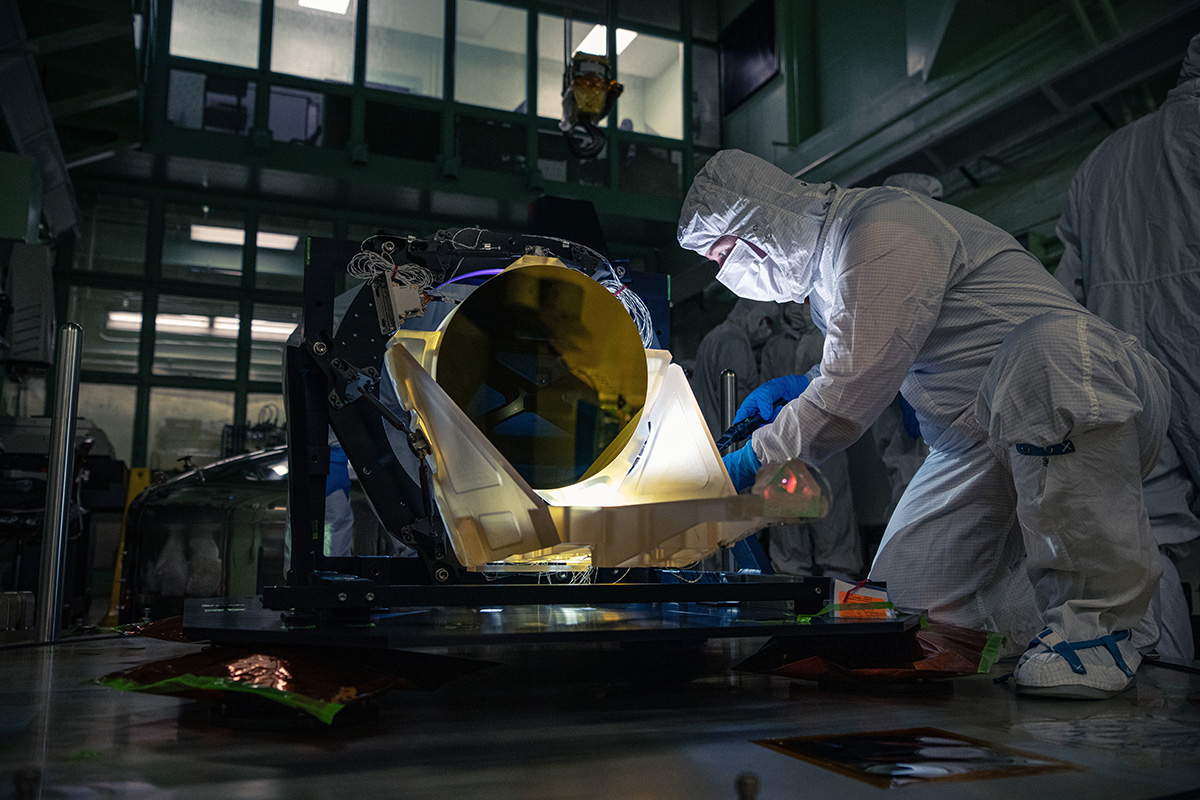
The findings, published April 23 in Science, come from measurements collected during theNOAA’s 2023 Stratospheric Aerosol Processes, Budget, and Radiative Effects mission aboard NASA’s WB-57 aircraft. Instruments on the high-altitude plane sampled the air at altitudes up to 12 miles (19 kilometers) above Earth’s surface to determine the size and composition of particles too small for most satellite- and balloon-based instruments to fully analyze.
The study revealed that particles 6 millionths of an inch (150 nanometers) across or smaller account for most of the total surface area of aerosols in the lower stratosphere. For perspective, it would take 500 of these particles to span the width of a human hair. Nanoscopic particles play a critical role in atmospheric chemistry because many of the chemical reactions that affect compounds like ozone take place on the surfaces of these particles.
Researchers found that the tiny particles originate primarily from two sources: carbon-based emission from vegetation and the oceans, which are carried through transport processes from near Earth’s surface and into the stratosphere; and sulfuric particles that form on material from meteors entering the atmosphere from above. In some regions, the researchers say, the surfaces of the tiny particles make up nearly 90% of the area available for reactions. Given that larger particles have significantly more surface area, this means that the percentage of these tiny particles is much higher than 90%.
Atmospheric chemistry models have not incorporated the massive impact of these particles on airborne reactions because they have been difficult to characterize. Researchers say improving models to correctly represent nanoparticles will be essential to building a more complete understanding of Earth’s atmosphere.
~James Riordon