

















Shock Detectives
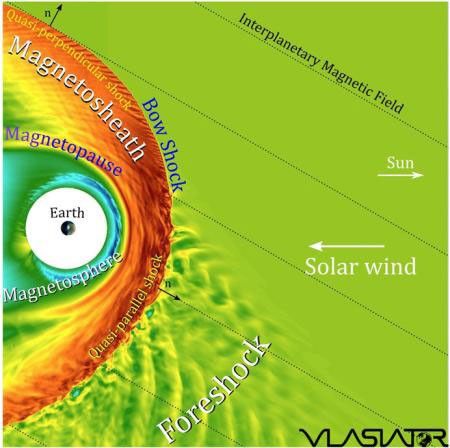
The Sun throws off an extremely fast stream of charged particles called the solar wind. This solar wind collides with the Earth and its protective magnetic field, generating a shock wave called “the bow shock.” There, at the bow shock, the ever-changing magnetic fields can either make the solar wind messy and dynamic or leave it smooth and stable. That’s where the scientists behind Shock Detectives need your help. Join the Shock Detectives project and help interpret data collected by the Magnetospheric Multiscale (MMS) Mission, whose four spacecraft fly in formation through the bow shock zone. You can help classify patterns in the bow shock and help scientists figure out what governs its behavior.
project task
Examining data
division
Sun
where
Online
launched
2026
What you'll do:
- Look at plots of data and learn to recognize regions of "peaceful" and "chaotic" plasma activity.
- Click buttons to inform the researchers which time periods are chaotic or peaceful.
- When and if you like, you can discuss what you have found with other volunteers and scientists in the Talk forum.
Requirements
- Time: 10-15 minutes to complete each tutorial (the project has two related workflows).
- Equipment: internet connected computer, tablet, or smartphone
- Knowledge: None. An in-project tutorial is provided.
Get started!
- Visit the project website on your computer or smartphone.
- Choose a workflow, and complete its in-project tutorial to learn how to interpret data from NASA’s Magnetospheric Multiscale (MMS) mission.
- Start classifying readings collected by the MMS as indicating “chaotic” or “peaceful” plasma behavior using the Field Guide reference as necessary.
Learn more:
Read the Research and Frequently Asked Questions (FAQ) pages whenever you’d like to learn more about the data and the research question this project addresses. Visit the Education page to access links to sources of more information on bow shocks, space weather, and the Magnetospheric Multiscale (MMS) Mission, whose four spacecraft flying in formation collect the data that this project studies.
Get to know the people of Shock Detectives!
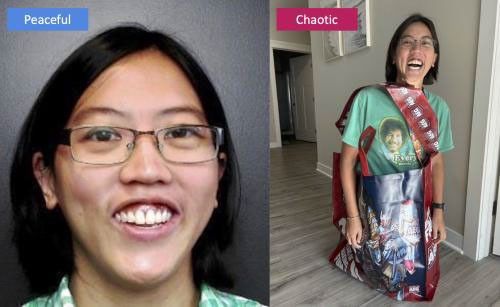
Dr. Vicki Toy-Edens
Data scientist, software engineer, project lead, Johns Hopkins Applied Physics Laboratory