
















Multisource Integrated Observatory
Integration for Innovation: Accelerating Earth Understanding, Maximizing Impact


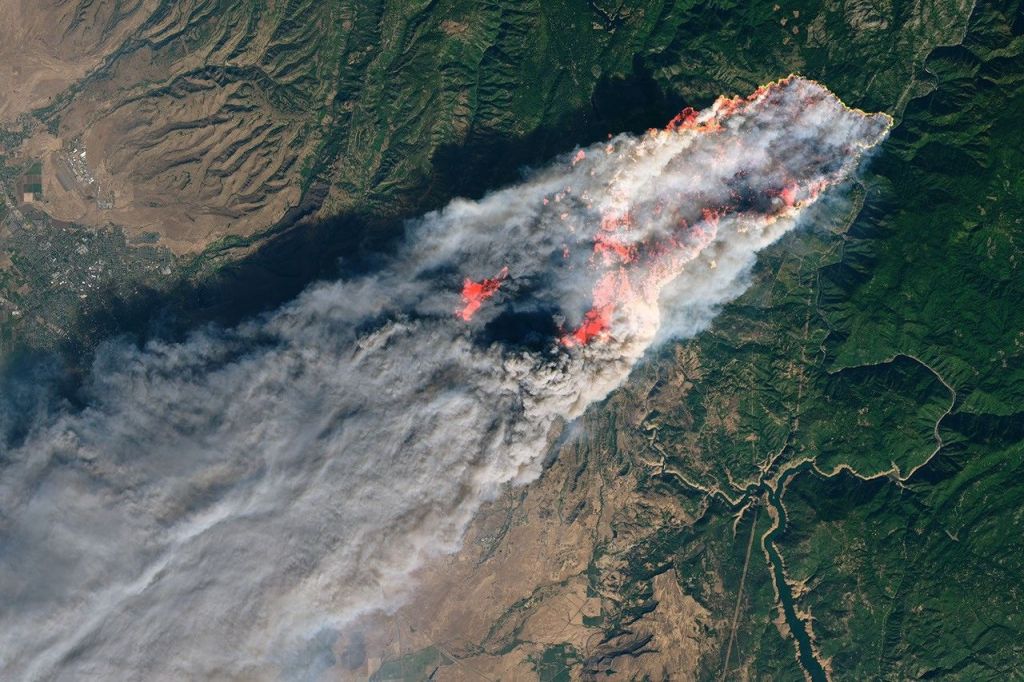
NASA’s Multisource Integrated Observatory (MIO) maximizes the value of Earth observations by combining trusted multisource data, innovative technology, and world-leading science expertise to accelerate the pace of discovery and advance applications for real-world use. The transformative structure breaks down barriers to foster a more collaborative and efficient approach for the most pressing and complex science questions.
MIO enables effective multi-source data integration, stimulates new opportunities to extract added value from mission observations, and cultivates agile, agency-level synergies to provide the actionable Earth insights that stakeholders need.
Multisource DART Teams
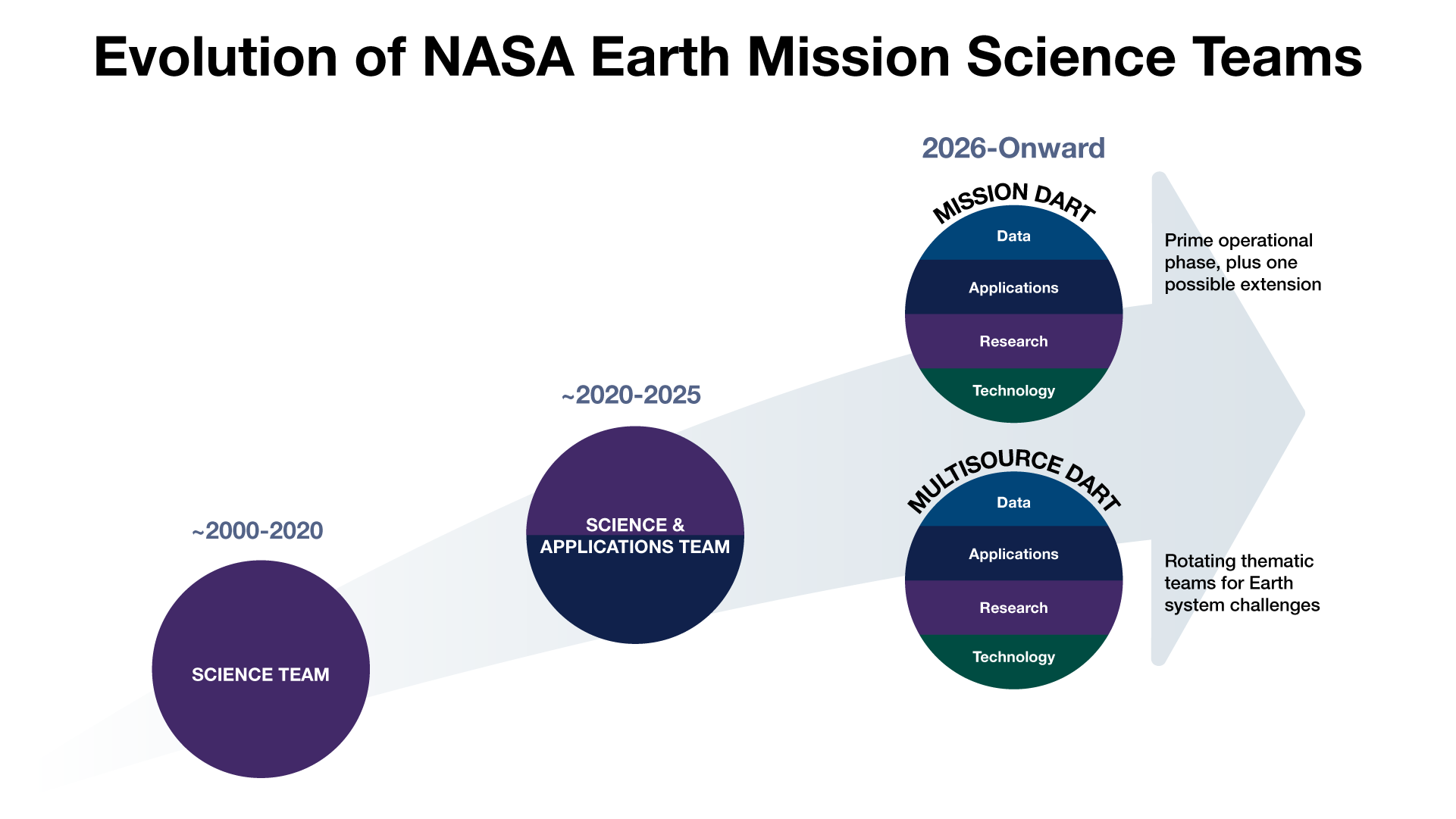
Three Multisource Data, Applications, Research, and Technology (DART) teams will take an interdisciplinary approach to address the nation's most complex and impactful Earth system science questions.
Focusing on "challenge" themes with five-year rotations, the cross-cutting teams will integrate observations from NASA missions, international partners, and commercial industry to accelerate discovery and innovation, advancing science-to-application pipelines across public and private sectors.
Stay tuned for more information in NASA's next annual Research Opportunities in Space and Earth Sciences (ROSES).
Mission DART Teams
Under MIO, teams assembled around single missions or observations will transition from Science and Applications Teams to the more cross-cutting Mission Data, Applications, Research, and Technology (DART) team structure, accelerating integration and impact of mission data during prime operations.
Teams will continue for the mission's prime operational phase, with one possible extension. Beyond the Mission DART, the team may propose continued innovation for use of the mission observations in support of thematic Multisource DART challenges.
Stay tuned for more information in NASA's next annual Research Opportunities in Space and Earth Sciences (ROSES).
Core Capabilities & Infrastructure
MIO includes a focus on core capabilities and infrastructure coordinated by a project office to support integration and DART interactions.
This includes facilitation of a unified computing environment to enable collaboration among cross-cutting DART teams and support efficient multisource data harmonization. The project office also promotes opportunities to advance core capabilities including algorithm development, modeling, and data calibration and validation.

ROSES Solicitation: NISAR DART Team
Submit a proposal by March 13, 2026, to join the NASA ISRO Synthetic Aperture Radar (NISAR) mission's Data, Applications, Research, and Technology (DART) team.
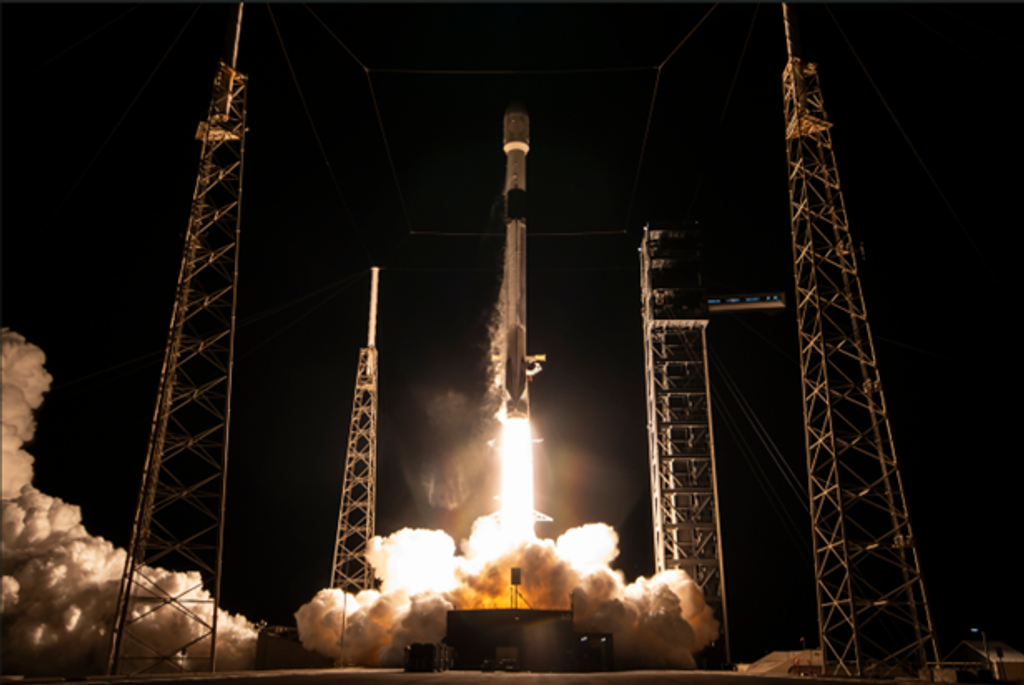
NISAR launched on July 30, 2025. The data it provides will help to track disasters, monitor ecosystems and crops, study glaciers and ice sheets, and understand how Earth’s surface moves and changes.
The DART team's primary task is to maximize scientific and societal benefits by meeting mission science objectives and stakeholder needs with speed and efficiency.
The Multisource Integrated Observatory breaks through collaboration barriers to spark innovation and stimulate world-changing scientific discovery, extracting maximum value from NASA's trusted Earth observations. By accelerating understanding of Earth's complex and interconnected systems, MIO will help to enable critical decisions for national security, resource management, and disaster preparedness."

Dr. Karen St. Germain
NASA Earth Science Division Director
MIO Project Leadership
| John Haynes | Program Manager |
| John Sullivan | Deputy Program Manager |
| Cecile Rousseaux | Project Scientist |
| Joel McCorkel | Project Manager |