

















Mission
Biosphere provides foundational knowledge on interactions between and within terrestrial and aquatic ecosystems, along with changes in their biogeochemistry and biodiversity. The goal is to detect and predict natural and human-induced changes in living systems to sustain the services they provide and ensure planetary health for future generations.
Biosphere News
As Iceberg A-23A disintegrated, it shed meltwater that helped fuel an extensive phytoplankton bloom in the South Atlantic Ocean.
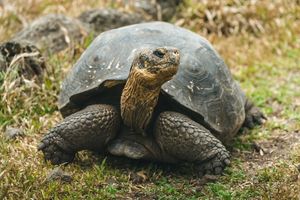
Giant tortoises are returning to Floreana Island after more than 150 years, guided by NASA data that shows suitable areas…
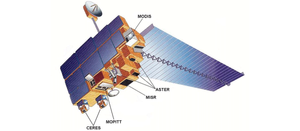
Launched into the night sky more than 26 years ago, on Dec. 18, 1999, from Vandenberg Air Force Base (now…
Introduction Launched in Feb. 2024, NASA’s Plankton, Aerosol, Cloud, ocean Ecosystem (PACE) mission is a cornerstone of Earth system science…

Satellites are helping land managers track ecological shifts as reserves reconnect and landscapes return to a more natural state.
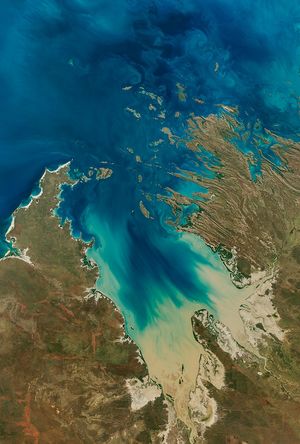
NASA–USGS Landsat has tracked coastal health, from Florida’s mangroves after hurricanes, to uncovering the surprising growth of eelgrass meadows in…
Overview
Earth's living ecosystems, along with their biodiversity and biogeochemical cycling of life-sustaining elements such as carbon, nitrogen, and phosphorus, are quite dynamic and both drive and respond to environmental changes ranging from local to global scales. Understanding humanity’s growing role in these changes is a necessary precondition for taking responsible action. We have much to learn about the interactions within and between ecosystems, including land, ocean, atmospheric, and human systems. NASA Biosphere specifically focuses on addressing how global ecosystems are changing, and with them the services they provide humans (e.g., food, national security, clean water, and biodiversity changes). NASA Biosphere also works closely with other NASA Spheres as life jointly depends upon and drives the development of fundamental components in all research Spheres. The view from space afforded by NASA satellites provides a holistic understanding of conditions necessary for managing a sustainable biosphere for all.
The Core Science Questions that Drive NASA's Biosphere Research
-
How are global terrestrial and aquatic ecosystems changing, with particular focus on changes to their biodiversity and their biogeochemical cycling of elements and water?
-
What changes are occurring in global land cover and land use, what are their causes, and what are the consequences of change for human societies and the sustainability of ecosystems?
-
How do biodiversity, land cover, and biogeochemical cycles respond to and affect global environmental change?
-
What are the consequences of change to the Earth system and increased human activities for coastal regions?

Funded Research Opportunities
Solicited program elements relevant to Biosphere are publicized through the Research Opportunities in Space and Earth Sciences (ROSES) NASA Research Announcements (NRAs) on the NASA Solicitation and Proposal Integrated Review and Evaluation System (NSPIRES) website. Past, open, and future solicitations can be searched and viewed on NSPIRES.
- A.4 Rapid Response and Novel Research in Earth Science: No due date
- F.5 Future Investigators in NASA Earth and Space Science and Technology: Due date TBD
Research Areas
-
Biological Diversity
Earth is a living planet. Biological diversity occurs across all levels of biological organization: molecular or genetic, organismal or species, and biotic communities coupled with their abiotic surroundings that together comprise ecosystems. NASA Biological Diversity (BD) research uses NASA observations and models to improve our understanding of biological diversity, how and why it is changing, and its effects on and interactions with the broader Earth system. NASA explores patterns of biological diversity on land, in water, and in the atmosphere using observations from satellites, airborne and seaborne platforms, and in-situ surveys. These observations are well-suited for detecting such patterns, especially at the ecosystem level, but in some cases at finer species levels. BD further seeks to understand the geophysical and ecological processes that result in the patterns of biological diversity our observations detect. This process-oriented research connects BD research with the activities of other NASA Earth Science programs, such as efforts to track the biogeochemical cycling of elements like carbon along with studies of the water cycle, the atmosphere, and the solid Earth.
As we enhance the search for life elsewhere in our Solar System and the wider Universe, it is worth noting that everything we know about life we know from life on Earth. Increasing our understanding of the diversity of life here allows us to refine our search for life out there. A model product showing chimpanzee habitat suitability. The habitat suitability model uses machine leaning to predict the suitability of a location for a species based on environmental descriptors such as tree height, forest loss, tree cover, and forest depth using NASA data.NASA/Scientific Visualization Studio
 -
Land-Cover and Land-Use Change
Land-Cover and Land-Use Change (LCLUC) is a scientific research area within NASA’s Earth Science Research Program. Analysis of land use by people and its changes is important for understanding the provision of food, water and ecosystems’ services and the resilience of those systems. The goals of this research include contributing to developing capability for periodic global inventories of land use and land cover from space, developing the scientific understanding and models necessary to simulate the processes taking place, and evaluating the consequences of observed and predicted changes useful for land management. LCLUC also contributes to the development of NASA’s Earth System Digital Twins by incorporating near real-time data on human land use into numerical Earth System models at the highest spatial and temporal resolutions. This helps operational decision-making, mitigating adverse impacts on the system and improve its sustainability.
 Fraction of roof surface (top-left) and ground impervious surface (bottom-left) for the entire CONUS and a zoom-in of the Boston-New York City corridor (right). The data is produced by combining National Land Cover Database impervious surface and building footprint data produced by Google and Microsoft, which are used for assessing urban heat island effects.Xiaojing Tang, James Madison University
 -
Ocean Biology and Biogeochemistry
From luscious islands to delicate sea-ice environments, shallow and productive ocean waters to unexplored depths, all the way to remote frozen ocean worlds in our solar system, Ocean Biology and Biogeochemistry (OBB) funds research that is foundational and nearly limitless. OBB provides critical insights for understanding how the ocean works, from ecosystem function to economic links and resilience to future change, and provides foundational knowledge towards space exploration and inspiration for all generations. Smart investments in ocean remote sensing now will result in multiplicative effects in the future across all sectors; by 2030, the potential economic value of Earth observations could exceed $700 billion globally. Better data means better decisions, solutions, and innovations.
The groundbreaking science OBB supports looks at the vast seascapes of our blue planet and furthers the understanding of how life may exist elsewhere. Within this framework, anything is possible. Investments for in situ and space-based technology are not only critical to advance our understanding of life on Earth and in our solar system but also represent an extension of the human imagination.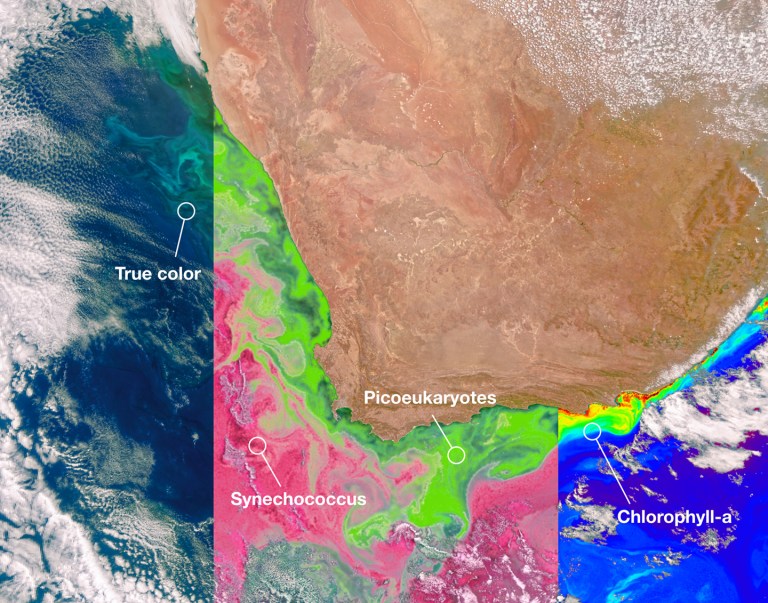 The first light imagery from PACE shows the southern tip of the African continent, highlighting select products from the Ocean Color Instrument (OCI). On the left panel, a true-color image shows bright plankton blooms. In the middle, plankton diversity products from the MOANA algorithm indicate Synechococcus (pink) and picoeucaryotes (green). Finally, the right panel shows a heritage chlorophyll-a concentration product.NASA/GSFC Ocean Color Web
 -
Terrestrial Ecology
Terrestrial Ecology (TE) uses satellite, airborne, and field-based observations, together with advanced data analysis and modeling, to study how Earth’s ecosystems function and change. The goal of TE is to improve understanding of the structure and function of global ecosystems, their connections with the atmosphere and hydrosphere, and their roles in cycling carbon, water, nutrients, and energy, and how these drive and respond to global change. This understanding is essential for human well-being and Earth’s habitability, provides the foundation for informed decision-making at local to international scales, and contributes directly to NASA applications in areas such as agriculture, wildfire management, and ecological conservation.
For decades, TE has led landmark field campaigns—such as BOREAS, LBA-ECO, and ABoVE—that, along with long-term records from satellites and innovative new observing tools, have built a strong foundation for discovery. A key part of TE is developing new ways to measure Earth’s surface using light and energy, and to turn those measurements into insights about ecosystem health and change. Building on this legacy, NASA is now planning the next generation of TE field campaigns and enabling the next generation of satellites to continue advancing our ability to understand and sustain the ecosystems that support life on our planet.A view of forest height data collected by the Global Ecosystem Dynamics Investigation (GEDI) forest instrument aboard the International Space Station.NASA/Scientific Visualization Studio
Biosphere Data Access and Distributed Active Archive Centers (DAACs)
Missions and Campaigns
-
Missions
NASA Earth Science missions see Earth from space and enable researchers to monitor and understand our home planet. Missions range from instruments onboard the International Space Station (ISS) to Earth-orbiting satellites that span both large and small (i.e., CubeSats) form factors. NASA’s Earth Science missions often have US or other international partnerships and frequently collect data for 10 or more years.
-
Campaigns
Campaigns use instrumented aircrafts, balloons, ships, and surface networks over land and ocean, to better observe and understand our home planet. Campaigns represent coordinated efforts with intensive observation periods over one or more regions that can last anywhere from weeks to years. These measurements help support missions by providing initial tests of instruments before they are launched to space. Campaigns also provide important measurements to calibrate and validate satellite data in addition to collecting observations in support of related scientific endeavors.

Public Events
Upcoming Meetings and Workshops
- 2026 NASA Land-Cover and Land-Use Change Science Team Meeting, TBD, North Bethesda, MD, USA
- Ocean Sciences Meeting, 22-27 February 2026, Glasgow, Scotland
- NASA Biodiversity and Ecological Conservation Team Meeting, 12-14 May 2026, Washington, DC, USA
- U.S. Marine Biodiversity Observation Network Meeting, 15 May 2026, Washington, DC, USA
Select Recent Meetings and Workshops
- American Geophysical Union (AGU) 2025 Fall Meeting, 15-19 December 2025, New Orleans, LA, USA
- 2025 International Ocean Colour Science Meeting, 1-4 December 2025, Darmstadt, Germany
- Carbon Monitoring System Science Team Meeting & Applications Workshop, 9-11 September 2025, Moffett Field, CA, USA
- 2025 Hyperspectral/Multispectral Imaging and Sounding of the Environment (HISE) Meeting, 20-24 July 2025, Long Beach, CA, USA
- ABoVE 11th Science Team Meeting, 12-15 May 2025, Fairbanks, AK, USA
- Land Cover/Land Use Changes in Southeast Asia - Regional Environmental Impacts and Synthesis, 19-25 February 2025, Iloilo City, the Philippines
Collaborating Organizations and Other Information
Biosphere Science Team and Program Links
Guiding Documents
Contacts
Amanda Whitehurst
Biosphere Program Manager
Terrestrial Ecology Research
Contact | Bio
Kelsey Bisson
Biosphere Associate Program Manager (IPA, Oregon State Univ.)
Ocean Biology and Biogeochemistry Research
Contact | Bio
Krishna Vadrevu
Biosphere Program Manager (MSFC Detailee)
Land-Cover and Land-Use Change Research
Contact | Bio
Laura Lorenzoni
Biosphere Program Manager
Ocean Biology and Biogeochemistry Research
Contact | Bio
Ryan Pavlick
Biosphere and Enabling Capabilities Program Manager (dual role)
Terrestrial Ecology Research and Airborne Science Program Scientist
Contact
Woody Turner
Biosphere Program Manager
Biological Diversity Research
Contact | Bio
Earth Science Division Embeds
Jessica Burnett
Earth Science Data Systems Embed
Contact
Keith Gaddis
Earth Action Embed
Contact | Bio
Teresa Kauffman
Earth Science Technology Office Embed
Contact