















Suggested Searches

1 min read

Boreal forest wildfire on Kamchatka Peninsula, Russia

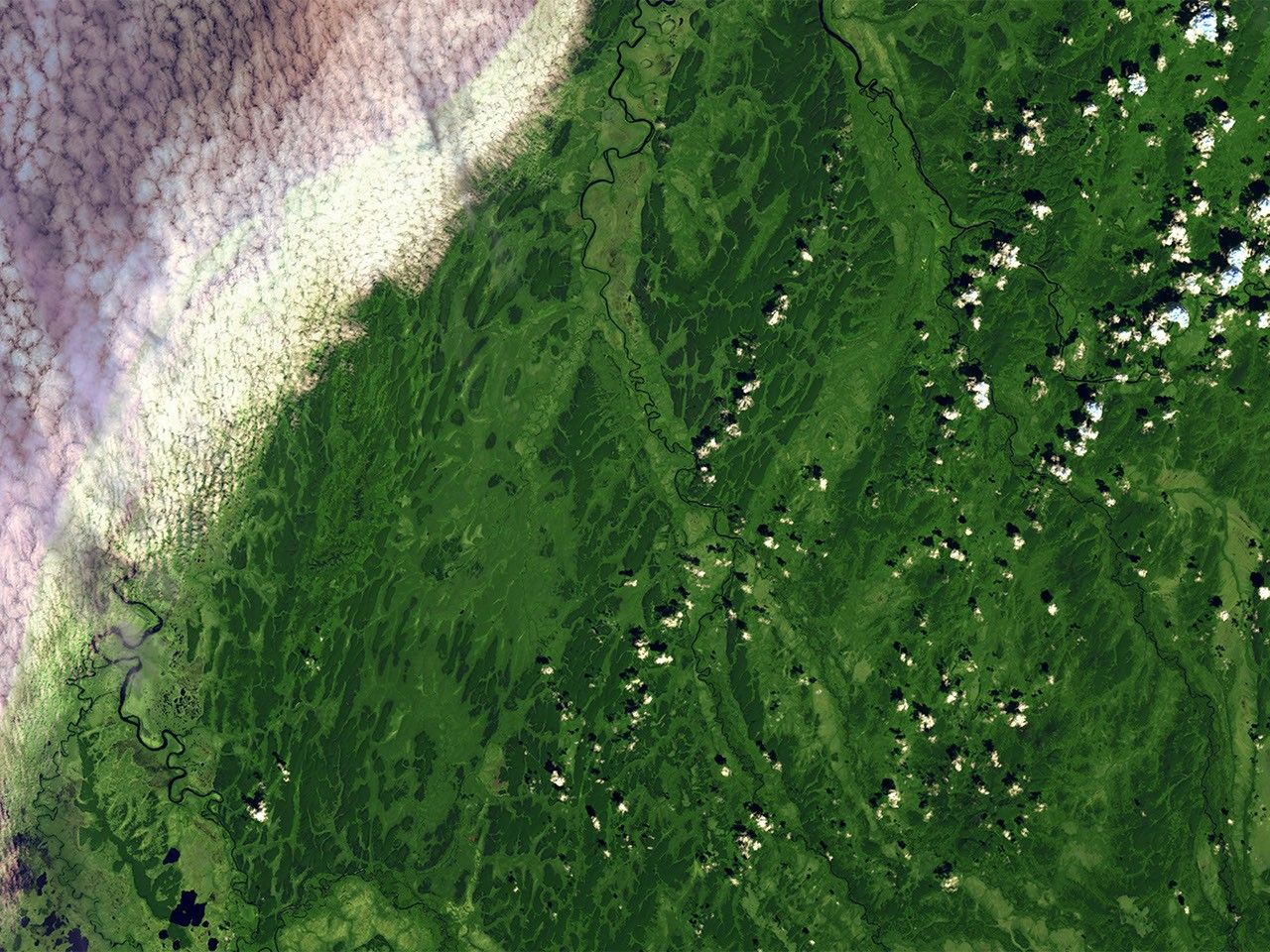
before
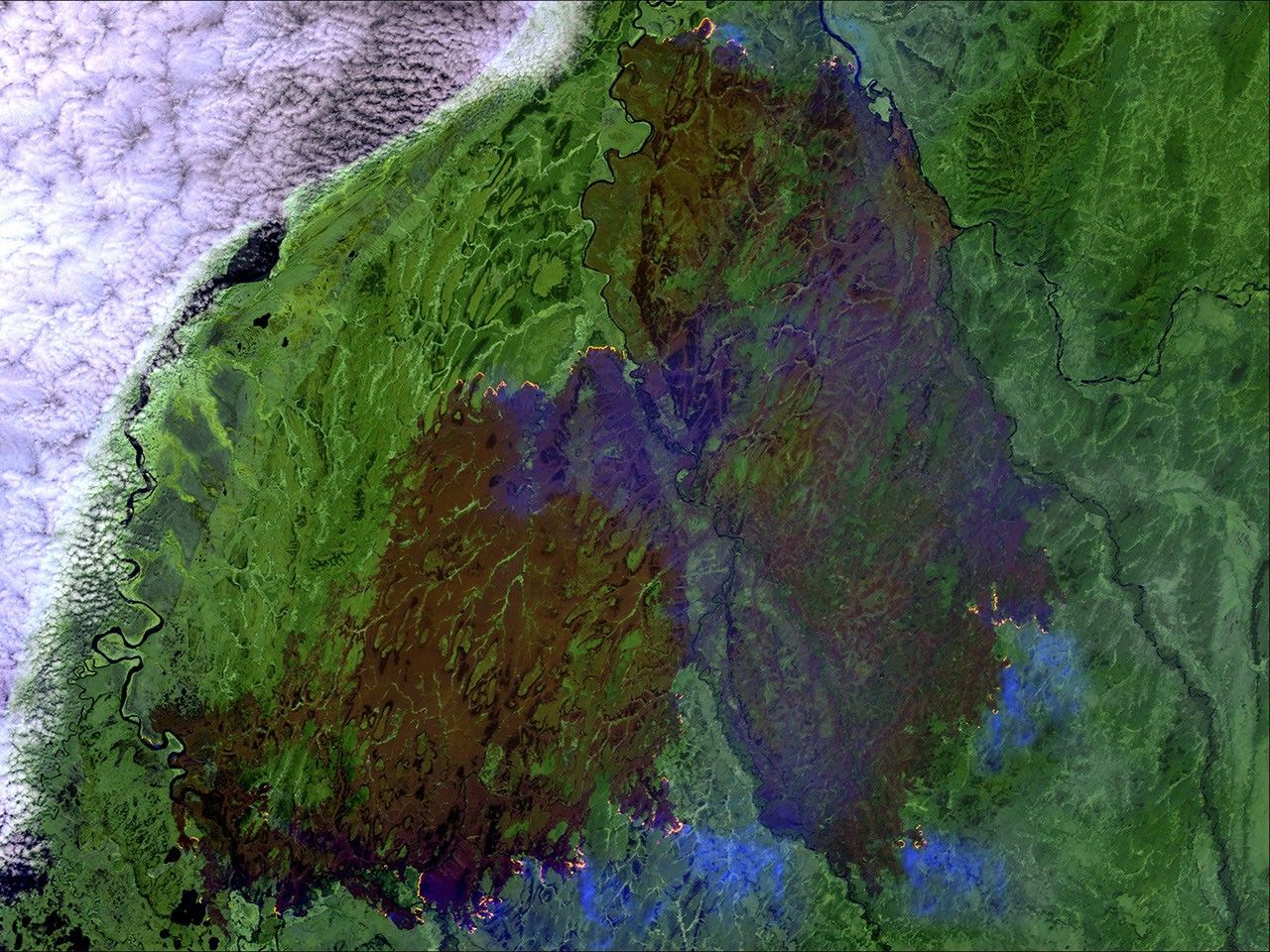
after
A massive wildfire on the Kamchatka Peninsula in far-eastern Russia has consumed nearly 600,000 acres of boreal forest and tundra since late May 2016. Fires appear orange in the 2016 image and smoke looks light blue. The large, brown area is the burn scar. The Siberian Times reported that smoke from the Russian wildfire was “producing exceptional sunsets” in the western United States and Canada. The newspaper attributed the Kamchatka fire and others this spring in eastern Russia partially to an unusually warm, dry winter and faster than normal snowmelt.    Images taken by the Operational Land Imager onboard Landsat 8 and the Enhanced Thematic Mapper Plus onboard Landsat 7. Source: U.S. Geological Survey (USGS) Landsat Missions Gallery; “Large Wildfire Consumes Boreal Forest in Eastern Russia;” U.S. Department of the Interior / USGS and NASA.

A massive wildfire on the Kamchatka Peninsula in far-eastern Russia has consumed nearly 600,000 acres of boreal forest and tundra since late May 2016. Fires appear orange in the 2016 image and smoke looks light blue. The large, brown area is the burn scar. The Siberian Times reported that smoke from the Russian wildfire was “producing exceptional sunsets” in the western United States and Canada. The newspaper attributed the Kamchatka fire and others this spring in eastern Russia partially to an unusually warm, dry winter and faster than normal snowmelt.  Images taken by the Operational Land Imager onboard Landsat 8 and the Enhanced Thematic Mapper Plus onboard Landsat 7. Source: U.S. Geological Survey (USGS) Landsat Missions Gallery; “Large Wildfire Consumes Boreal Forest in Eastern Russia;” U.S. Department of the Interior / USGS and NASA.

Before and After

Boreal forest wildfire on Kamchatka Peninsula, Russia

July 18, 2015 - June 10, 2016

A massive wildfire on the Kamchatka Peninsula in far-eastern Russia has consumed nearly 600,000 acres of boreal forest and tundra since late May 2016. Fires appear orange in the 2016 image and smoke looks light blue. The large, brown area is the burn scar. The Siberian Times reported that smoke from the Russian wildfire was “producing exceptional sunsets” in the western United States and Canada. The newspaper attributed the Kamchatka fire and others this spring in eastern Russia partially to an unusually warm, dry winter and faster than normal snowmelt.  Images taken by the Operational Land Imager onboard Landsat 8 and the Enhanced Thematic Mapper Plus onboard Landsat 7. Source: U.S. Geological Survey (USGS) Landsat Missions Gallery; “Large Wildfire Consumes Boreal Forest in Eastern Russia;” U.S. Department of the Interior / USGS and NASA.

Downloads

Image 1

JPEG

(814 KB)

Image 2

JPEG

(831 KB)
