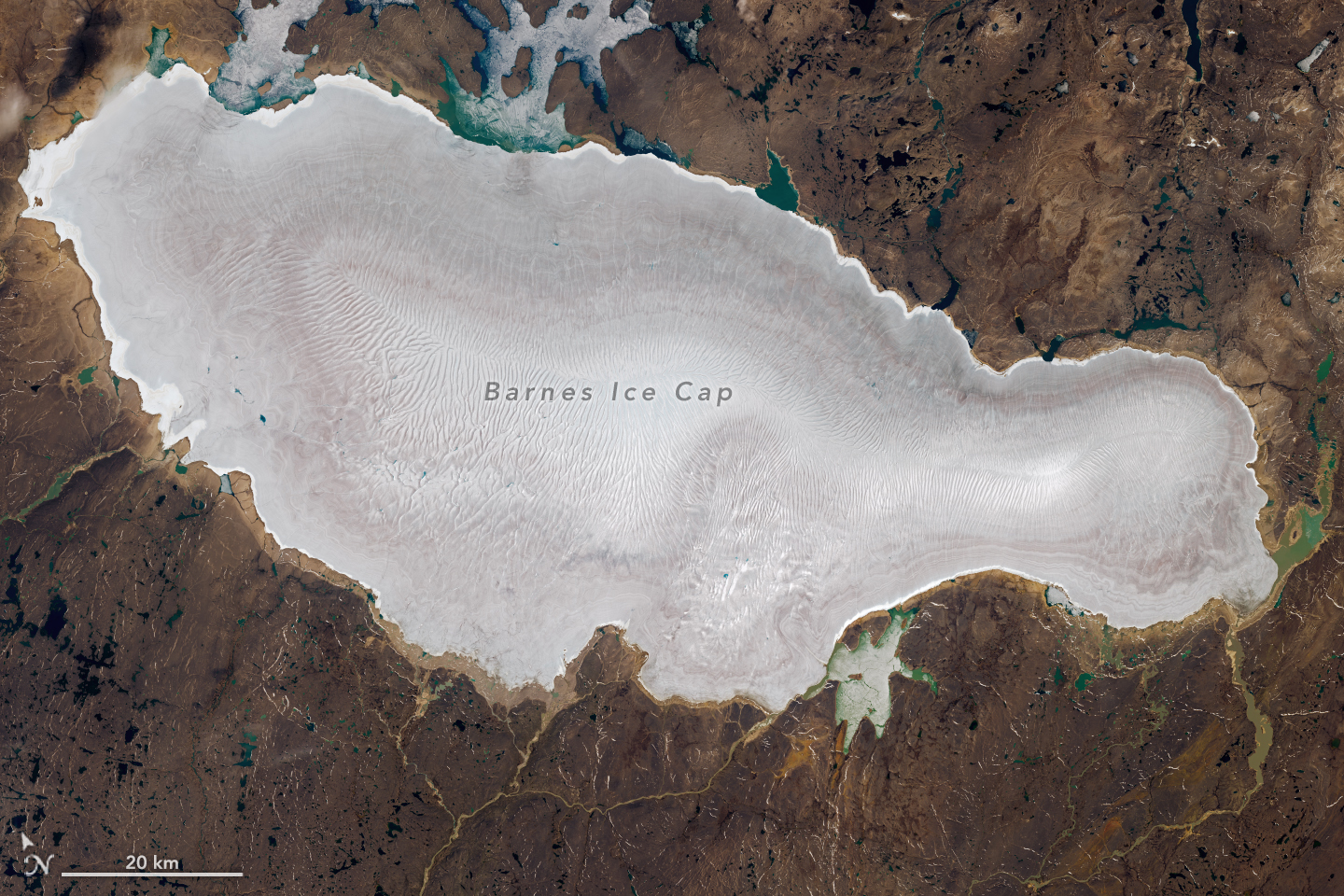





























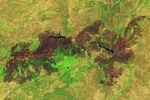

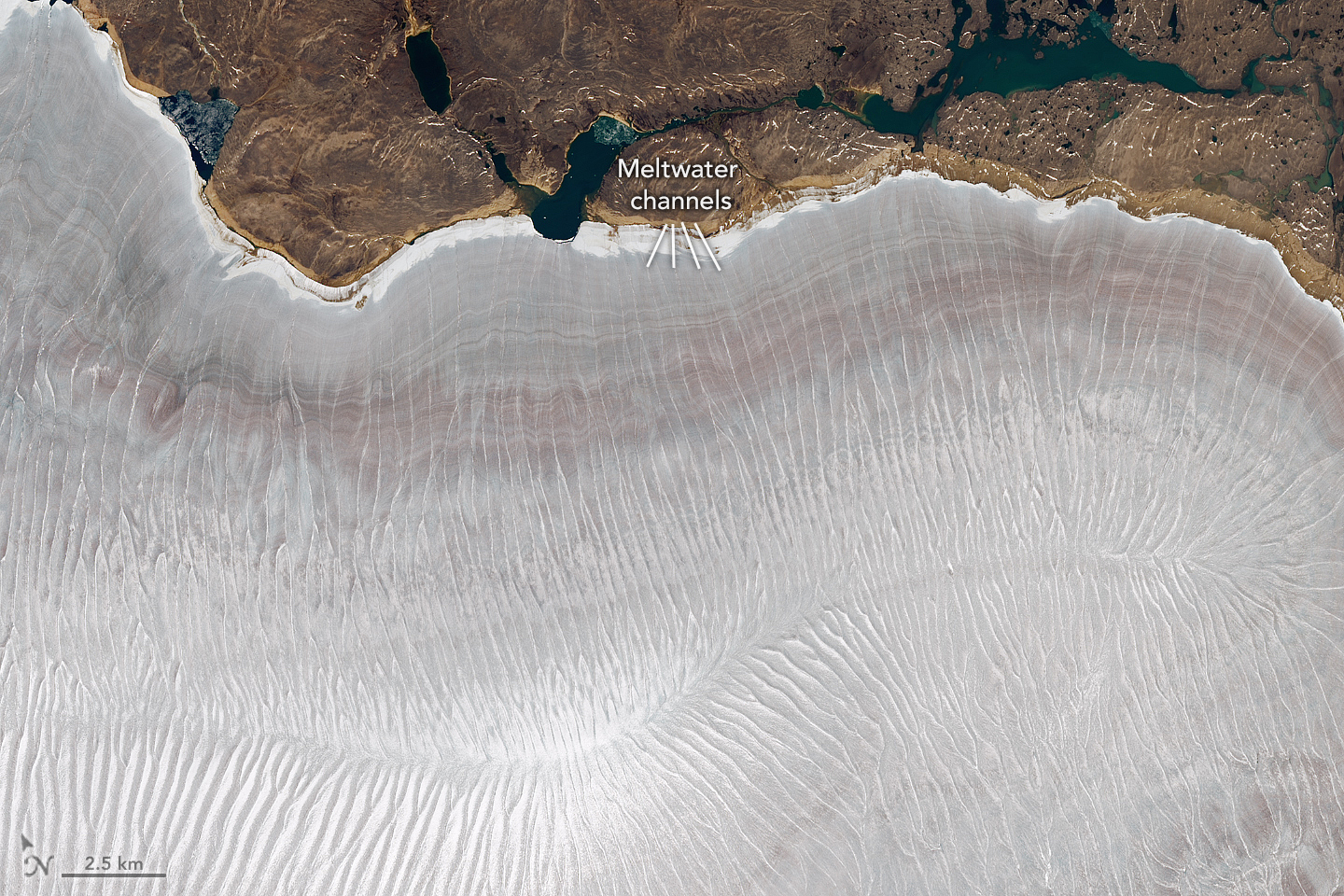
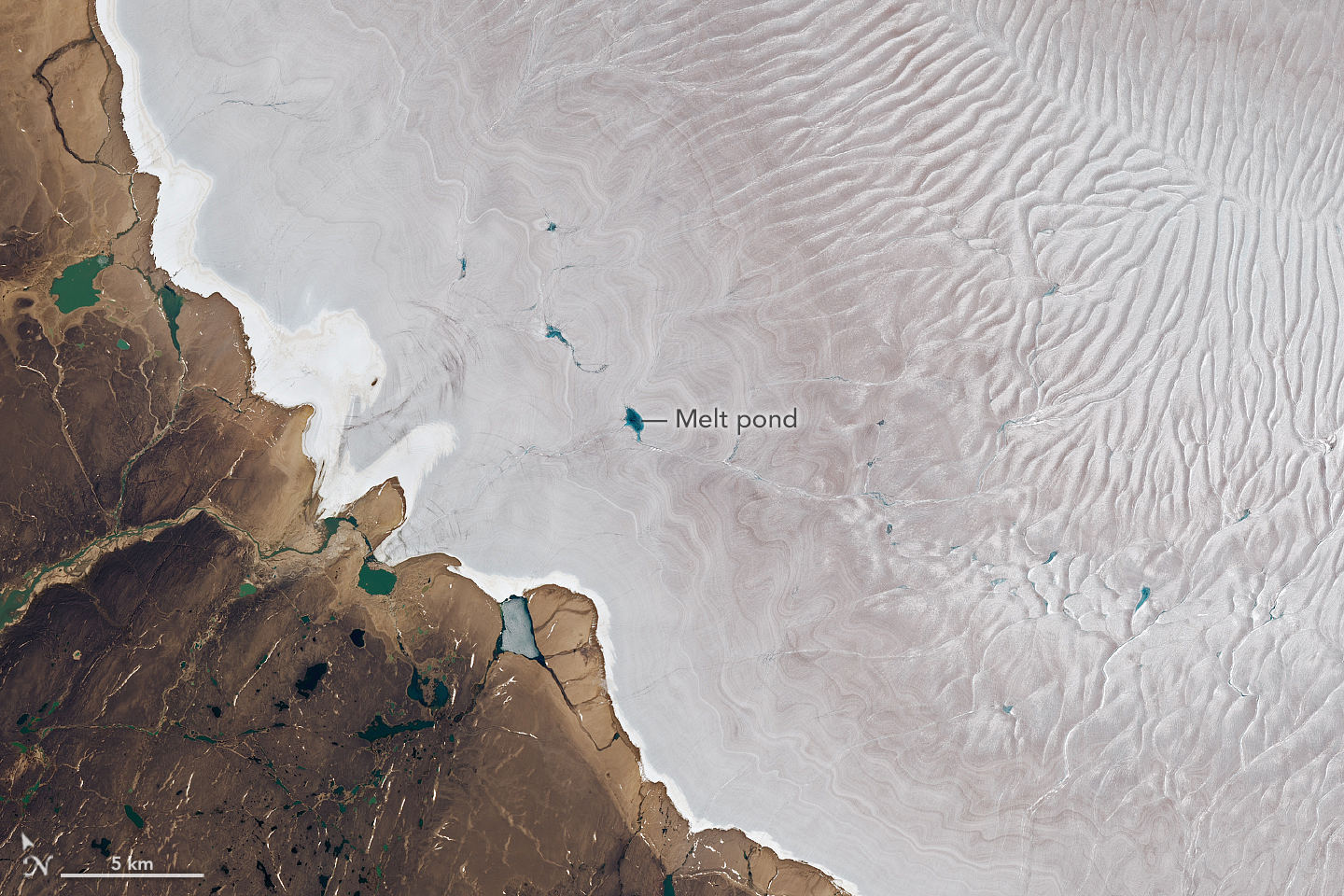
For most of the year, the Barnes Ice Cap in the Canadian Arctic lies quiet under a blanket of snow. By summer, that snow melts back, and the ice cap transforms in texture, its bare ice dotted with turquoise ponds and its surface threaded with meltwater channels. In summer 2026, this seasonal awakening arrived fast and early.
Located in the center of Baffin Island, the ice cap is a remnant of the Laurentide Ice Sheet, which once covered much of northern North America. Today, the bowling-pin-shaped ice cap spans around 5,700 square kilometers (2,200 square miles), with ice up to about 730 meters (2,400 feet) thick. Like most of the glacial ice across the Canadian Arctic, the Barnes Ice Cap is thinning and retreating.
The ice cap entered the 2026 melt season with an already-thin snowpack, and within a few weeks it had gone from snow-covered to mostly bare. By mid-July, its snow cover was effectively gone—“the earliest it has been this bare,” said glaciologist Mauri Pelto of Nichols College, who has monitored the ice cap using images from Landsat satellites and, when possible, field observations.