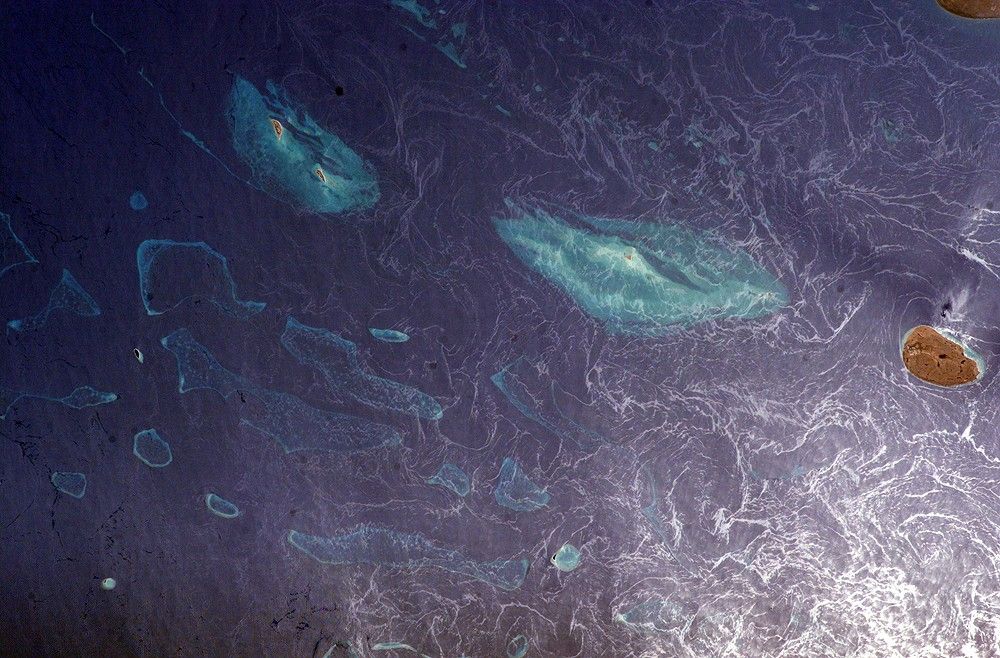



















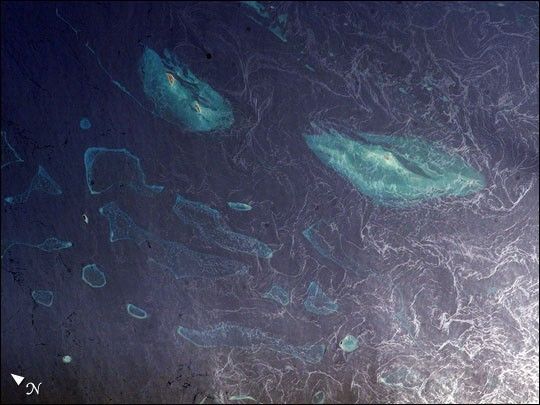
This unique photograph of shallow Red Sea waters off the coast of Saudi Arabia gives us a glimpse of both the coral reefs under the surface, and the texture and movements of surface waters. On the left side of the image we see through the water column to the reefs below the surface. On the right side of the image, the sun reflects off of microscopic oily films formed by a combination of natural biological sources and human activities on the sea surface (visit Oceanography from the Space Shuttle for more info). The films are concentrated by surface water movements and variably dampen surface capillary waves, which effect how the sun’s light is reflected. This creates patterns of brighter and darker reflections when viewed from orbit. These patterns trace the complex surface water dynamics along the coast.
The Red Sea and Gulf of Aden include over 17,400 km2 of coral reefs, or 6% of the world’s total (World Atlas of Coral Reefs). The World Resources Institute has estimated that 60% of the reefs in the Red Sea and Arabian Gulf are threatened by coastal development, overfishing, and the threat of oil spills by the heavy tanker traffic. The stretch of reefs shown here is near Qutu Island, south of Al-Qunfudhah, and is relatively isolated compared to other reefs in the region.
References & Resources
ISS006-E-45935 was provided by the Earth Sciences and Image Analysis Laboratory at Johnson Space Center. Additional images taken by astronauts and cosmonauts can be viewed at the NASA-JSC Gateway to Astronaut Photography of Earth.