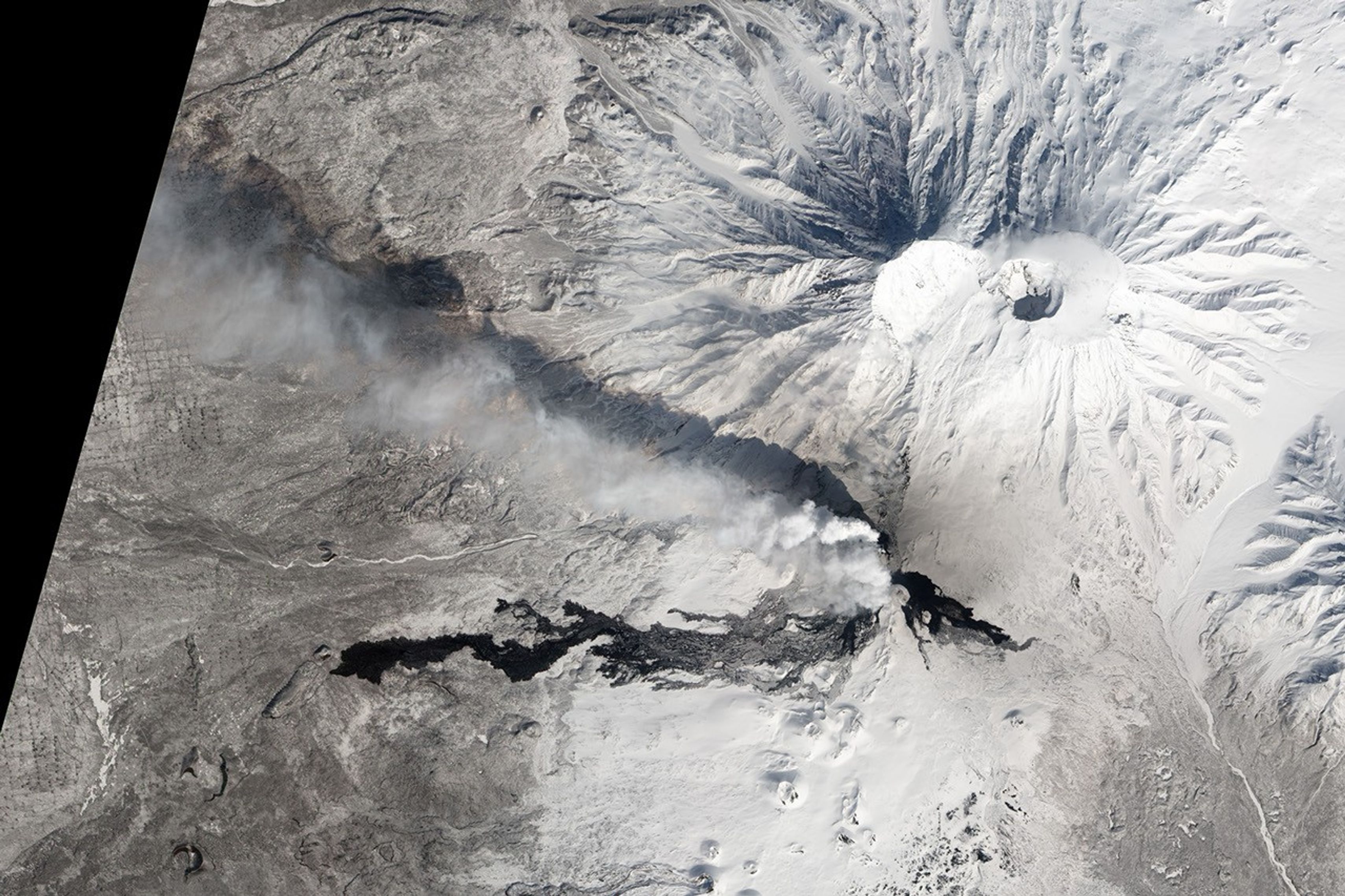














Tolbachik Volcano is not a single peak, but a complex of volcanic features superimposed on one another. The varied shapes result from differences in the chemistry, gas content, and temperature of lava. Over time the composition of magma feeding a volcano may change, generating volcanoes with complex shapes.
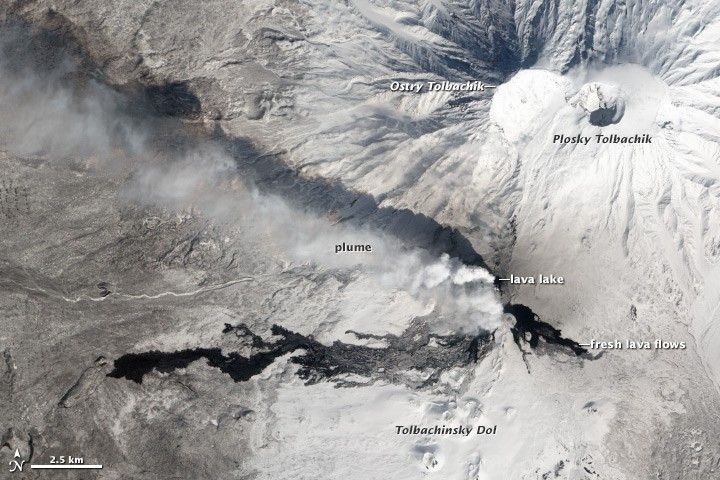
The current eruption, which started in late 2012, is on Tolbachinsky Dol, a lava plateau marked by small volcanic cones that formed during earlier eruptions. These cones stretch southwest from the summit of Plosky Tolbachick, a gently sloping shield volcano formed from layers of fluid lavas. Just to the west of Plosky Tolbachik lies Ostry Tolbachik, a steep-sided stratovolcano composed of layers of thick lava, ash, tephra, and other volcanic debris.
This April 5, 2013, natural-color image of Plosky Tolbachik, Ostry Tolbachik, and Tolbachinksy Dol was acquired by the Advanced Land Imager (ALI) on NASA’s Earth Observing-1 (EO-1) satellite.
References
- Global Volcanism Program (2012, December) Tolbachik: Index of Monthly Reports. Accessed April 8, 2013.
- Kamchatka Volcanic Eruption Response Team (February 25, 2013) Plosky Tolbachik volcano. Accessed April 8, 2013.
- Rosetta Stones (2012, December 12) What’s So Unusual About Tolbachik’s Eruption? Um… Actually… Accessed April 12, 2013.
References & Resources
NASA Earth Observatory image by Jesse Allen and Robert Simmon, using EO-1 ALI data from the NASA EO-1 team. Caption by Robert Simmon.