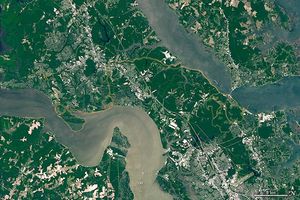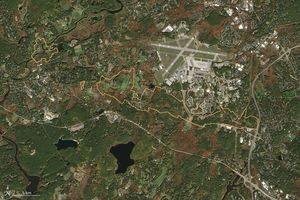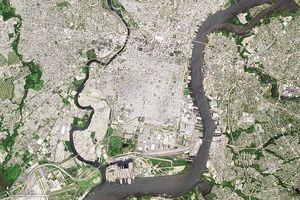























The origins of Memorial Day lie in the U.S. Civil War, a conflict that led to the deaths of nearly 700,000 Americans. By the waning days of the war, makeshift military cemeteries had sprung up throughout the country, but especially in the South and Mid-Atlantic, where much of the fighting occurred.
By the time the leader of the veterans' group Grand Army of the Republic declared May 30, 1868, as “Decoration Day”—a day for "strewing with flowers or otherwise decorating the graves of comrades who died in the defense of their country"—informal memorials and commemorative events were already happening.
The U.S. Department of Veterans Affairs notes that at least 25 places played a role in the early years of the holiday, including Columbus, Mississippi; Macon, Georgia; Columbus, Georgia; Richmond, Virginia; Boalsburg, Pennsylvania; and Carbondale, Illinois.
One of the earliest and largest ceremonies documented by historians occurred in Charleston, South Carolina. Confederate control of the badly damaged city had ended in February 1865, and Union troops had emancipated thousands of people there. Among the first tasks taken on was ensuring a proper burial for 257 soldiers found in mass graves near a racetrack at the Washington Race Course and Jockey Club, which had been used as a prison camp during the war.
After these soldiers had been re-interred in a new cemetery nearby, a crowd of roughly 10,000 people, including freedmen, missionaries, teachers, and soldiers, assembled at the racetrack and held a parade on May 1, 1865. The day featured thousands of schoolchildren carrying armloads of roses, women bearing flowers and wreaths, double-time marches by troops, choir performances of the "Star-Spangled Banner," and Bible recitations by local ministers.
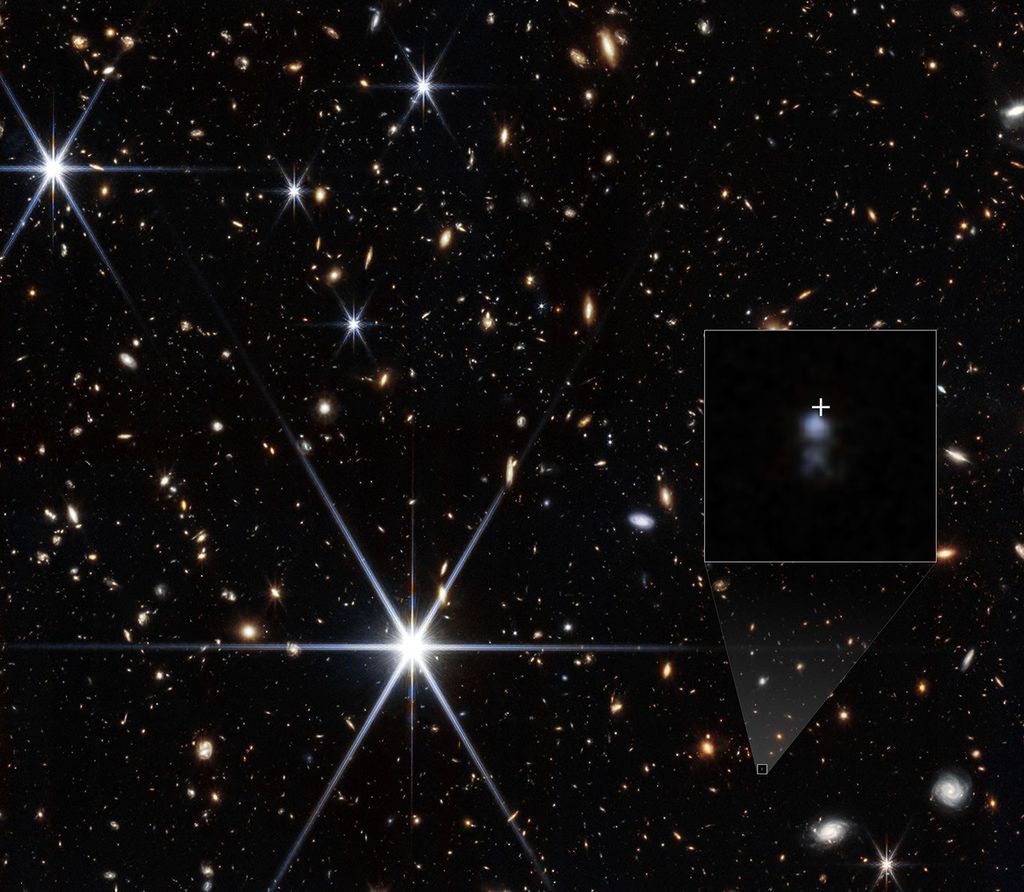
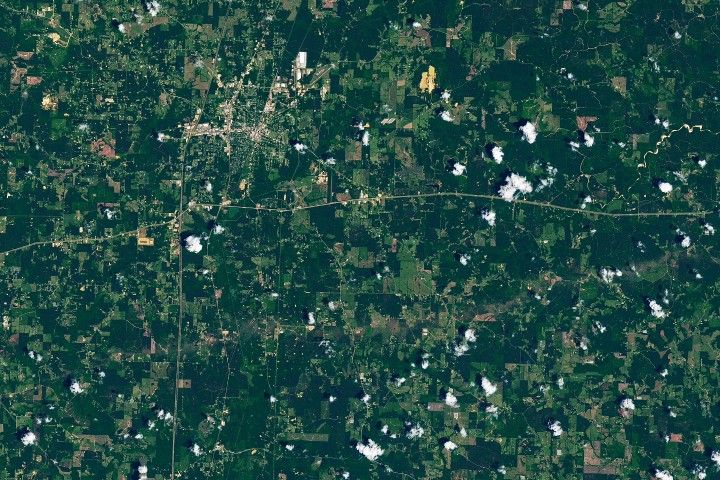
Much has changed in Charleston since the Civil War. The city has been rebuilt, and it has grown from a pre-war population of 40,000 to 160,000 today. Yet signs of the racetrack in what is now Hampton Park, where the early memorial event took place, remain visible—even to a sensor orbiting Earth on Landsat 9 (above).
In 1968, the federal government declared Memorial Day an official national holiday with the Uniform Monday Holiday Act, which moved Decoration Day celebrations from May 30 to the last Monday in May. This act followed a congressional resolution in 1966 that recognized a century of Memorial Day events in Waterloo, New York, acknowledging its claim as the "birthplace" of Memorial Day in honor of a commemorative event held there on May 5, 1866.

NASA Earth Observatory images by Michala Garrison, using Landsat data from the U.S. Geological Survey. Story by Adam Voiland.

References & Resources
- American Battle Monuments Commission (2014, May 23) From Decoration Day to Memorial Day: An American Tradition for Nearly 150 Years. Accessed May 21, 2026.
- American Battlefield Trust (2012, November 16) Civil War Casualties. Accessed May 21, 2026.
- Blight, D. (2015, April 27) The First Decoration Day. Accessed May 21, 2026.
- Charleston Area Branch of the Association for the Study of African American Life and History (2024, May 23) Decoration Day & Charleston’s Gullah Community: Honoring the Fallen First – Memorial Day. Accessed May 21, 2026.
- The College Today (2017, May 29) Memorial Day Uncovered: Charleston’s ‘Martyrs of the Race Course.’ Accessed May 21, 2026.
- The Historical Marker Database (2025, January 12) First Memorial Day. Accessed May 21, 2026.
- History.com (2026, May 4) One of the Earliest Memorial Day Ceremonies Was Held by Freed African Americans. Accessed May 21, 2026.
- National Archives (2018, May 24) The Nation’s Sacrifice: The Origins and Evolution of Memorial Day. Accessed May 21, 2026.
- National Archives (2024, May 23) Memorial Day: A Commemoration. Accessed May 21, 2026.
- National Cemetery Administration (2026) Memorial Day History. Accessed May 21, 2026.
- Time (2018, May 25) Lots of Places Claim to Be the Birthplace of Memorial Day. Here's the Truth, According to an Expert. Accessed May 21, 2026.
- U.S. Army Airborne & Special Operations, The History of Memorial Day. Accessed May 21, 2026.
- U.S. Department of Veterans Affairs, The Origins of Memorial Day. Accessed May 21, 2026.
- WCBD News2 (2022, May 29) First recorded Memorial Day observance took place in Hampton Park in 1865. Accessed May 21, 2026.