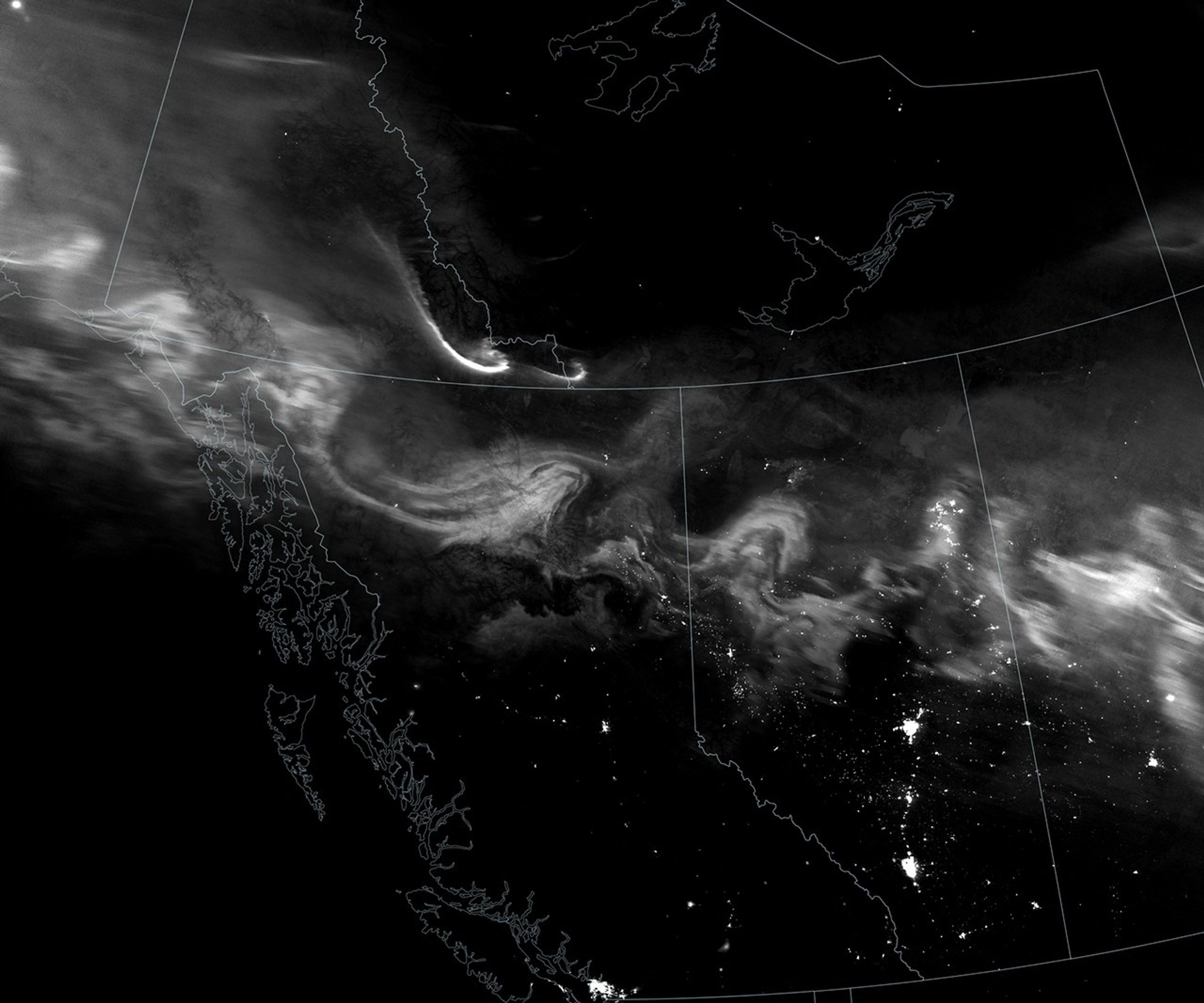















A flurry of solar activity in mid-December 2023 sent energized particles crashing into Earth’s magnetosphere, producing undulating auroras across northern latitudes of our planet. The VIIRS (Visible Infrared Imaging Radiometer Suite) on the NOAA-NASA Suomi NPP satellite captured this image of light from the aurora over western Canada in the early morning of December 17, 2023. The day-night band of VIIRS detects nighttime light in a range of wavelengths from green to near-infrared and uses filtering techniques to observe signals such as city lights, reflected moonlight, and auroras.
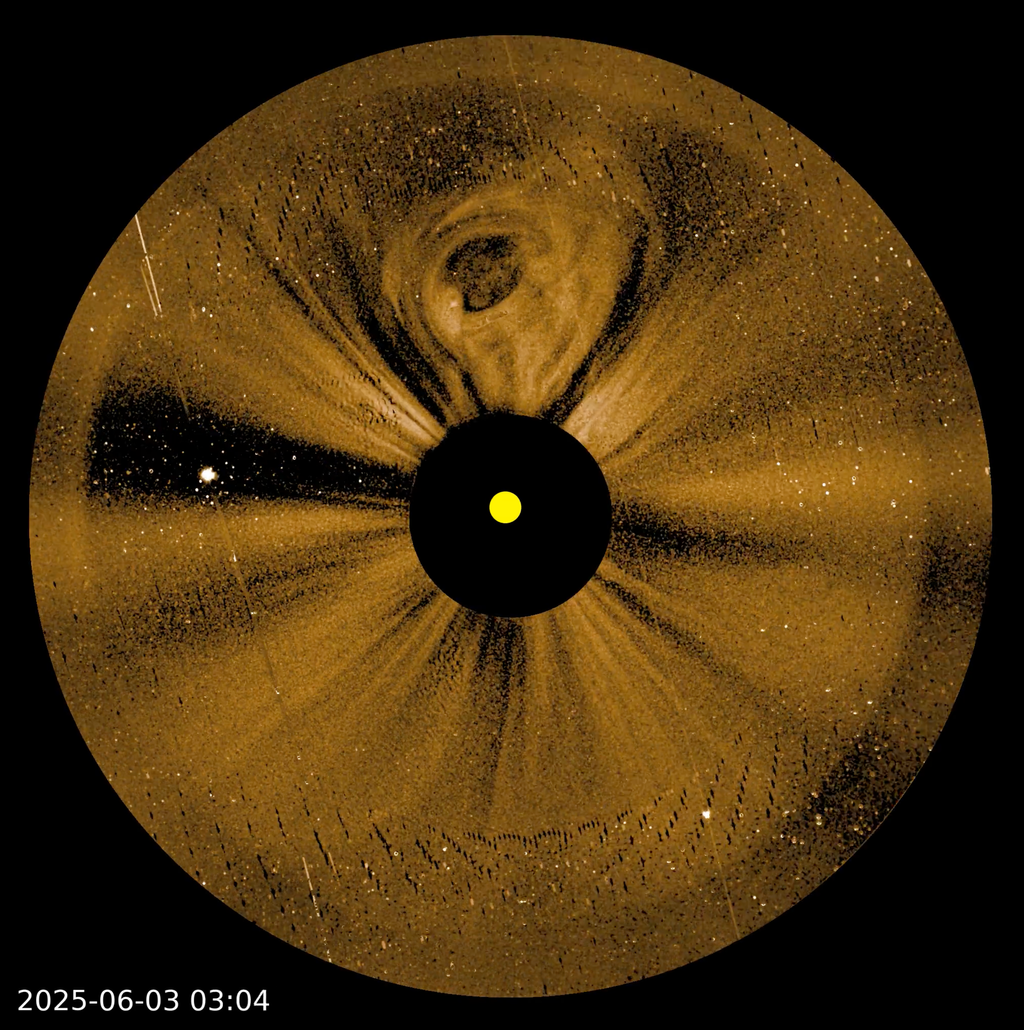
These auroras may have stemmed from several coronal mass ejections that were observed on December 14 and 15. Minor to moderate geomagnetic storm conditions were expected in the following days, according to NOAA’s Space Weather Prediction Center. Coronal mass ejections contain large amounts of plasma from the Sun’s corona and carry with them an embedded magnetic field. Interactions between these expulsions from the Sun and the upper atmosphere of Earth produce light that makes up colorful aurora displays.
The Sun’s activity is ramping up as it approaches the peak of solar cycle 25, forecast to occur in or around July 2025. The Sun’s magnetic field flips at the peak of these cycles, each of which lasts approximately 11 years. Scientists track fluctuations in solar activity in part by monitoring the number and location of sunspots—dark blotches on the Sun’s surface that are the main source of solar eruptions.
The aurora seen here occurred several days after the strongest solar flare of this solar cycle so far. Whereas coronal mass ejections may take several days to travel to Earth, solar flares reach the planet in a matter of minutes and interfere with radio communications. Coronal mass ejections often, but not always, occur in tandem with solar flares.
References & Resources
- The Conversation (2023, March 29) What are auroras, and why do they come in different shapes and colours? Two experts explain. Accessed December 18, 2023.
- Earth.com (2023, December 17) “NOAA Warning”: Strong solar storm event will cause auroras and disruptions today. Accessed December 18, 2023.
- NASA (2020, September 15) How Scientists Around the World Track the Solar Cycle. Accessed December 18, 2023.
- NASA Solar Cycle 25 Is Here. NASA, NOAA Scientists Explain What That Means. Accessed December 18, 2023.
- NASA Science Aurorasaurus. Accessed December 18, 2023.
- NOAA Space Weather Prediction Center Solar Cycle Progression. Accessed December 18, 2023.
- NOAA Space Weather Prediction Center (2023, December 14) Strongest Solar Flare of this Solar Cycle. Accessed December 18, 2023.
- NOAA Space Weather Prediction Center (2023, December 15) G1-G2 (Minor-Moderate) Geomagnetic Storm Watches 16-17 Dec, 2023. Accessed December 18, 2023.
NASA Earth Observatory image by Lauren Dauphin, using VIIRS day-night band data from the Suomi National Polar-orbiting Partnership . Story by Lindsey Doermann .