

















June 9-21, 2023
Biparjoy Swamps Western India
After making landfall on June 15, 2023, in western India as a severe cyclonic storm, Cyclone Biparjoy’s winds began to weaken. However, intense rains continued to pour down on parts of Gujarat, Rajasthan, and Madhya Pradesh over the next several days as the slow-moving storm moved inland and toward the northeast, triggering widespread flooding.
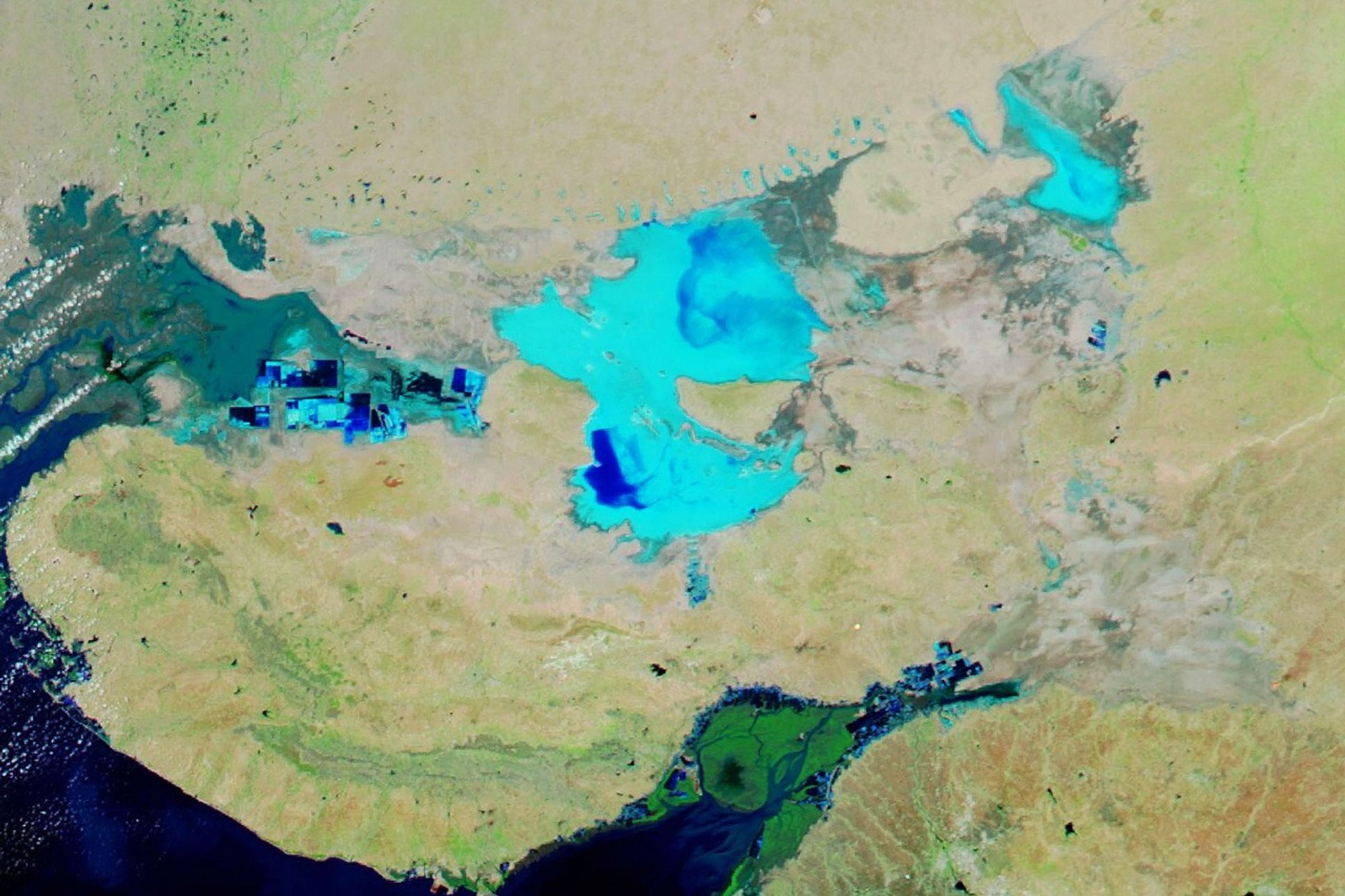
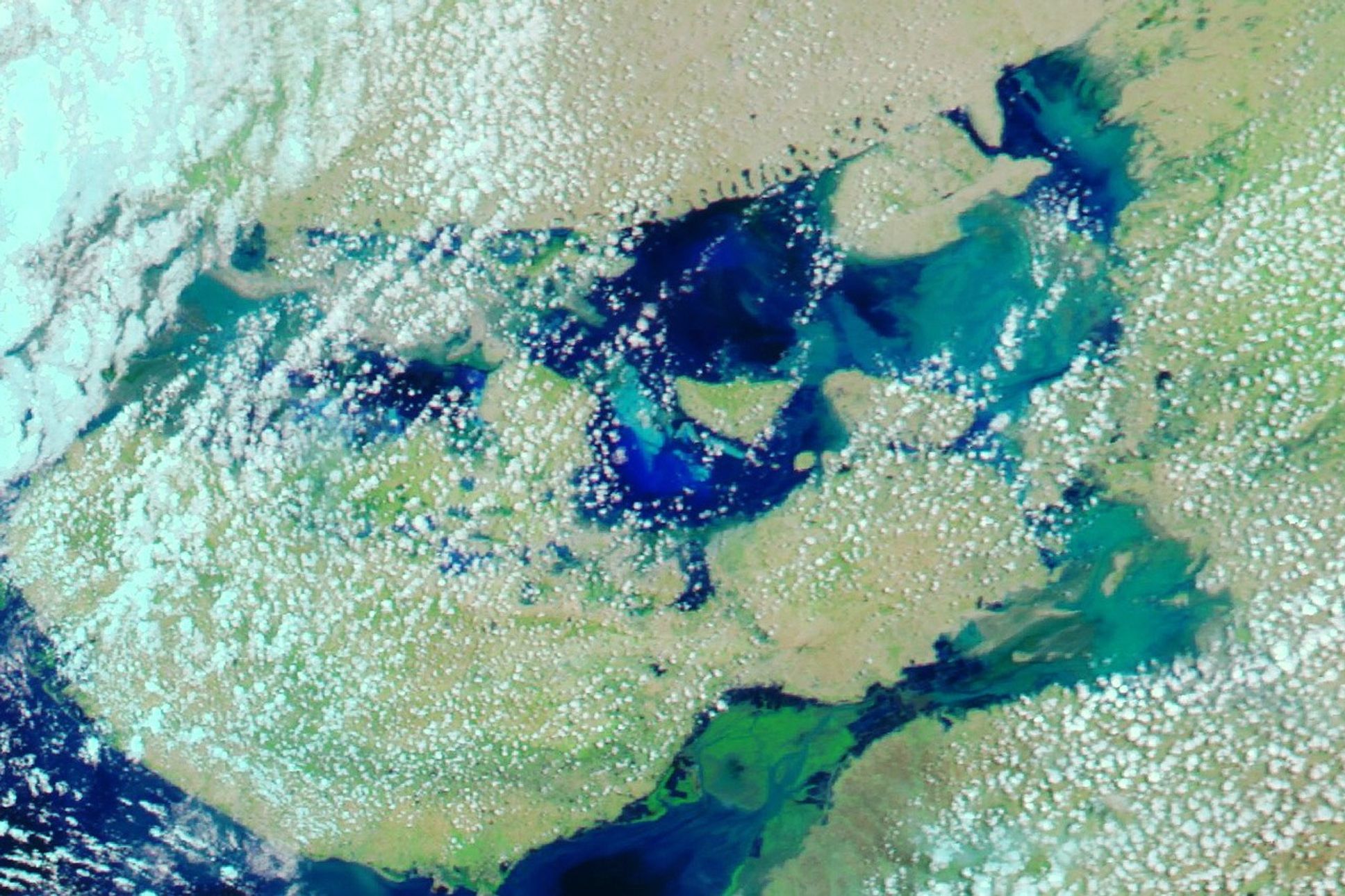
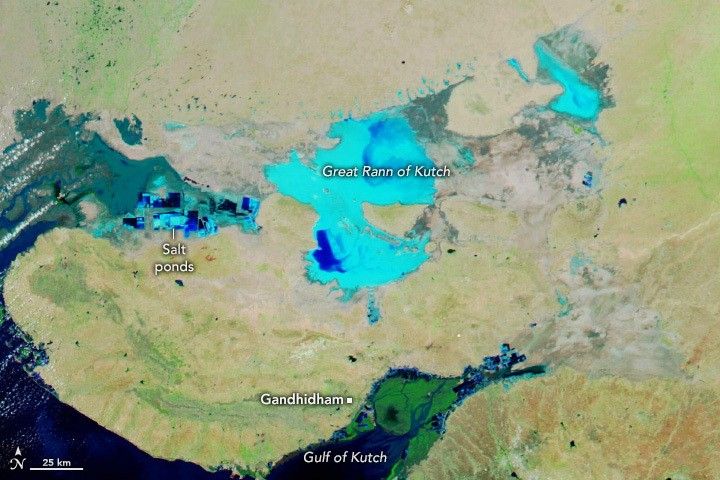
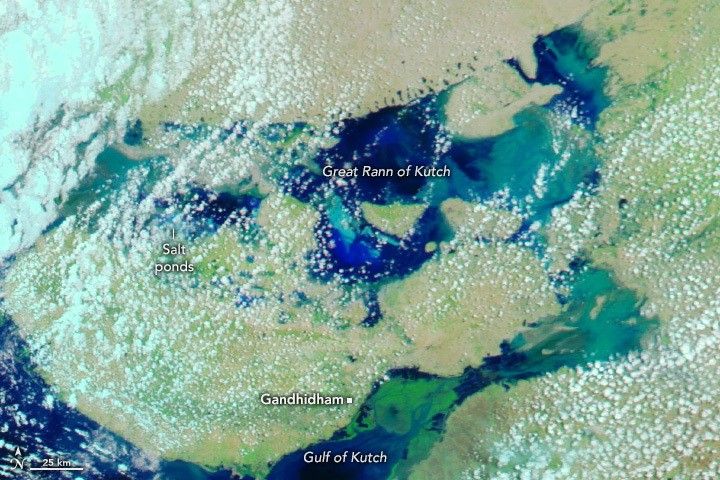
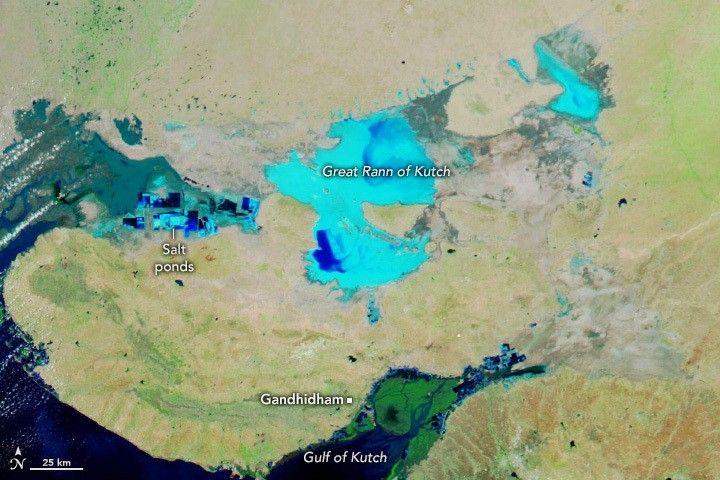
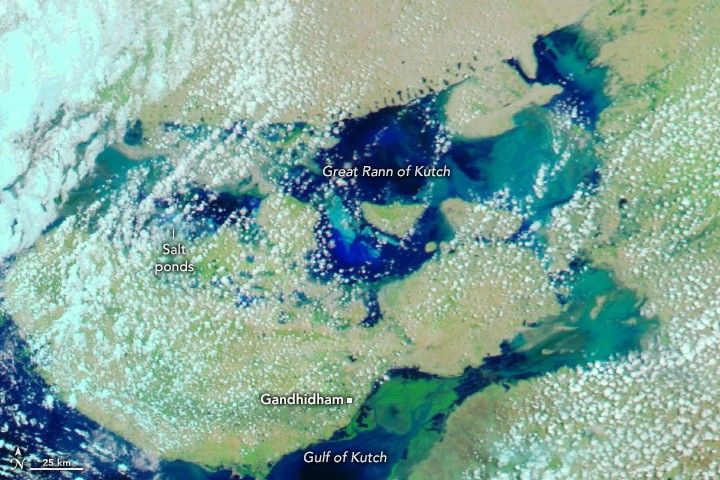
Flooding was visible on June 21 (right) when the Moderate Resolution Imaging Spectroradiometer (MODIS) on NASA’s Aqua satellite passed over the region. The same area is shown on June 9 (left), before Biparjoy moved ashore. In these false-color images, which use MODIS bands 7-2-1, areas flooded with sediment-laden water appear greenish blue. Water with less suspended sediment appears dark blue. The large light blue areas in the June 9 image are dry natural salt pans. The rectangular features on the left side of the images are evaporation ponds used to produce salt.
Water pooled in low-lying wildlife sanctuaries and salt flats in the area, including the Great Rann of Kutch. But water also swept through towns and cities surrounding these sparsely populated areas. In the process, it flooded tens of thousands of homes, caused power outages, swamped farmland, and displaced tens of thousands of people. The Indian news outlet ETV Bharat even reported a sharp increase in snake bites in one part of Rajasthan because of the flooding.
According to the India Meteorological Department, Cyclone Biparjoy was one of the longest-lived cyclones ever observed in the North Indian Ocean. The average lifespan of a tropical cyclone in this region is six days and three hours; Biparjoy persisted for 13 days and three hours, nearly topping a 1977 storm that lasted for 14 days and six hours.
Cyclones in the Arabian Sea are relatively rare, although they are becoming more frequent with rising sea surface temperatures. A 2021 study led by researchers in India found that cyclones over the last four decades have become more frequent and have lasted longer. The researchers found that ocean temperatures were linked to this change.
References & Resources
- Deshpande, M., et al. (2021) Changing status of tropical cyclones over the north Indian Ocean. Climate Dynamics, 57, 3545-3567.
- ETV Bharat (2023, June 19) After Cyclone Biparjoy, snakebite patients flood Rajasthan hospital. Accessed June 27, 2023.
- France24 (2023, June 16) Deadly cyclone Biparjoy uproots power lines after making landfall in India, heads towards Pakistan. Accessed June 27, 2023.
- Hindustan Times (2023, June 21) Remnants of Cyclone Biparjoy leave a trail of destruction in Rajasthan and record rainfall in Chennai, India. Accessed June 27, 2023.
- NASA Earth Observatory (2023, June 15) Cyclone Biparjoy Churns Toward India and Pakistan. Accessed June 27, 2023.
- NASA Earthdata (2023) Tropical Cyclones Data Pathfinder. Accessed June 27, 2023.
- The Watchers (2023, June 21) Remnants of Cyclone Biparjoy leave a trail of destruction in Rajasthan and record rainfall in Chennai, India. Accessed June 27, 2023.
- The Weather Channel (2023, June 22) Cyclone Biparjoy Triggers Devastating floods in five Rajasthan districts. Accessed June 27, 2023.
NASA Earth Observatory image by Wanmei Liang, using MODIS data from NASA EOSDIS LANCE and GIBS/Worldview . Story by Adam Voiland .