









Auroras are a brilliant reminder that Earth is constantly absorbing energy from the Sun—even on the night side. Our nearest star bathes the planet in streams of energetic particles, magnetic fields, and radiation that stimulate our atmosphere and occasionally light up the night sky.
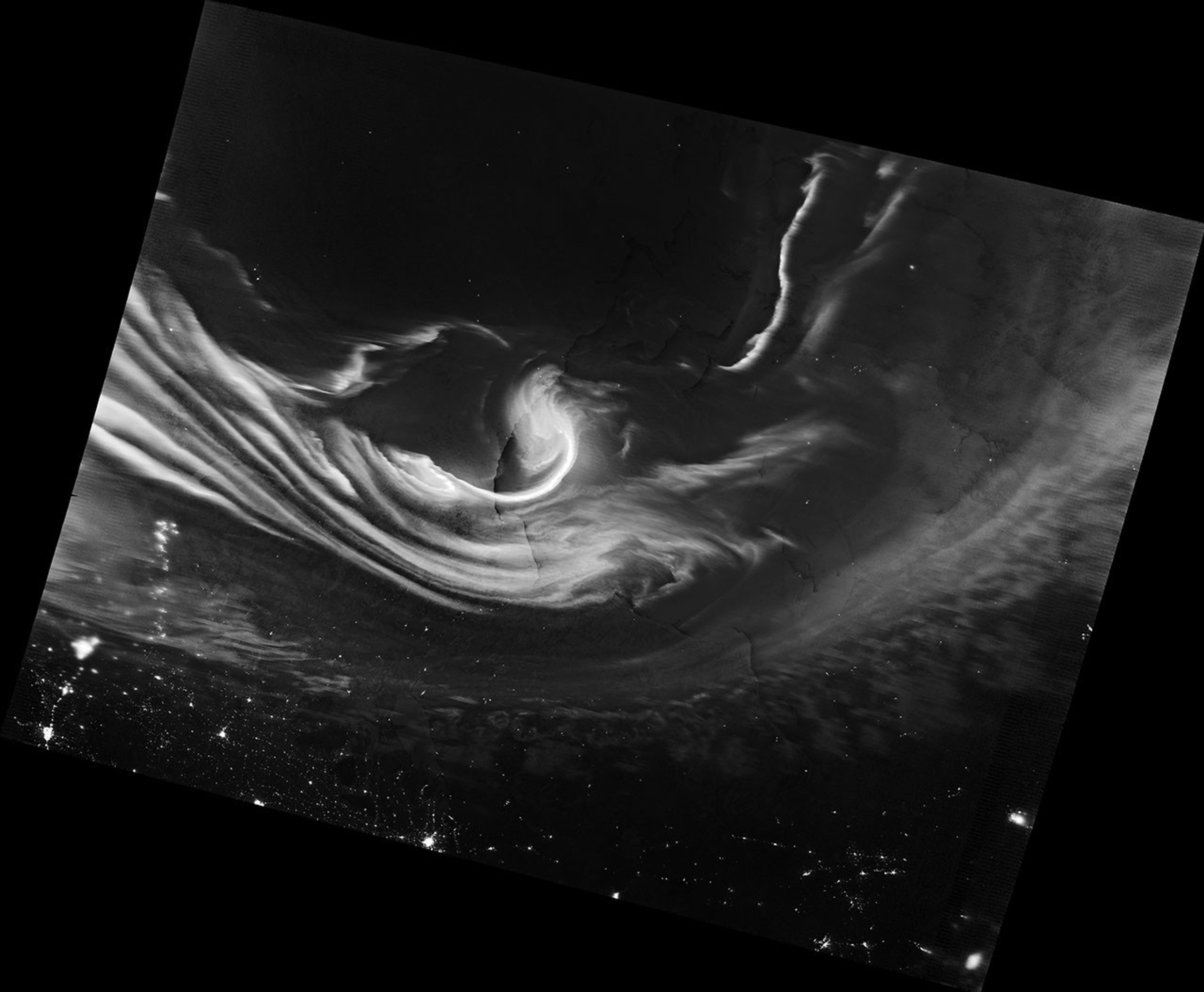
At 2:20 a.m. Central Daylight Time (08:20 Universal Time) on February 4, 2022, the Visible Infrared Imaging Radiometer Suite (VIIRS) on the Suomi NPP satellite acquired this image of the aurora borealis, or “northern lights,” over central Canada and Hudson Bay. (Auroras were visible for three consecutive nights over North America and Northern Europe.) The nighttime image was made possible through the VIIRS “day-night band,” which measures nighttime light emissions and reflections including airglow, city lights, and reflected moonlight.
The auroras were a visible manifestation of a minor geomagnetic storm—a disturbance of the upper atmosphere caused by the interaction of pressure waves and electromagnetic energy from the Sun interacting with Earth’s magnetic field (or magnetosphere). In this case, the Sun was spewing streams of high-speed solar wind through a temporary hole in the solar corona.
The collision of solar particles and pressure into Earth’s magnetosphere accelerates particles already trapped in the space around Earth (such as in the radiation belts). Those particles are sent crashing into Earth’s upper atmosphere at altitudes of 100 to 400 kilometers (60 to 250 miles), where they excite oxygen and nitrogen molecules and release photons. The results are rays, sheets, and curtains of dancing light in the sky.
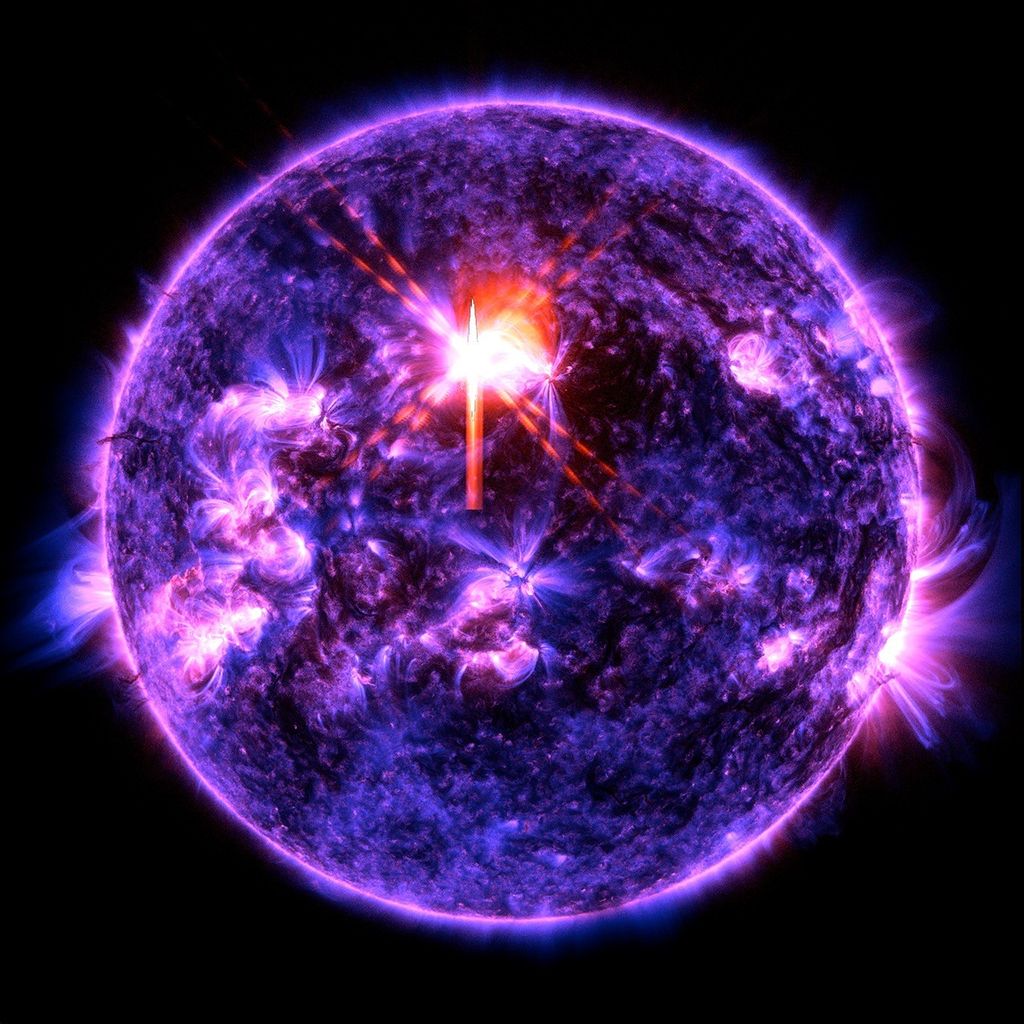
Solar Cycle 25 is now underway, and that means more frequent opportunities to see auroras. Solar cycles are traditionally measured by the rise and fall in the number of sunspots, but they also coincide with increases in solar flares, coronal mass ejections (CMEs), radio emissions, and other forms of space weather. Scientists have forecasted that the Sun will reach its next peak of activity (solar maximum) in mid-2025.
You can participate in aurora citizen science through a project called Aurorasaurus. The project tracks auroras around the world via reports to its website and on Twitter, then generates a real-time global map of those reports. Citizen scientists verify the tweets and reports, and each verified sighting serves as a valuable data point for scientists to analyze and incorporate into space weather models. The project is a public-private partnership with the New Mexico Consortium and supported by the National Science Foundation and NASA.
References & Resources
NASA Earth Observatory image by Joshua Stevens , using VIIRS day-night band data from the Suomi National Polar-orbiting Partnership . Story by Michael Carlowicz .