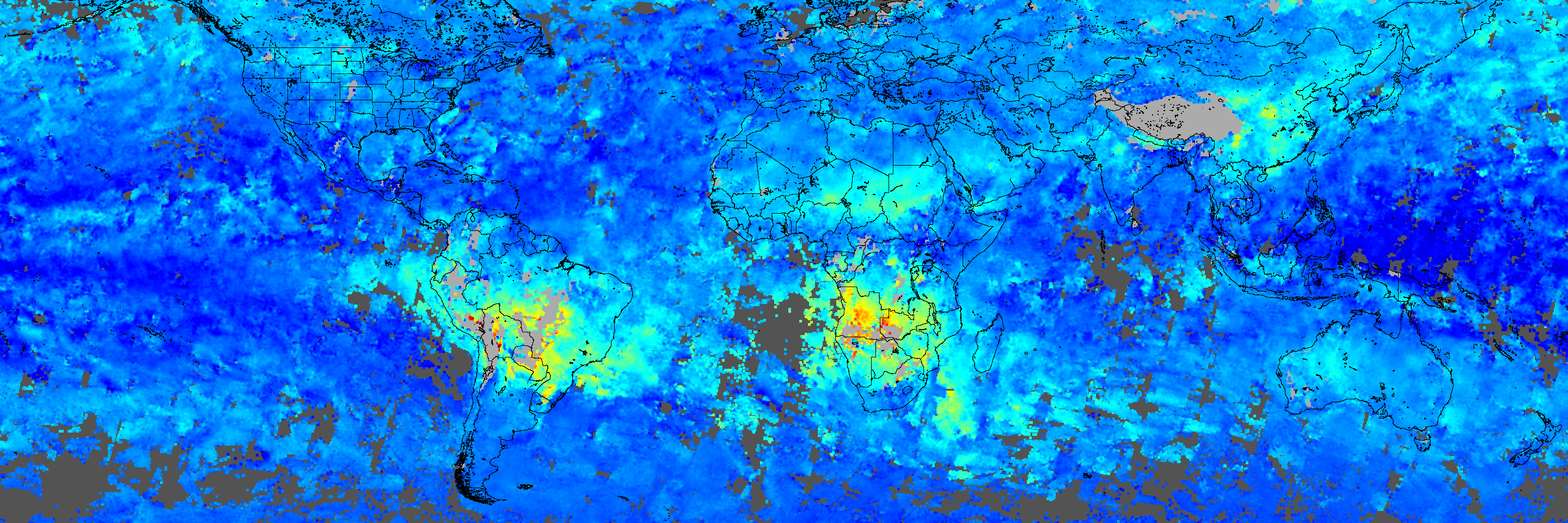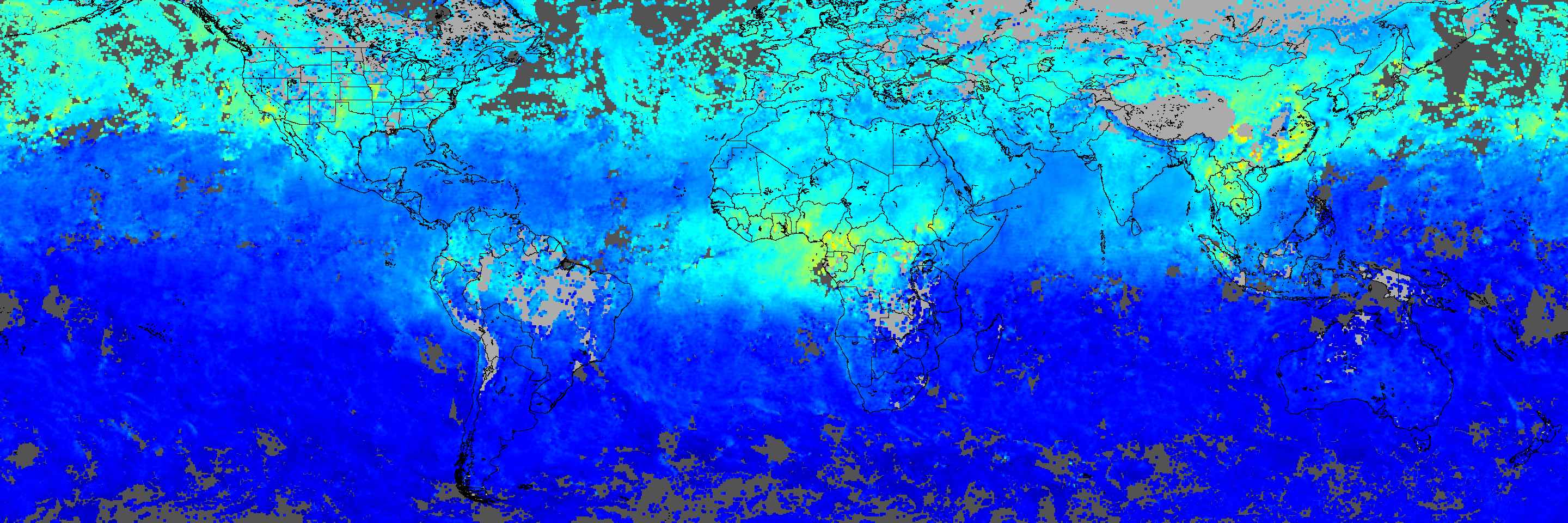












- September 17-27, 2004 (2.8 MB)
- February 17-27, 2004 (2.7 MB)
Vegetation burning in the Southern Hemisphere peaks during the dry season months between July and September. Burning of vegetation biomass releases various particles and trace gases into the atmosphere, includingcarbon monoxide (CO). The emissions from fires in South Americaand South Equatorial Africa significantly contribute to the global COburden during this season, as is evident in the false-color images above. The pair of images compares the CO concentrations measured in the lower troposphere forFebruary (bottom) and September (top) 2004.
While the Northern Hemisphere clearlydominates the CO budget in February when biomass burning in the SouthernHemisphere is low, the fire season in the Southern Hemisphere becomes animportant component to the global CO budget in September.
The data have been taken with the Measurements of Pollution in theTroposphere (MOPITT) instrument launched onboard NASAâs Terrasatellite in December 1999. The images show the averaged COconcentrations in parts per billion (ppb) at 700 mbar (~3 km altitude)for February 17-27, 2004, and September 17-27,2004, respectively. High CO levels are indicated in red, while blueshades represent low CO concentrations. Missing data either due toclouds or due to high surface altitude (e.g. over the Andes or theHimalaya) are colored in gray.
References & Resources
Data courtesy of the NCAR and University of Toronto MOPITT Teams