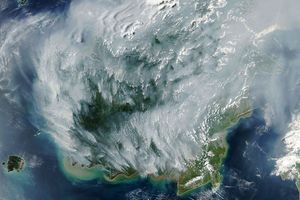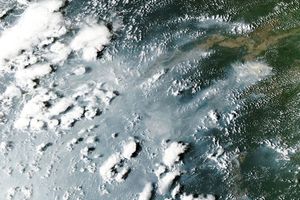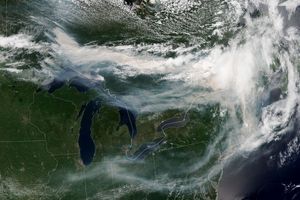



















Forest fires, for example those caused by lightning strikes, have long been part of many ecosystems. However, fires are having greater and greater impacts on the land and the atmosphere as the scale of the burning increases with human activity. Burning of forest and grassland is used in many regions for the purpose of land clearing, such as in Southeast Asia, where the yearly agricultural burning is at its peak.
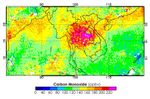
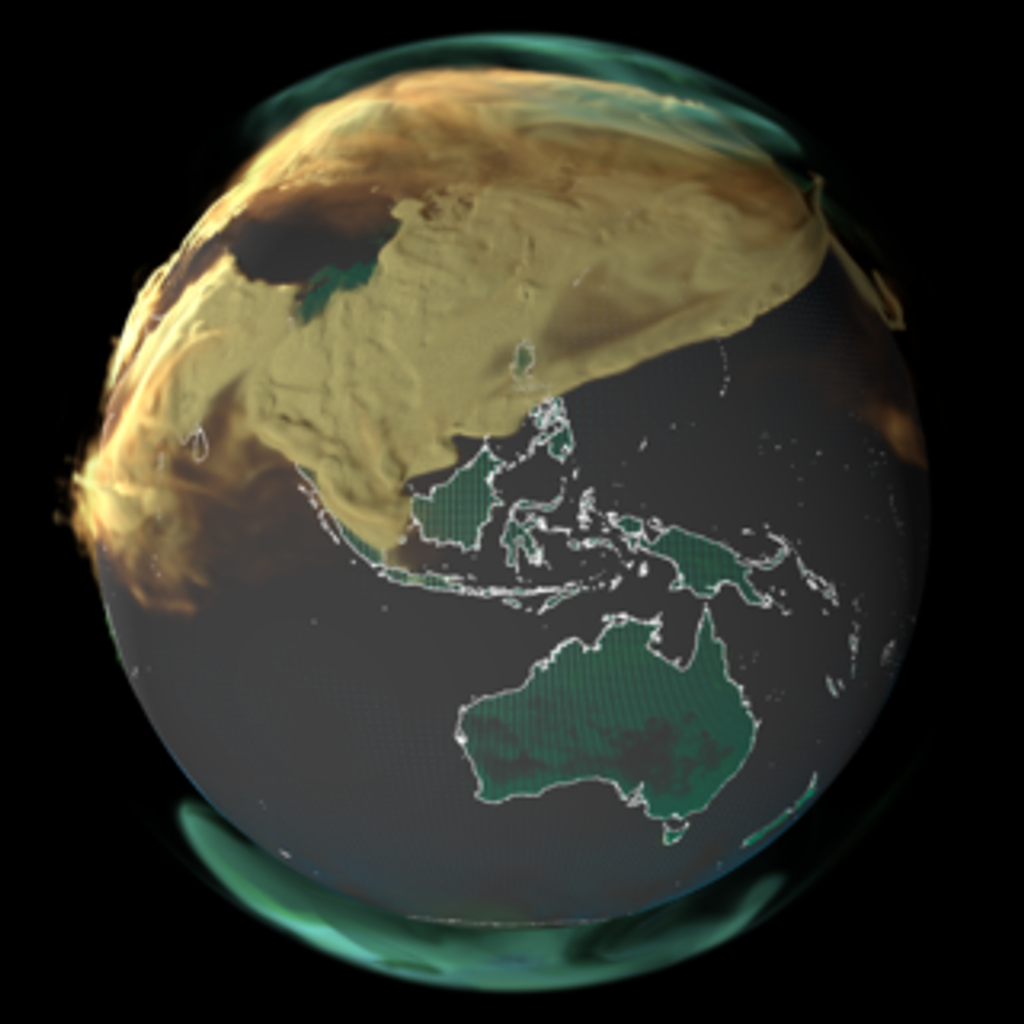
Among other pollutants and particles, biomass burning releases high amounts of carbon monoxide (CO) into the atmosphere. Atmospheric CO levels have been measured since March 2000 by the Measurements of Pollution in the Troposphere (MOPITT) remote-sensing instrument onboard NASA’s Terra satellite. The image above shows the observed CO concentrations at 700 hPa (~3 kilometers altitude) over Southeast Asia for January 20-30, 2005. The high concentrations of CO coming from the fires are clearly seen in the data, as is the transport of this pollutant towards the East.
References & Resources
Image courtesy of the NCAR and University of Toronto MOPITT teams