

















December 14, 2017
Curvy Contrails
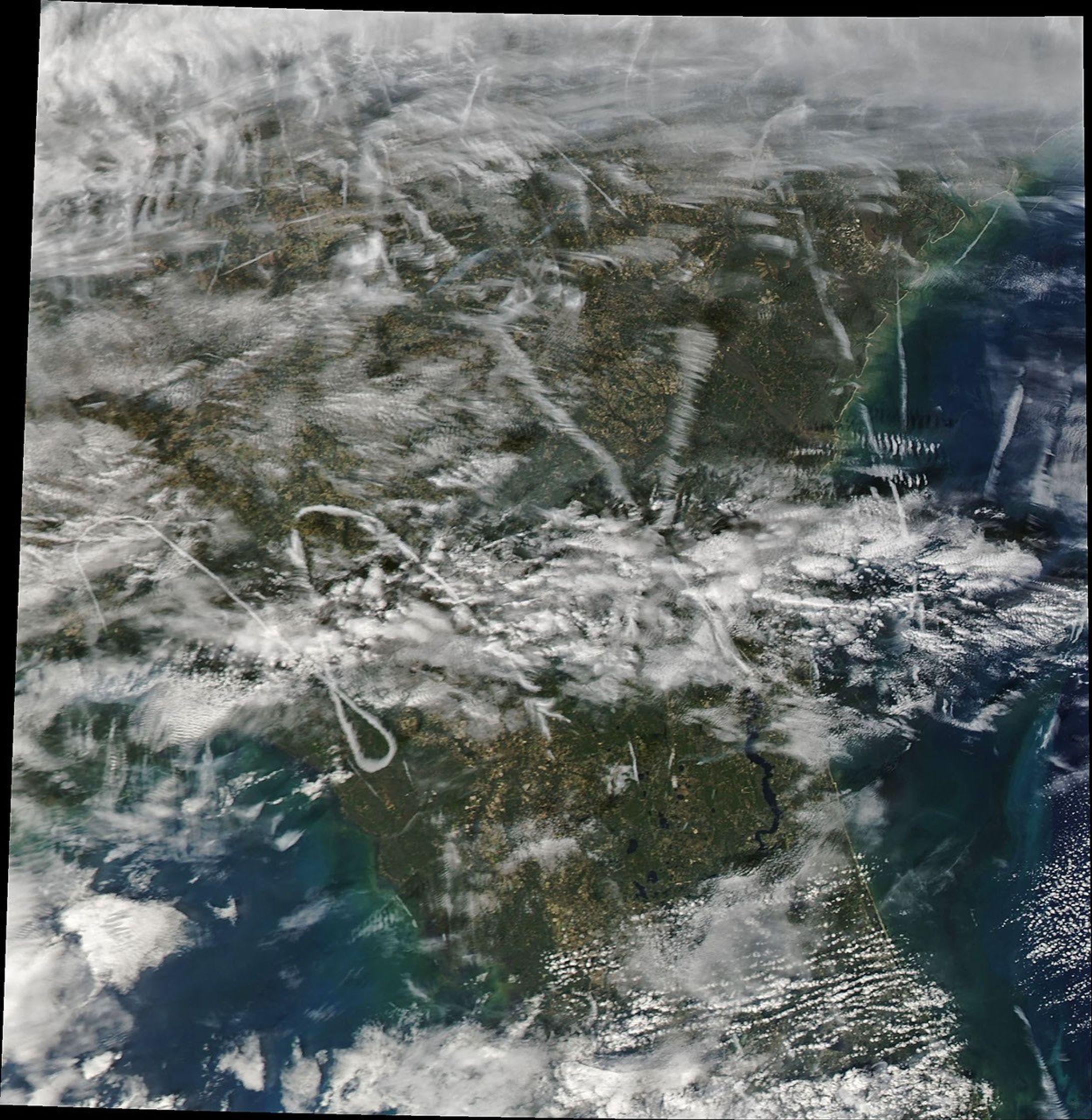
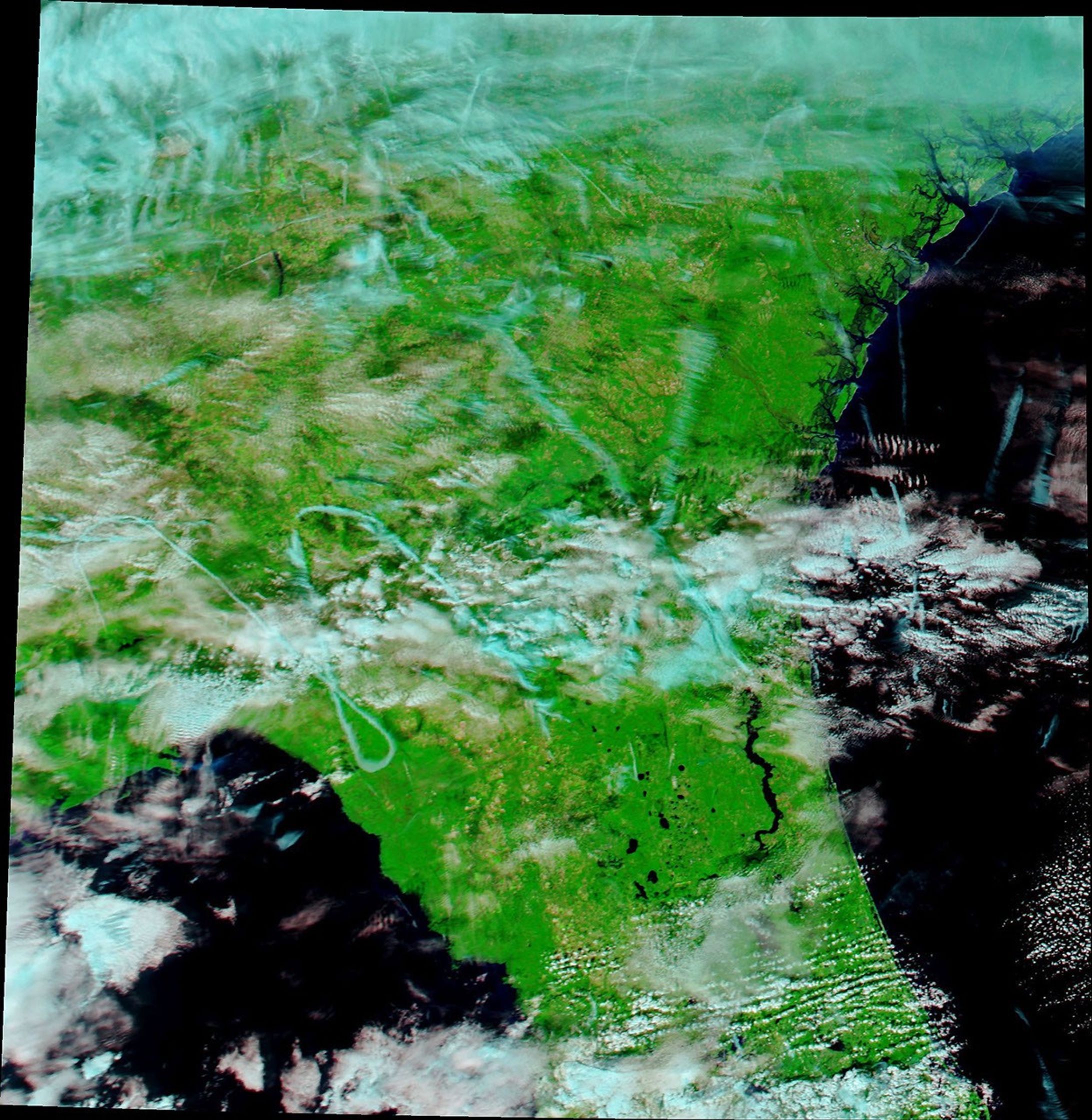
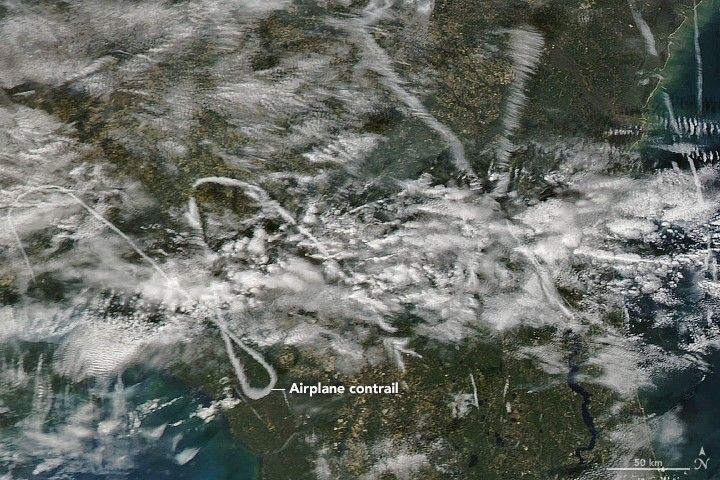
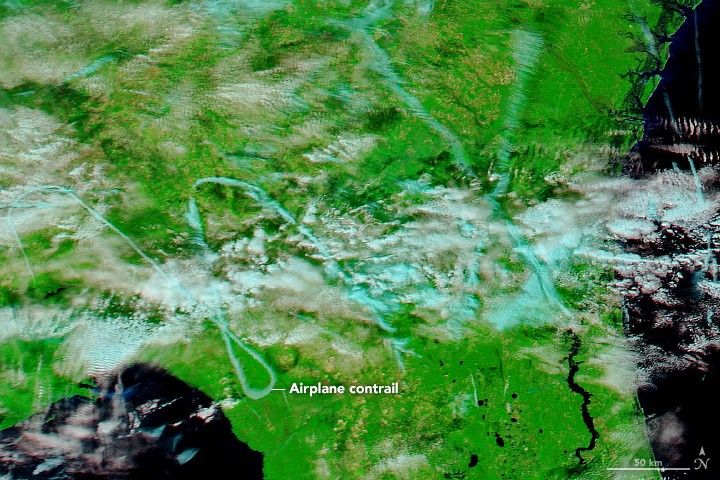
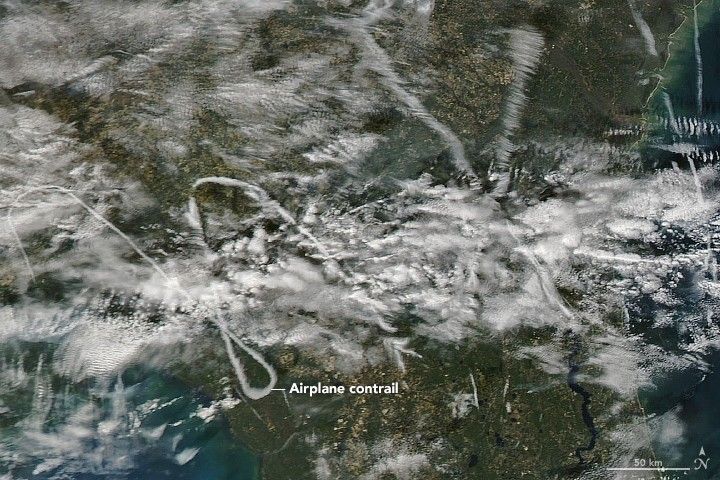
On December 14, 2017, cloud scientist Bastiaan Van Diedenhoven spotted curious patterns in the sky over Florida and Georgia. The shapes—visible in natural color (top) and false-color (bottom) images from the Moderate Resolution Imaging Spectroradiometer (MODIS) on NASA’s Aqua satellite—were sketched by aircraft.
“These are definitely contrails,” said Van Diedenhoven, a researcher for Columbia University and NASA’s Goddard Institute for Space Studies. “Patterns like this don’t form naturally.”
Condensation trails, or contrails, are a type of cirrus cloud that forms in nearly the same way as naturally occurring cirrus. The difference lies in the source of ingredients. Aircraft exhaust contains an abundance of water vapor and small particles. At high altitudes, where it’s cold enough—at least -39°C (-38°F)—the water vapor can easily freeze onto the particles and form the long, narrow clouds.
The blue areas in the false-color image indicate ice, which is consistent with the icy composition of contrail cirrus. When the air temperature and humidity allow the ice crystals to stay solid, cirrus clouds can stick around for hours and move with the winds. In this case, the relatively long lifetime, unique shape, and isolation of the contrails made them easier than most to see from space.
“These are not uncommon, but can be hard to spot,” Van Diedenhoven said. “Often aircraft need to circle to wait for a chance to land at a nearby airport. I think these patterns are also hard to spot because of the busy air traffic and all the resulting overlapping contrails when the air conditions are conducive for creating contrails.”
Another clear example of curvy contrails occurred in March 2016, when half-circles were visible in the sky off the east coast of England. Van Diedenhoven identified the source to be a Royal Air Force aircraft, which he guesses might have been doing a research flight.
References & Resources
- Worldview (2017, December 14) Aqua MODIS.
- NASA Earth Observatory (2013, February 21) Criss-Crossing Contrails.
NASA Earth Observatory image by Joshua Stevens, using MODIS data from LANCE/EOSDIS Rapid Response . Story by Kathryn Hansen.