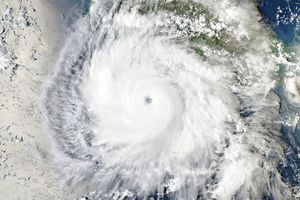








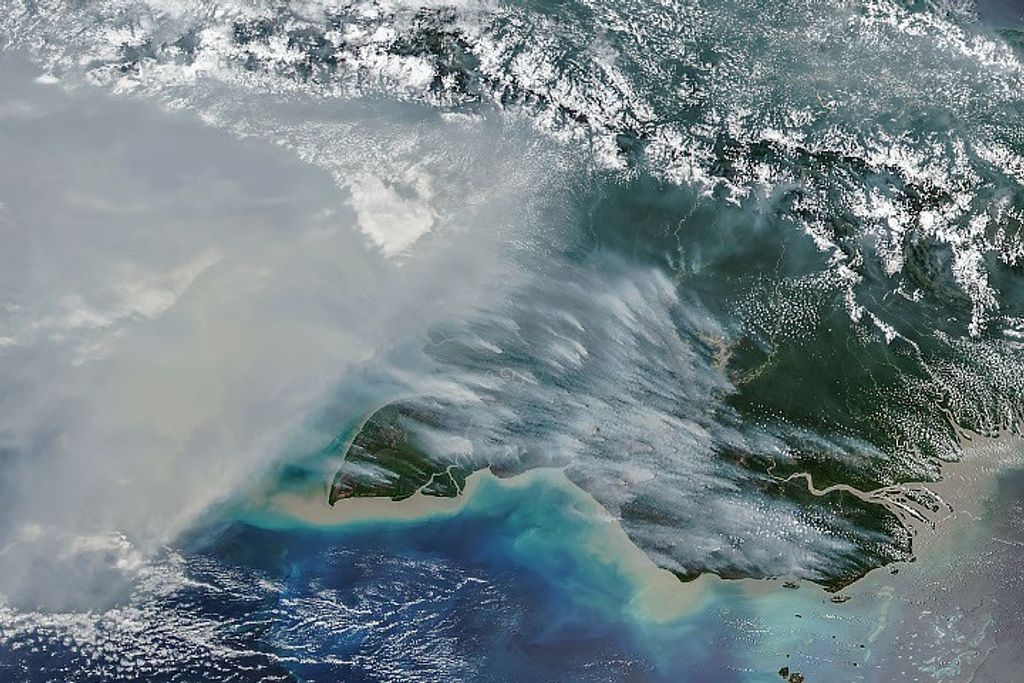





















NASA’s Aqua satellite captured this image of tropical cyclone Nathan as it bore down on northeastern Queensland in March 2015. Though hundreds of kilometers offshore in the Coral Sea and moving south, forecasters expect the storm to turn back and make landfall near Cooktown on March 20, 2015.
The image was acquired by the Moderate Resolution Imaging Spectroradiometer (MODIS) at 1:35 p.m. local time (03:35 Universal Time) on March 17, 2015. According to Australia’s Bureau of Meteorology, the storm had maximum wind gusts of 100 kilometers (62 miles) per hour at the time, making it a category 1 cyclone. Nathan will likely strengthen into a Category 3 storm before making landfall.
It won’t be Queensland’s first encounter with the storm. Last week, the developing cyclone grazed northeastern Queensland before moving east over the Coral Sea. The first brush with Nathan produced drenching rains that caused many rivers in northeastern Queensland to flood, according to media reports.
MODIS captured earlier images of Nathan on March 16 and March 13.
References & Resources
- Australian Bureau of Meteorology (2015) Tropical Cyclone Nathan. Accessed March 17, 2015.
- Brisbane Times (2015, March 13) Cyclone Nathan moves away from coast as heavy rain continues. Accessed March 17, 2015.
- NineMSN (2015, March 13) Cooktown cut off by floodwaters as Cyclone Nathan moves further north. Accessed March 17, 2015.
- The Guardian (2015, March 15) Cyclone Nathan takes a breath at sea before returning to north Queensland. Accessed March 17, 2015.
NASA image courtesy Jeff Schmaltz, LANCE/EOSDIS MODIS Rapid Response Team at NASA GSFC. Caption by Adam Voiland.