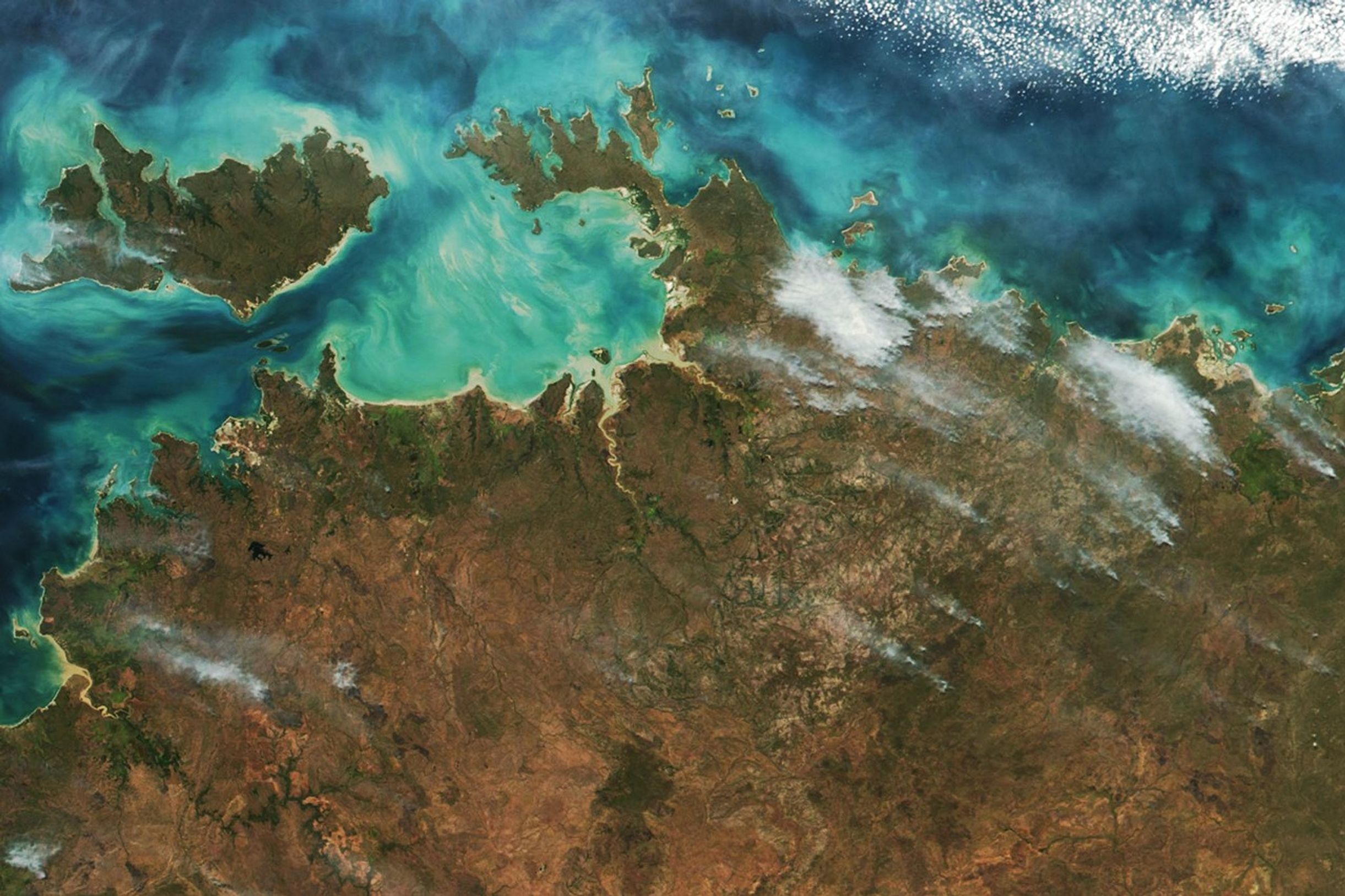





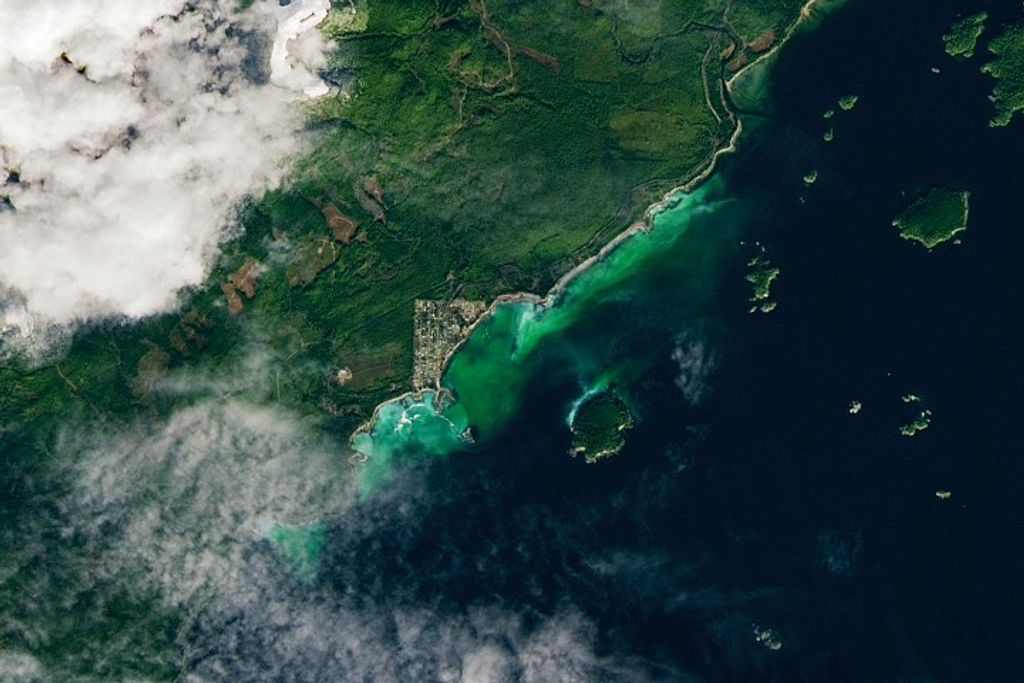














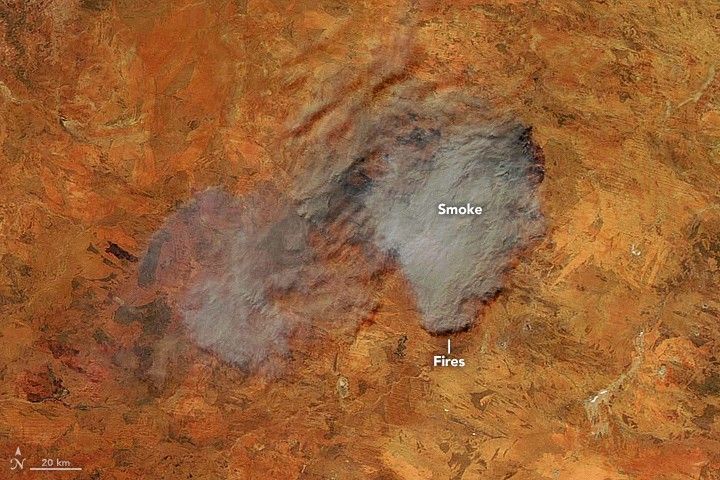
Fire is ubiquitous during Northern Territory’s dry season, which runs from April to December. As has been the case for months, the Moderate Resolution Imaging Spectroradiometer (MODIS) sensor on NASA’s Aqua satellite observed smoke and dozens of active fires as it passed over the region on June 5, 2018.
The type of vegetation burning varies with latitude. Areas nearest to the coast receive the most rain and support eucalyptus forests. Hummock grasslands grow in the drier areas, farther inland.
The first image shows fires in forested areas of Arnhem Land. The second image is a grass fire burning southeast of Lake Argyle, in the Tanami Desert on June 6, 2018.
People play a pivotal role in causing most of the fires in Northern Territory. Indigenous Australian communities frequently use fire to aid with hunting, to prepare crops, to clear roads, and for several other purposes. There are a few cattle ranches in this area that also use fire to manage pasture land.
Unusually dry weather in May 2018 primed the vegetation for burning. However, the total number of fires in Arnhem Land is still running a bit lower than average for April through July, explained Rick McRae, a risk analyst with the Australian Capital Territory government. Still, the number of fires in Arnhem Land is still quite high in comparison to other parts of Australia. Fire counts are also higher than normal in the Tanami Desert, which usually sees the most activity in July and August.
References & Resources
- Bryant C. (2018) Understanding bushfire: trends in deliberate vegetation fires in Australia. Accessed June 7, 2018.
- Savannah Explorer (2018) Fire in Australia's Tropical Savannas. Accessed June 7, 2018.
- Fire Australia Rangelands and Fire Information (2018) Fire Map. Accessed June 7, 2018.
- Northern Territory Fire and Rescue Service (2018) Fire Incident Map. Accessed June 7, 2018.
NASA Earth Observatory images by Lauren Dauphin, using MODIS data from LANCE/EOSDIS Rapid Response . Caption by Adam Voiland.