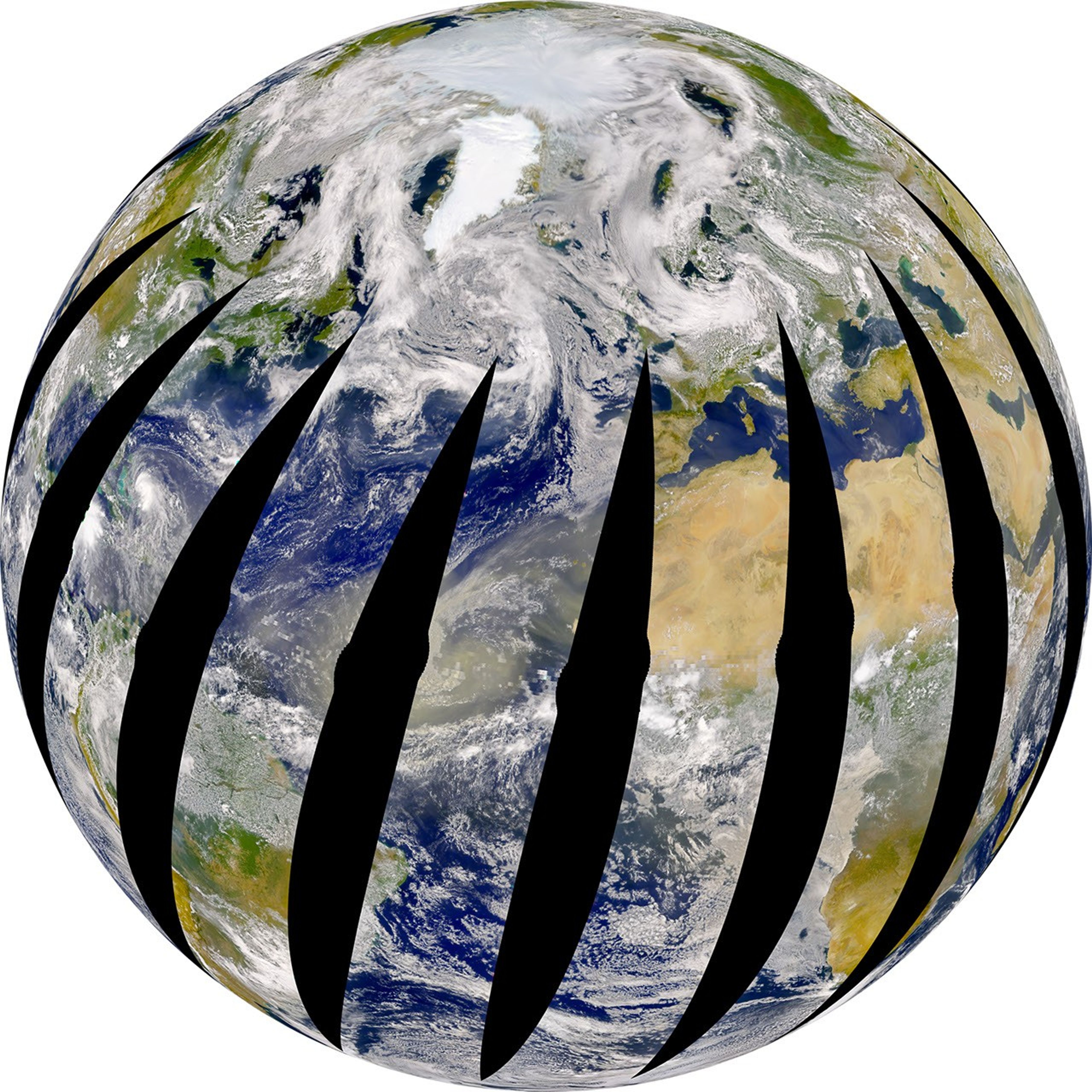

Floridians looking for a break from hurricane season in late July 2005 were in for a change, though it wasn't necessarily what they wanted: Saharan dust. By July 19, a massive dust storm crossed the Atlantic towards southern Florida. As reported by the South Florida Sun-Sentinel, on July 21, 2005, the dust was expected to linger over Florida for roughly 12 hours after its arrival.
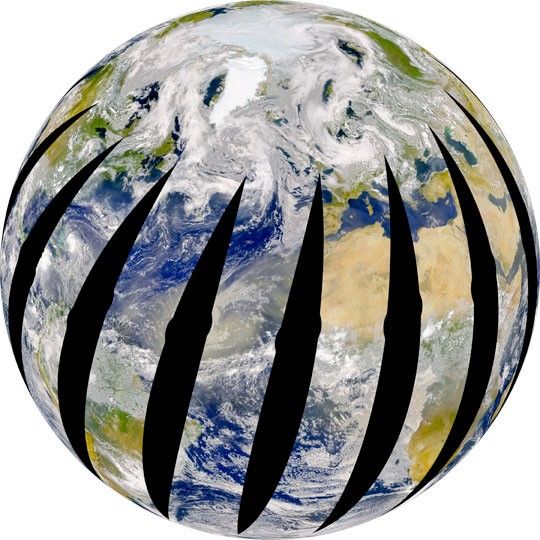
This image, captured by the Sea-viewing Wide Field-of-view Sensor (SeaWiFS) instrument, shows wide swaths of the planet. On the right is the Sahara Desert, Earth’s biggest dust-producing machine. In the far upper left is North America, this dust storm’s likely target. In the center of the picture, intermixed with clouds, is the swirling dust storm, nearly the size of the United States.
How damaging a dust cloud is depends on its dilution. Diluted clouds do little more than leave a thin coat of dust on cars, and add color to sunrises and sunsets. Thicker clouds spell trouble for people with respiratory ailments. Dust clouds also carry pathogens.
Saharan dust has decimated some species of Caribbean corals, yet without regular dustings, the Caribbean Islands themselves would be barren rock. Vegetation arose there thanks to dust from across the Atlantic. Saharan dust has also played a role in the development of the Amazon Rainforest.
- Recommended Further Reading:
- Holmes, H. (2001) The Secret Life of Dust. John Wiley and Sons, Inc., Hoboken, New Jersey.
References & Resources
Image provided by the SeaWiFS Project, NASA/Goddard Space Flight Center, and ORBIMAGE