














Nearly 80 percent of Greenland—the planet’s largest island—is covered by ice. But signs of autumn still show up on the landscape, especially along the island’s ice-free coastal areas. In addition to colorful changes in the Arctic tundra, large dust storms can arise at this time of year.
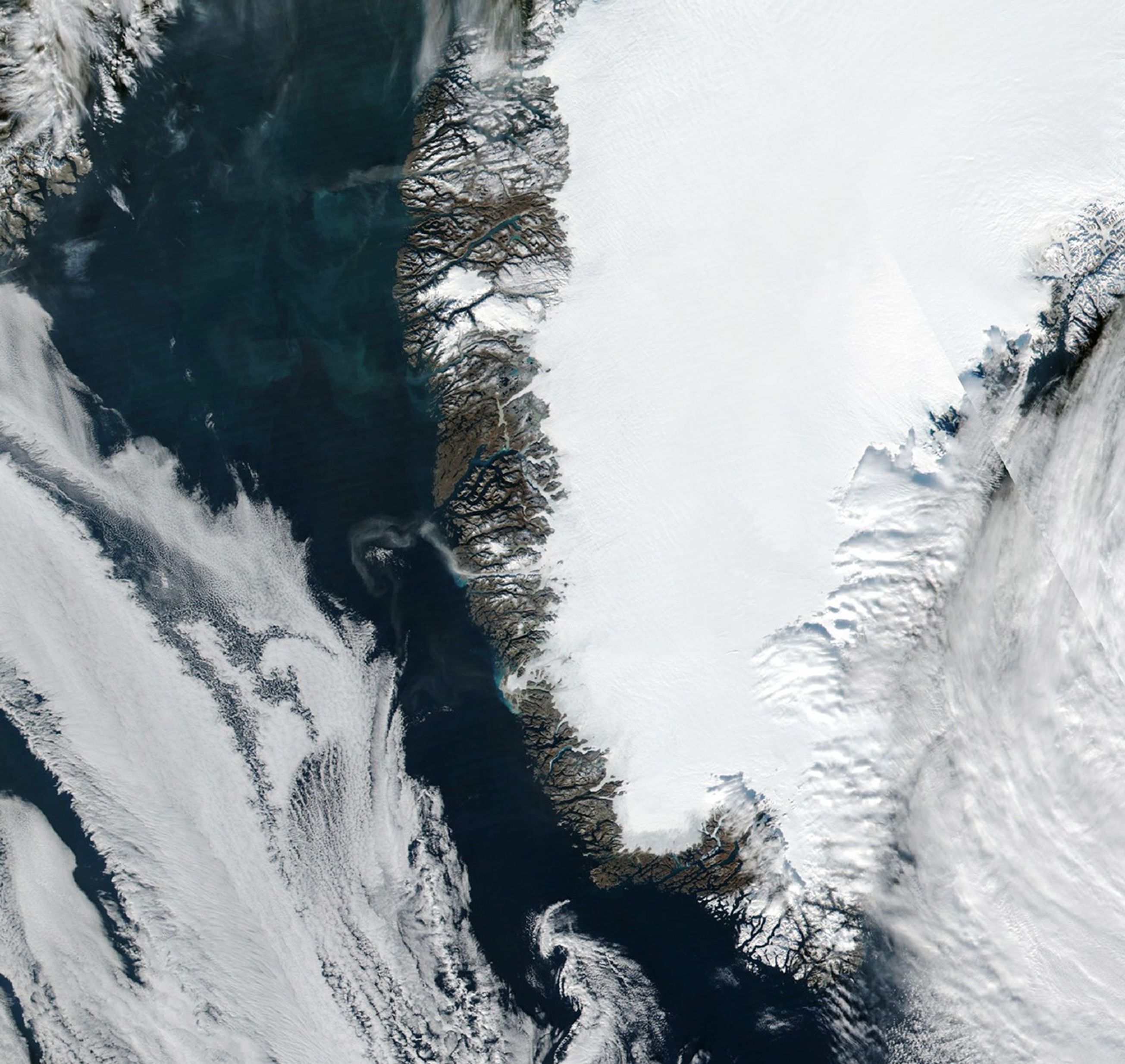
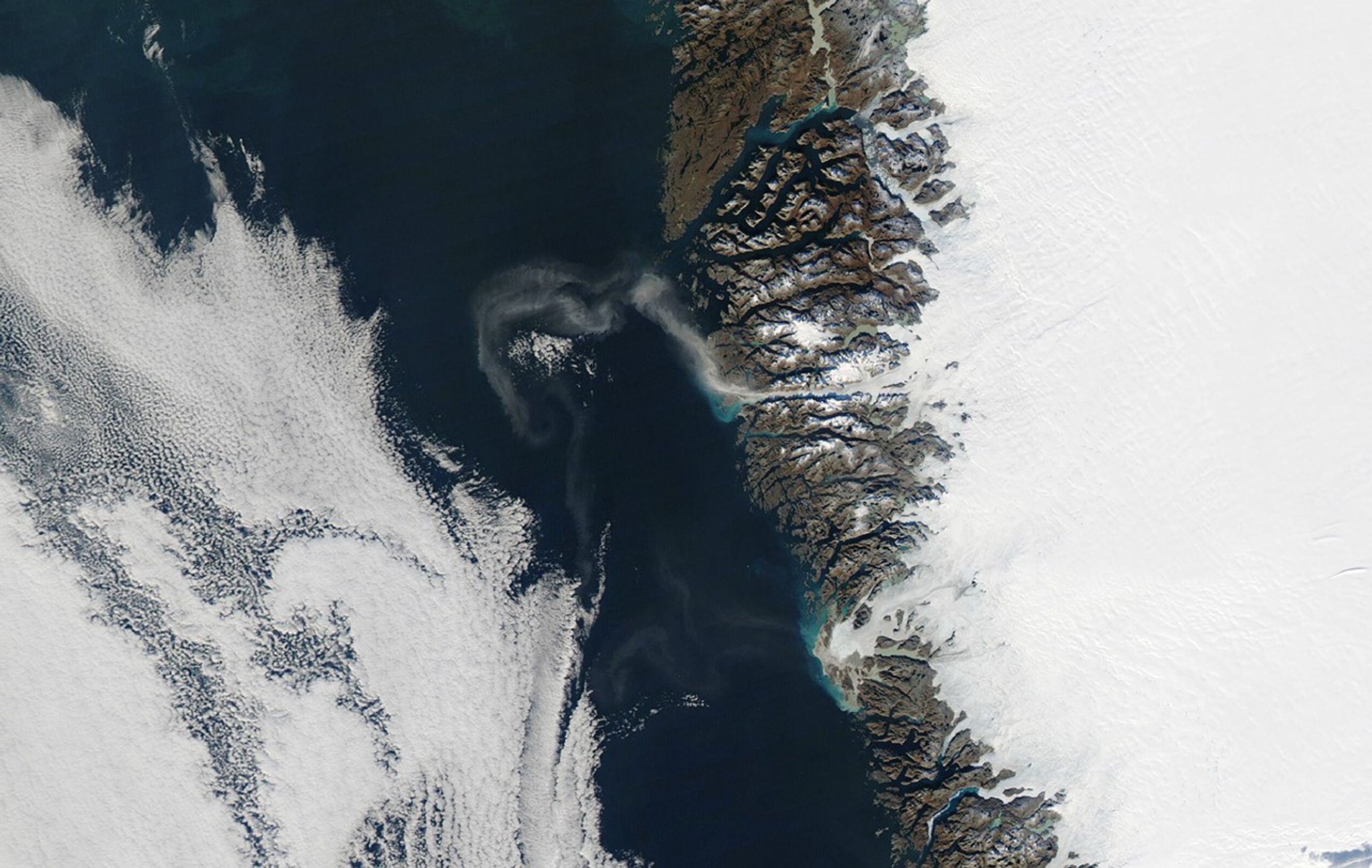
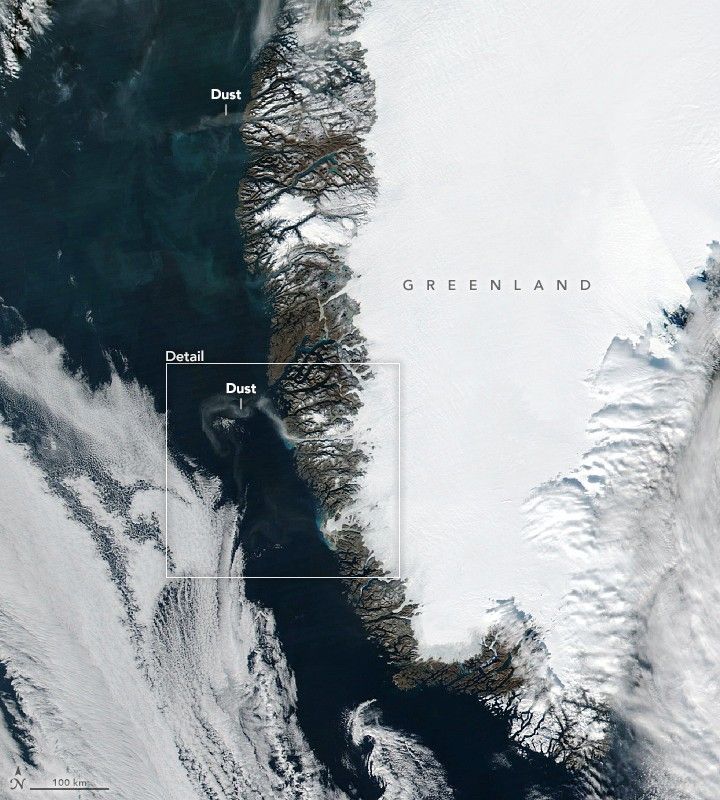
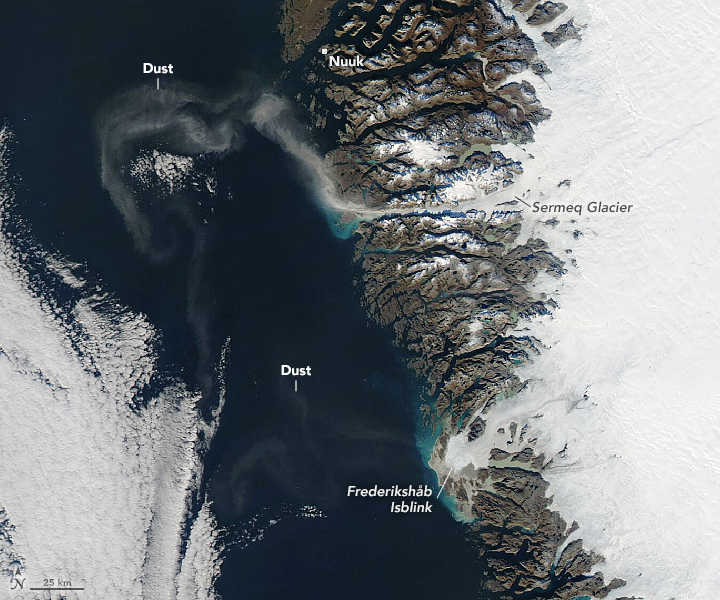
Dust was in the air on October 18, 2021, when the Visible Infrared Imaging Radiometer Suite (VIIRS) on the Suomi NPP satellite and the Moderate Resolution Imaging Spectroradiometer (MODIS) on NASA’s Aqua satellite acquired these images. At least four plumes were blowing westward from Greenland’s coast.
The “dust” in this image is actually glacial silt or “flour”—the dusty remains of rock that has been ground to powder by flowing glaciers. The material is so fine and lightweight that winds can easily loft it into the air.
According to NASA remote sensing scientist Santiago Gassó, large plumes like these are most common during the transition from summer to winter. In summer, rapidly moving streams and rivers carry meltwater away from the ice sheet and toward the ocean. By autumn, cooler temperatures cause melting to slow and rivers to recede, exposing large playas of glacial silt.
The detailed image above shows airborne silt arising from dry land near the Frederikshåb Isblink and Sermeq glaciers. Snow had not yet fallen on the area; when it does, it will prevent the wind from lifting more dust.
Even when silt is exposed at the surface, you still need strong winds to produce the plumes. Unlike dust from the Sahara—where convection can loft dust high into the atmosphere—the dust in these images stayed relatively low—Gassó estimated no higher than 1 to 2 kilometers in altitude.
Still the winds that are channeled through Greenland’s glacial valleys can produce strong gusts and carry dust hundreds of kilometers in a day. “This dust could get carried very far from the coast, potentially bringing nutrients to areas where nutrients are not easy to come by,” Gassó said.
The dust can also deliver nutrients locally. A study in 2021 showed that dust lofted from Greenland can provide mineral phosphorus that supports blooms of ice algae. Like soot or dust particles, algae can darken the ice, which lowers its albedo and hastens melting.
References & Resources
- McCutcheon, J. et al. (2021) Mineral phosphorus drives glacier algal blooms on the Greenland Ice Sheet. Nature Communications, 12 (570).
- NASA Earth Observatory (2018, October 17) Glacier Flour in Greenland Skies.
- Twitter (2018, October 17) Santiago Gassó.
NASA Earth Observatory images by Lauren Dauphin, using MODIS data from NASA EOSDIS LANCE and GIBS/Worldview and VIIRS data from NASA EOSDIS LANCE , GIBS/Worldview , and the Suomi National Polar-orbiting Partnership . Story by Kathryn Hansen .