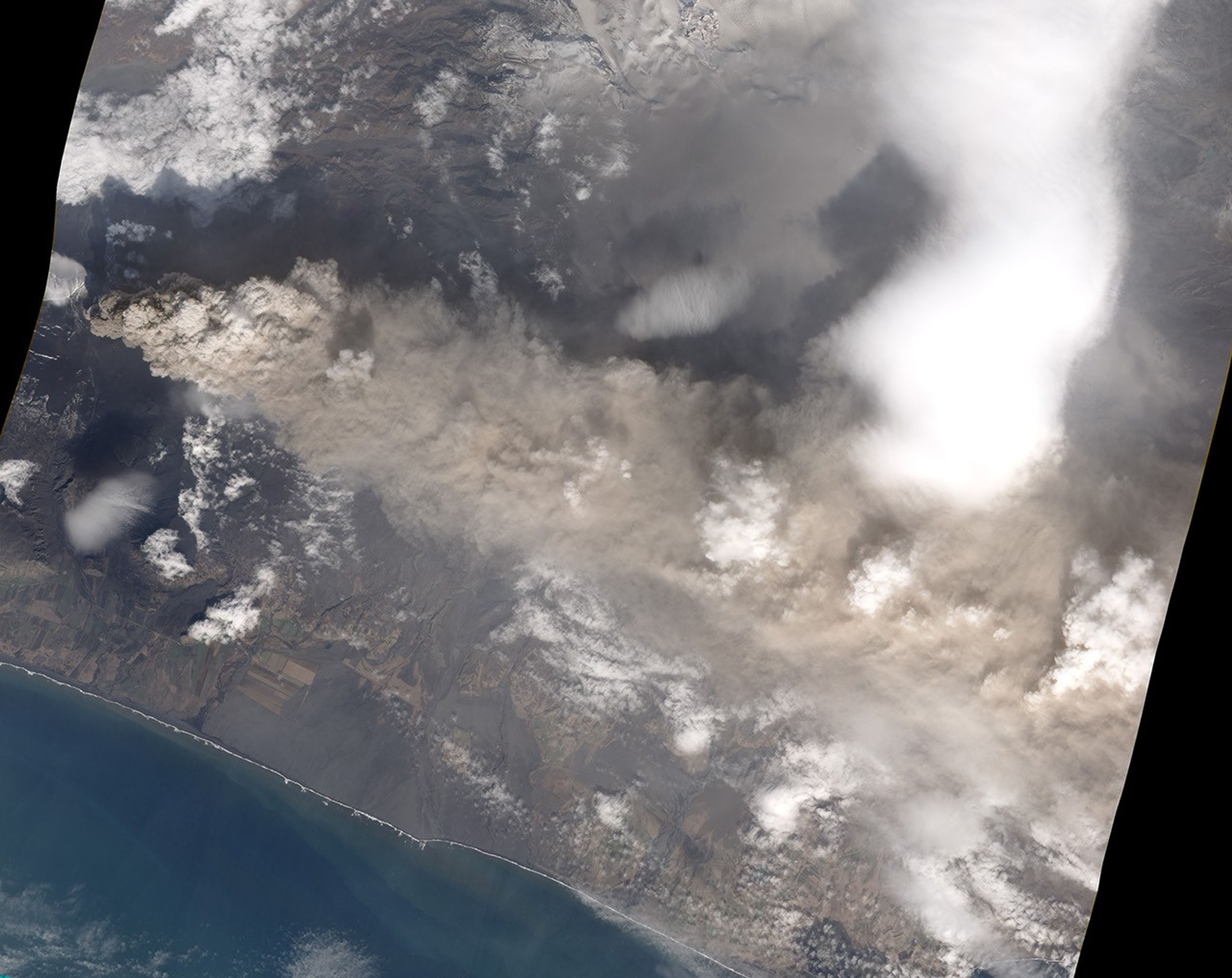




















Ash and steam billow from Iceland’s Eyjafjallajökull volcano in this detailed, natural-color image from the Advanced Land Imager on NASA’s Earth Observing-1 (EO-1) satellite on May 4, 2010. The ash plume on May 4 reached about six kilometers into the atmosphere, according to the Icelandic Coast Guard. The plume extended 300 to 400 kilometers southeast of the volcano, said the Icelandic Met Office. The south-blowing ash caused flight cancellations in Ireland and Scotland on May 5. Volcanic ash can clog and stop jet engines.
The Eyjafjallajökull Volcano began its eruption on March 20, 2010. Between April 14 and April 19, the volcano sent clouds of ash over Europe, closing airpace. The eruption shifted to a lava-producing phase throughout late April, but resumed explosive ash eruptions in early May. Starting on May 3, earthquakes started to shake the volcano, hinting that new magma is flowing into the volcano. According to the Iceland Met Office, there were no signs that the eruption was about to end as of May 6.
References & Resources
- Icelandic Met Office. (2010, May 6). Update on activity. Accessed May 6, 2010.
- Pogatchnik, S. (2010, May 6). Irish, Scottish airports reopen as ash heads west. Associated Press. Accessed May 6, 2010.
NASA image by Robert Simmon, using ALI data from the EO-1 team. Caption by Holli Riebeek.