




















October 21, 2013
Fall Colors in Pennsylvania
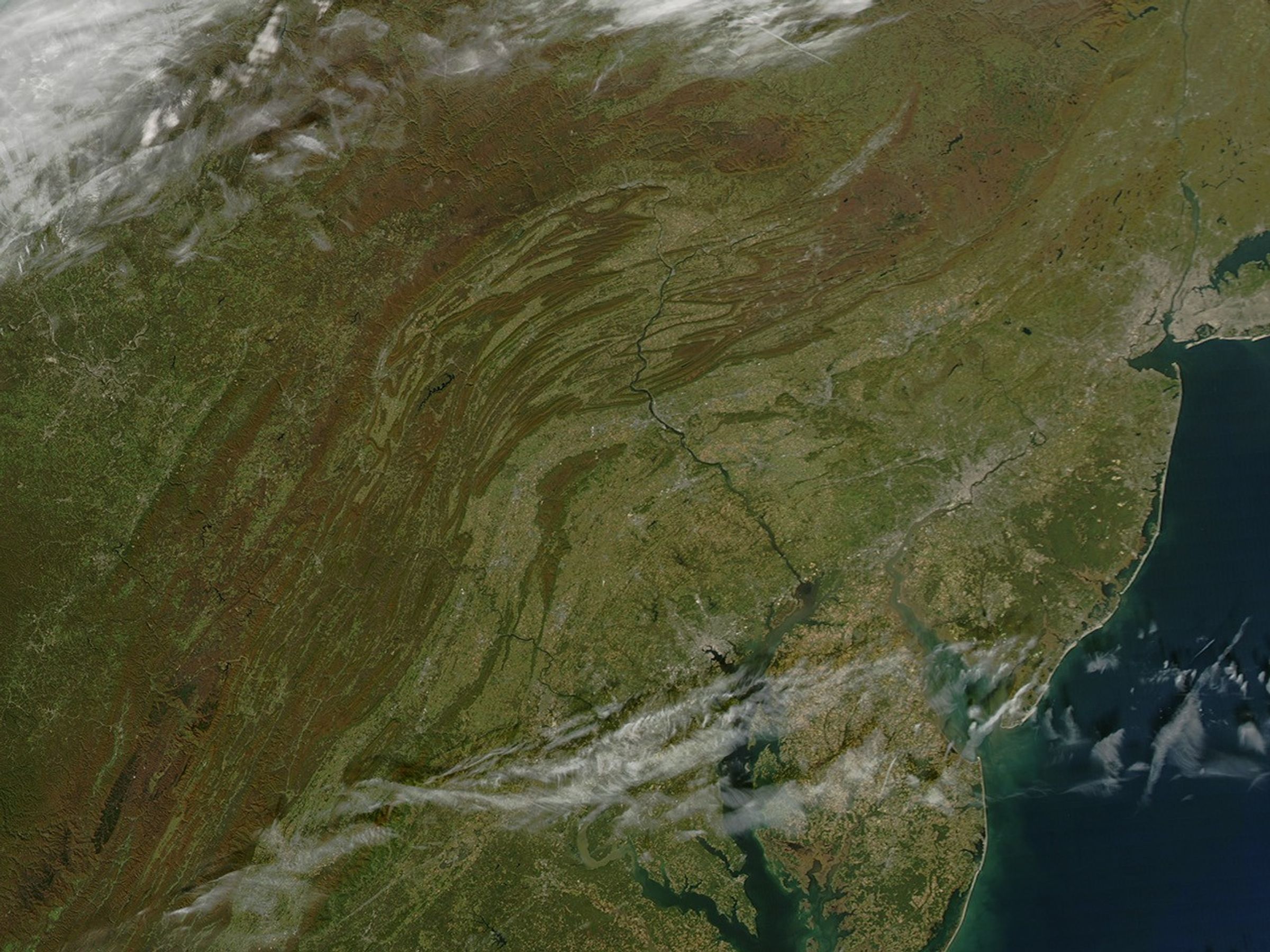
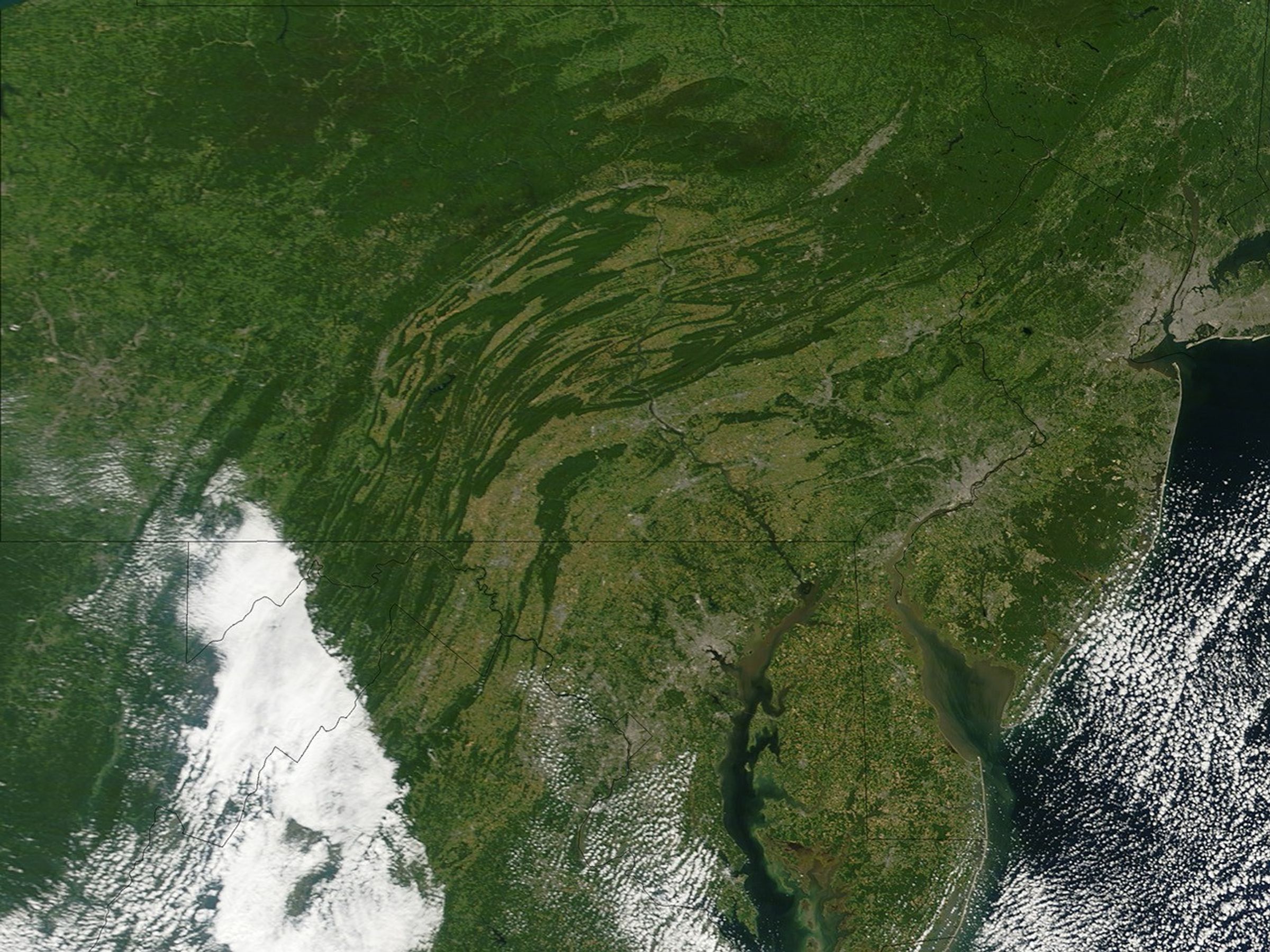
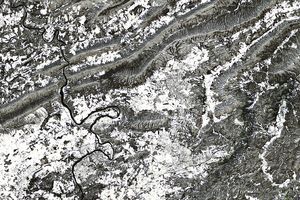
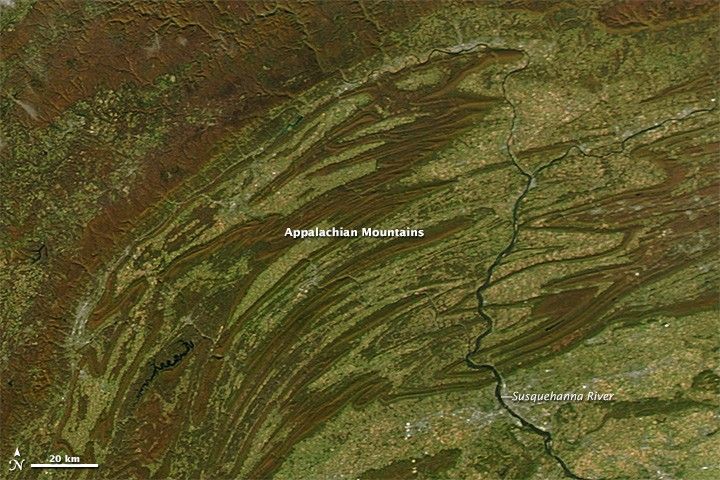
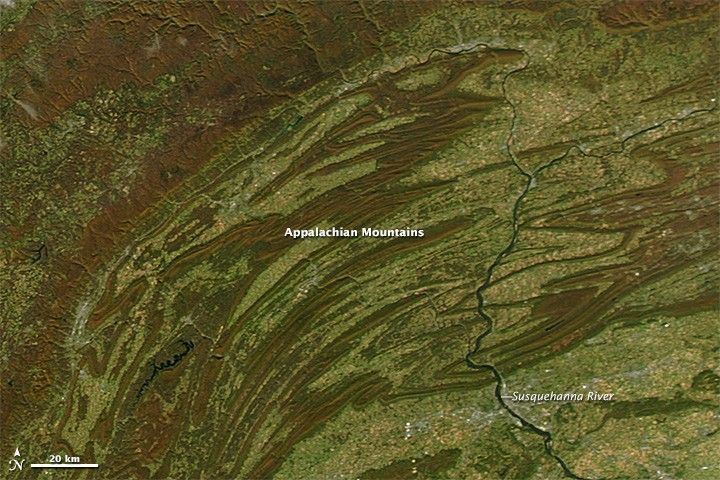
With temperatures falling and days growing shorter in the northern hemisphere, autumn colors swept across the northeastern United States. Between mid-September and late October, forests in central Pennsylvania evolved from green—with no hint of fall color—to a symphony of reds, yellows, and browns.
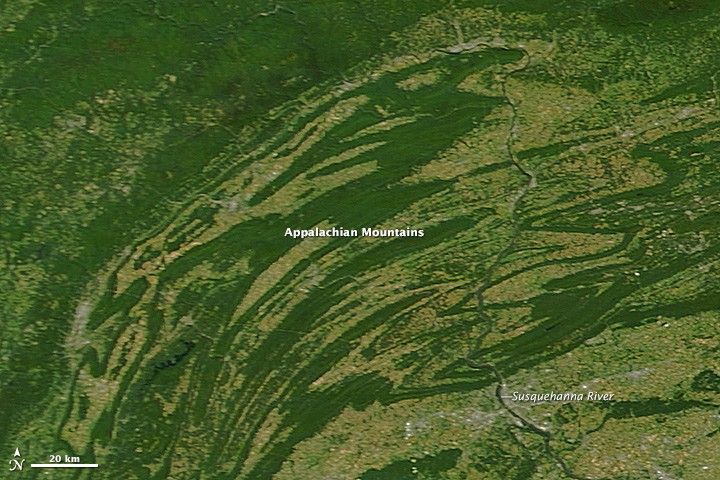
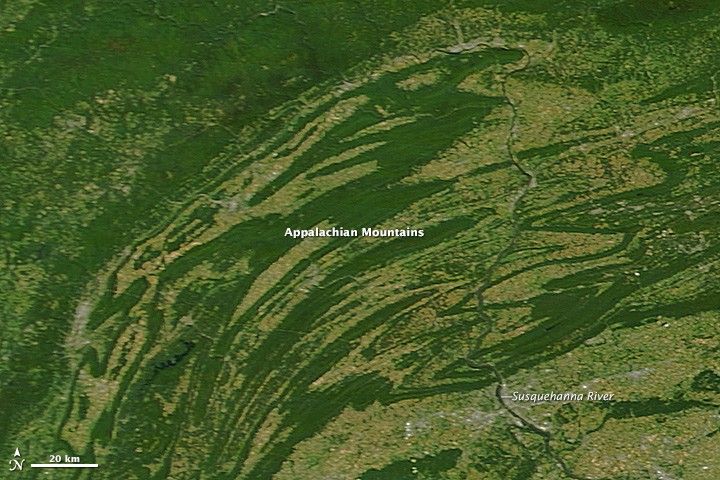
The Moderate Resolution Imaging Spectroradiometer (MODIS) on NASA’s Aqua satellite captured the annual transformation in this pair of images from October 21 (top) and September 17, 2013 (bottom). According to the Foliage Network, fall colors were at or just past their peak in central and eastern Pennsylvania when MODIS passed over and captured the top image. The forests along the ridge lines of the Appalachian Mountains were the most colorful.
At lower elevations, the trees still had a tinge of green. Forests once covered the entire landscape, but today the fertile valleys are filled with pink, tan, and green agricultural fields. Some crops had been harvested, leaving behind golden stubble or red-brown bare earth.
In autumn, the leaves on deciduous trees change colors as they lose chlorophyll, the molecule that plants use to synthesize food. However, chlorophyll is not a stable compound and plants have to continuously synthesize it, a process that requires ample sunlight and warm temperatures. When temperatures drop and days shorten, levels of chlorophyll do as well.
Chlorophyll makes plants appear green because it absorbs red and blue sunlight as it strikes leaf surfaces. As concentrations of chlorophyll drop, the green fades, offering a chance for other leaf pigments—carotenoids and anthocyanins—to show off their colors. Carotenoids absorb blue-green and blue light, appearing yellow; anthocyanins absorb blue, blue-green, and green light, appearing red.
As explained by the U.S. Forest Service, certain species of trees produce certain colors. Oaks generally turn red, brown, or russet; hickories become golden bronze; aspen and yellow-poplar turn golden. Maples differ by species. Red maple turns brilliant scarlet; sugar maple, orange-red; and black maple, yellow. Leaves of some trees, such as elms, simply become brown.
Oak-dominated forests grow in the part of Pennsylvania are shown here. On lower slopes, red and white oaks mix with tuliptree, red maple, and hickories. On drier upper slopes and ridge tops throughout the central Pennsylvania, oak forests are often dominated by white, black, and chestnut oaks.
Weather can affect the range and intensity of autumn colors. Both low temperatures and bright sunshine destroy chlorophyll. If the weather stays above freezing, it is easier for anthocyanins to form. Dry weather, which increases the sugar concentration in sap, also increases the amount of anthocyanin. So the brightest autumn colors occur when dry, sunny days are followed by cool, dry nights, which was not necessarily the case this year.
Further Reading
- NASA Earth Observatory (2010, October 16) Fall colors in the Allegheny Mountains.
- NASA Earth Observatory (2008, December 3) Fall colors in Pennsylvania.
References & Resources
- Pennsylvania Department of Conservation and Natural Resources Plant Communities. Accessed October 29, 2012.
- The Washington Post (2013, October 18) Mid-Atlantic fall foliage right on schedule; near peak conditions in mountains. Accessed October 29, 2012.
- The Foliage Network Northeast Reports. Accessed October 29, 2012.
- University of Wisconsin The chemistry of autumn colors. Accessed October 29, 2013.
- USDA Forest Service Why leaves change color. Accessed October 29, 2013.
NASA image courtesy Jeff Schmaltz, LANCE MODIS Rapid Response. Caption by Adam Voiland.