


















- February 6, 2008 (4.51 MB JPG)
- December 20, 2007 (3.58 MB JPG)
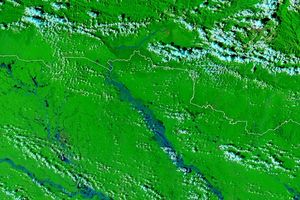
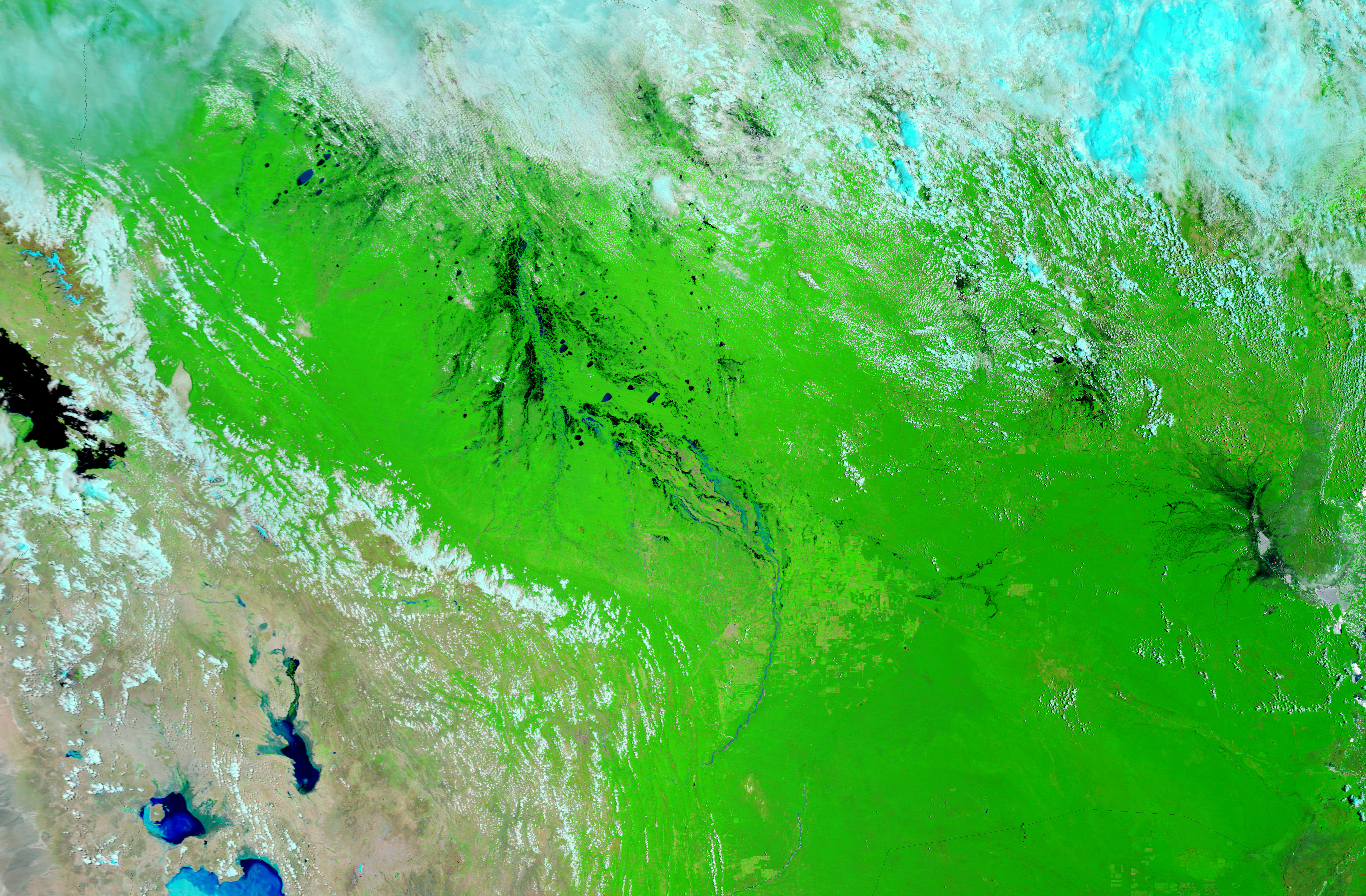
By February 6, 2008, the floods that had swollen rivers throughout Bolivia in January had reached the Mamoré River, one of the largest rivers in Bolivia. In this image, wide strips of black—pools of water—surround the serpentine river. Water encroaches on the city of Trinidad, a tiny tan-gray dot against the bright green plant-covered land. Poor road conditions limited access to the city, said the United Nations Office for the Coordination of Humanitarian Affairs (OCHA). Throughout Bolivia, the floods had affected more than 41,000 families, destroyed and damaged homes and crops, and killed 48 as of February 6, said OCHA. One of the most severely affected regions was the Division of Beni, shown here.
The Moderate Resolution Imaging Spectroradiometer (MODIS) on NASA’s Terra satellite captured the top image of the floods on February 6, 2008, and the lower image on December 20, 2007. Daily images of Bolivia are available from the MODIS Rapid Response System. The images shown here are false color, meaning they do not appear as the human eye would see them. These false-color images combine infrared and visible light to make water stand out. Water is black or dark blue in contrast to the tan and green land. Clouds are light blue and white.
References & Resources
- References
- United Nations Office for the Coordination of Humanitarian Affairs. (2008, February 6). Bolivia: Floods OCHA Situation Report No. 6. ReliefWeb. Accessed February 7, 2008.
NASA images courtesy the MODIS Rapid Response Team at NASA GSFC. Caption by Holli Riebeek.