














Suggested Searches

Vegetation

Satellites observe global-scale patterns of vegetation that scientists use to study changes in plant growth as a result of climate and environmental changes as well as human activity. Photosynthesis plays a big role in removing carbon dioxide from the atmosphere and storing it in wood and soils, so mapping vegetation is a key part of studying the carbon cycle. Farmers and resource managers also use satellite-based vegetation maps to help them monitor the health of our forests and croplands.

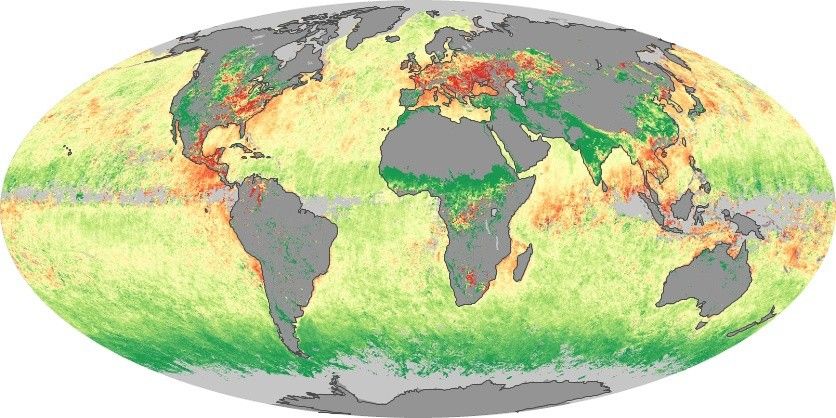
On these maps, vegetation is pictured as a scale, or index, of greenness. Greenness is based on several factors: the number and type of plants, how leafy they are, and how healthy they are. In places where foliage is dense and plants are growing quickly, the index is high, represented in dark green. Regions where few plants grow have a low vegetation index, shown in tan. The index is based on measurements taken by the Moderate Resolution Imaging Spectroradiometer (MODIS) on NASA’s Terra satellite. Areas where the satellite did not collect data are gray.

The most obvious pattern that the maps show is a global one: vegetation greenness is high around the equator all year long, where temperatures, rainfall and sunlight are abundant. Between the equator and the poles, the vegetation greenness rises and falls as the seasons change.

View and download more of these data from NASA Earth Observations (NEO):
Vegetation

More from the Earth Observatory
A Direct Hit on Jamaican Forests 

Hurricane Melissa left the island nation’s forests brown and battered, but they won’t stay that way for long.

Nov 25, 2025
Autumn in the Ozarks

Late-season reds and browns swept across the Ozark Highlands in the south-central U.S.

Nov 21, 2025
Browns Canyon National Monument

The remote and rugged landscape in central Colorado is known for outdoor recreation by day and exceptional stargazing by night.

Aug 12, 2025