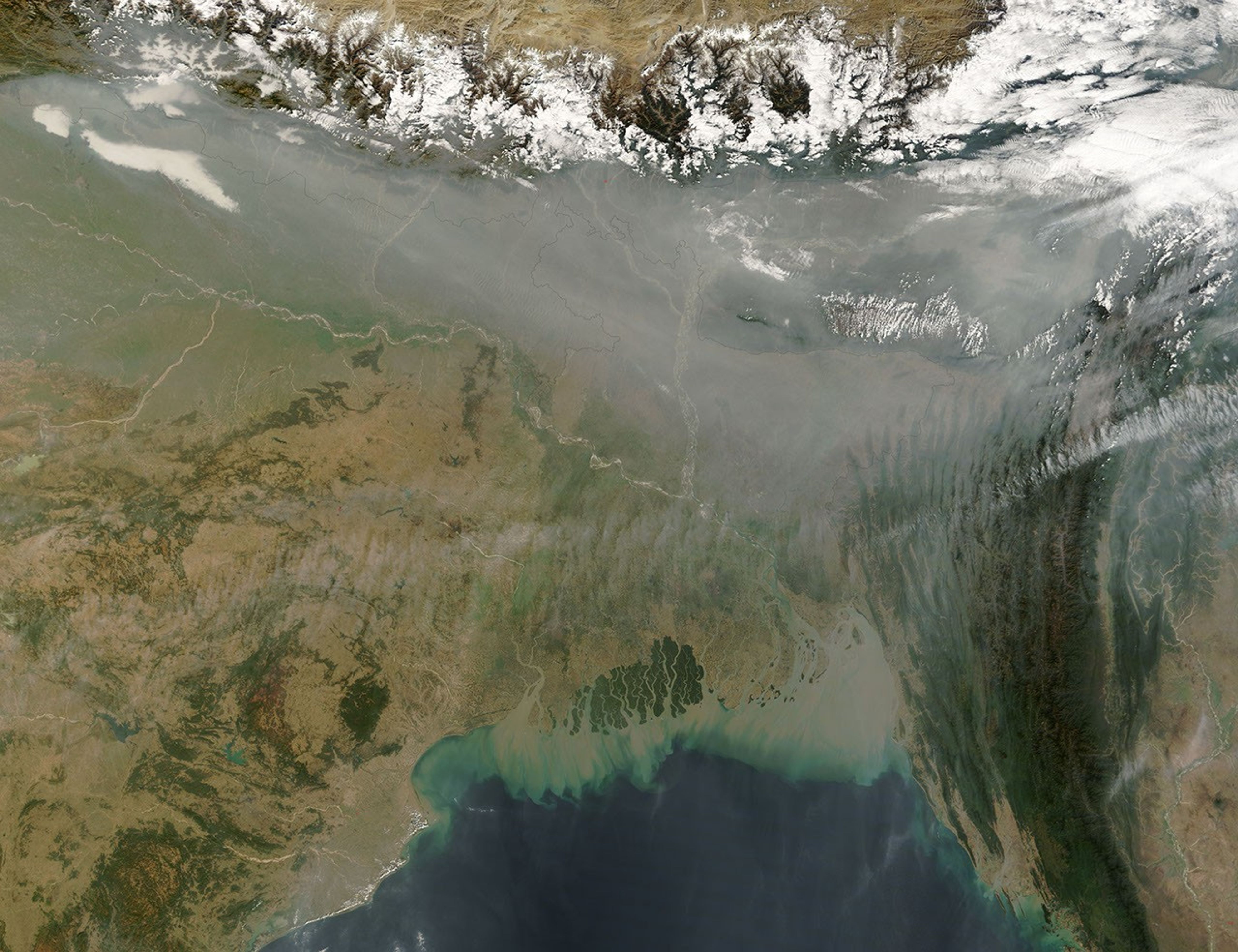


























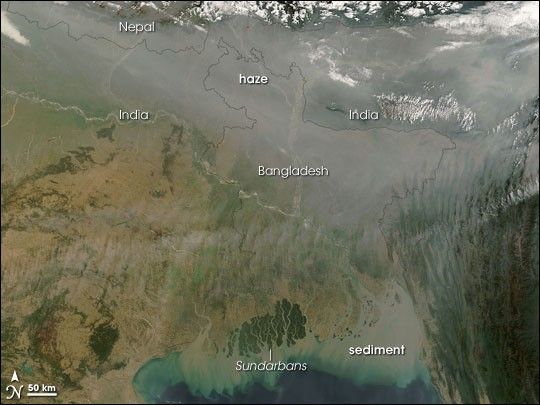
More haze hugged the Himalaya Mountains on January 21, 2007, clouding the skies over northern India, Nepal, and Bangladesh. In the south, thick sediment clogged the mouth of the Ganges. During the Northern Hemisphere winter, haze often collects at the base of the mountains, trapped there in part by weather systems. Sediment flowing from the mouth of the Ganges is a natural occurrence, but it can be exacerbated by land-use changes as an area industrializes.
The Moderate Resolution Imaging Spectroradiometer (MODIS) on NASA’s Terra satellite took this picture on January 21, 2007. In this image, the haze appears as a dingy, gray-beige fog over the region, pushing south into Bangladesh. Skies are clearer to the south, and this image offers a clear view of the Sundarbans that straddle the border between India and Bangladesh. In the east, the land surface vaguely resembles marbled paper—the result of the same continental collision that formed the Himalayas.
References & Resources
NASA image by Jeff Schmaltz, MODIS Rapid Response Team, Goddard Space Flight Center.