
















February 25, 2014
Haze Blows Across Northeastern Asia
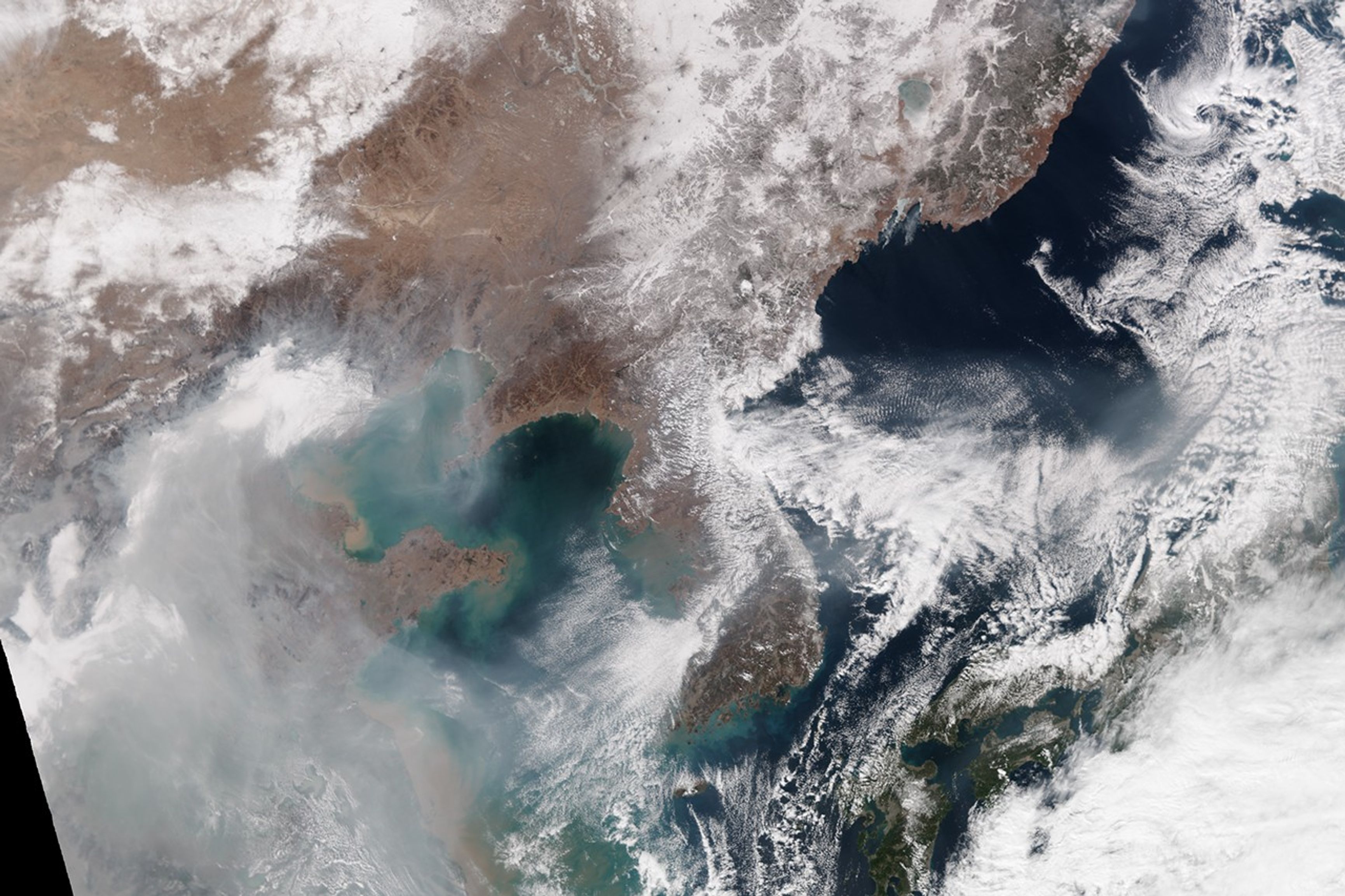
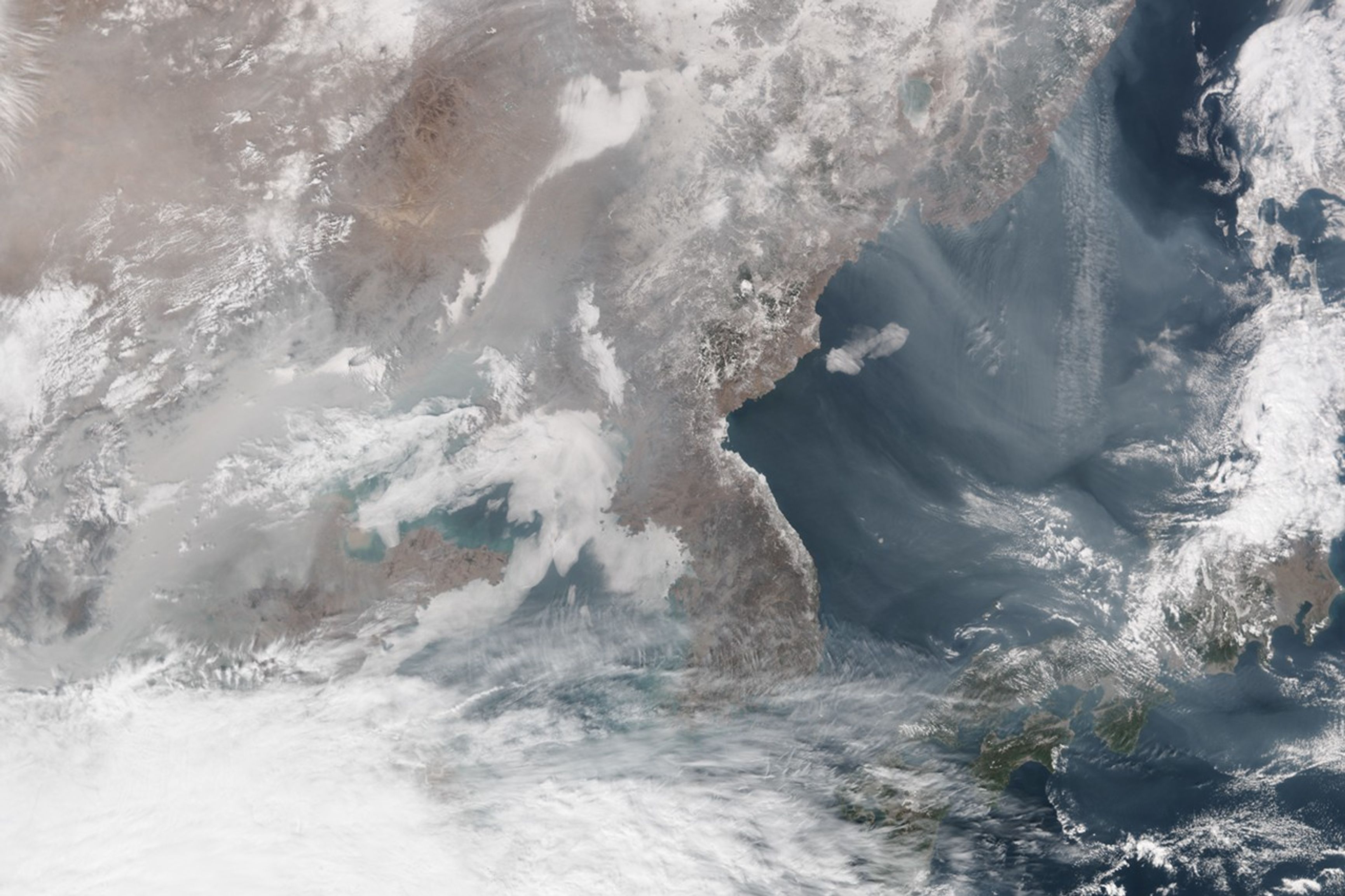
An all-too-common winter weather pattern settled over northeastern China over the past two weeks, letting air pollution build to hazardous levels. A temperature inversion trapped pollution near the ground, making particulate measurement soar. On February 24 and 25, 2014, the China Meteorological Administration issued an orange alert for air quality, warning of visibility below 2,000 meters and recommending that people stay indoors or wear a mask while outdoors in the North China Plain, including Beijing.
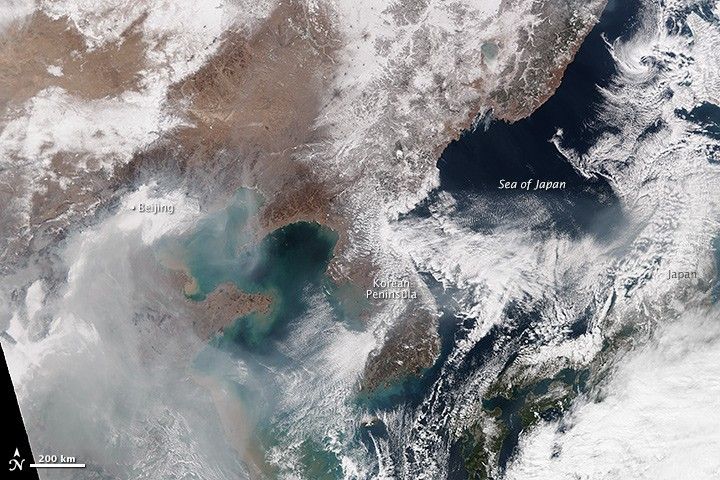
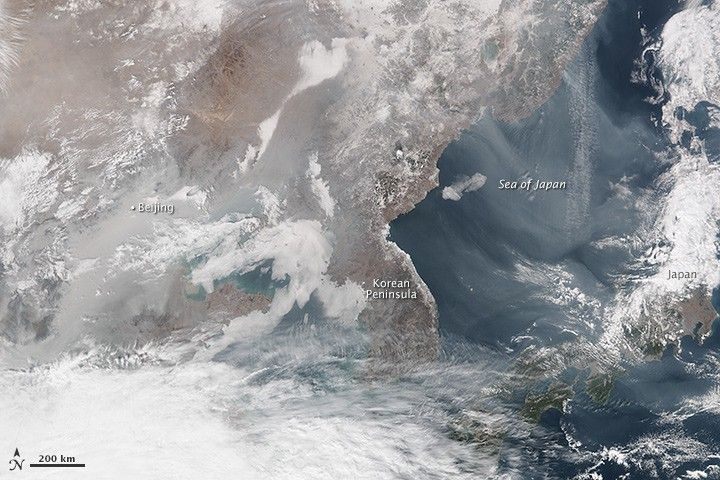
The haze limited visibility from space, too. The Visible Infrared Imaging Radiometer Suite (VIIRS) instrument on the Suomi NPP satellite captured the development of the pollution event and its transport across eastern Asia. The top image shows February 20, when the haze was confined to the North China Plain. The lower image offers a view from February 25, when the haze had thickened over China and extended north and east over Korea, the Sea of Japan, and Japan.
Particulate levels (PM 2.5) in Beijing reached 444 micrograms per cubic meter on February 25, according to the Associated Press. (As a reference point, the U.S. Environmental Protection Agency limits daily PM 2.5 exposure to 35 micrograms per cubic meter, and the World Health Organization recommends a limit of 25 micrograms per cubic meter.) In response to the unhealthy air, Beijing stopped some industrial activity on February 25.
Fine particulate pollution (PM 2.5) is a health hazard because it is small enough to penetrate the lungs. In the short term, it can cause respiratory irritation and shortness of breath, trigger asthma attacks, and reduce lung function. Long-term exposure to particular pollution can lead to heart disease, stroke, and lung disease, including lung cancer.
References & Resources
- Associated Press (2014, February 25) Pollution hides Beijing skyline; statues get masks. The Washington Post. Accessed February 26, 2014.
- The Globe and Mail (2014, February 25) China’s air pollution reaches ‘crisis’ level. Accessed February 26, 2014.
- U.S. Environmental Protection Agency (2013) Overview of EPA’s revisions to the air quality standards for particulate pollution (particular matter). Accessed February 26, 2014.
- U.S. Environmental Protection Agency (2013) Particle pollution and health. Accessed February 26, 2014.
- Voice of America (2014, February 26) Smog debate stirs as Beijing holds off on red alert. Accessed February 26, 2014.
- World Health Organization (2011, September) Air quality and health. Accessed February 26, 2014.
- Xinhua (2014, February 26) Xinhua insight: Smog becoming key test for Chinese officials. Accessed February 26, 2014.
NASA Earth Observatory image by Jesse Allen, using VIIRS data from the Suomi National Polar-orbiting Partnership. Suomi NPP is the result of a partnership between NASA, the National Oceanic and Atmospheric Administration, and the Department of Defense. Caption by Holli Riebeek.