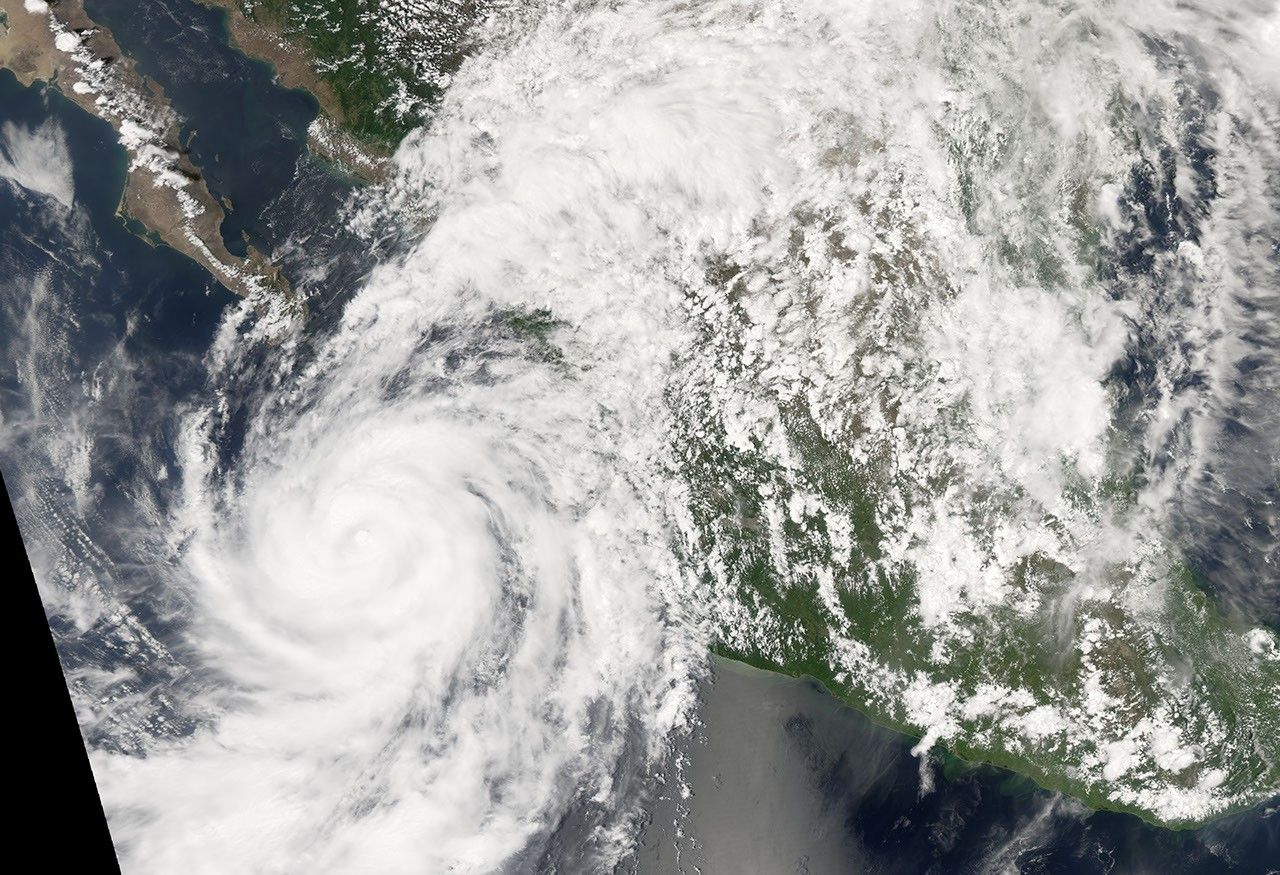




















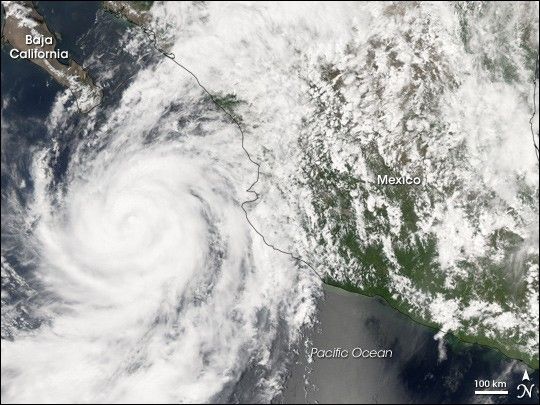
Only the third hurricane of the relatively quiet 2007 eastern Pacific hurricane season, Hurricane Henriette was also the first hurricane of the season to make landfall. Henriette skimmed up the Mexican coastline as it developed between August 30 and September 4, 2007. The National Hurricane Center predicted that the storm would come ashore over Baja California on September 4 as a strengthening Category 1 hurricane before traveling north through Mexico and into the United States.
The Moderate Resolution Imaging Spectroradiometer (MODIS) on NASA’s Aqua satellite captured this image of Henriette at 2:10 p.m. local time (21:10 UTC) on September 3. At that time Henriette was still a tropical storm with sustained winds of 110 kilometers per hour (70 miles per hour). Though not as powerful as Hurricane Felix, which was pounding Central America from the Caribbean, Henriette had caused at least six deaths in Mexico before coming ashore. The outer bands of the storm inundated Acapulco with heavy rain that caused deadly flooding and landslides, reported the Associated Press on September 4.
You can download a 250-meter-resolution KMZ file of Hurricane Henriette suitable for use with Google Earth.
References & Resources
NASA image created by Jesse Allen, using data provided courtesy of the MODIS Rapid Response team.