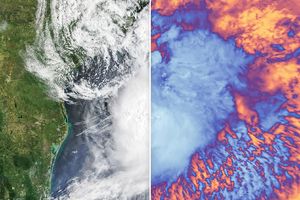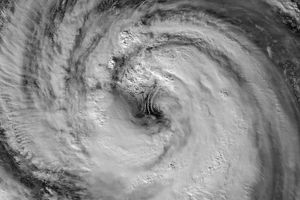







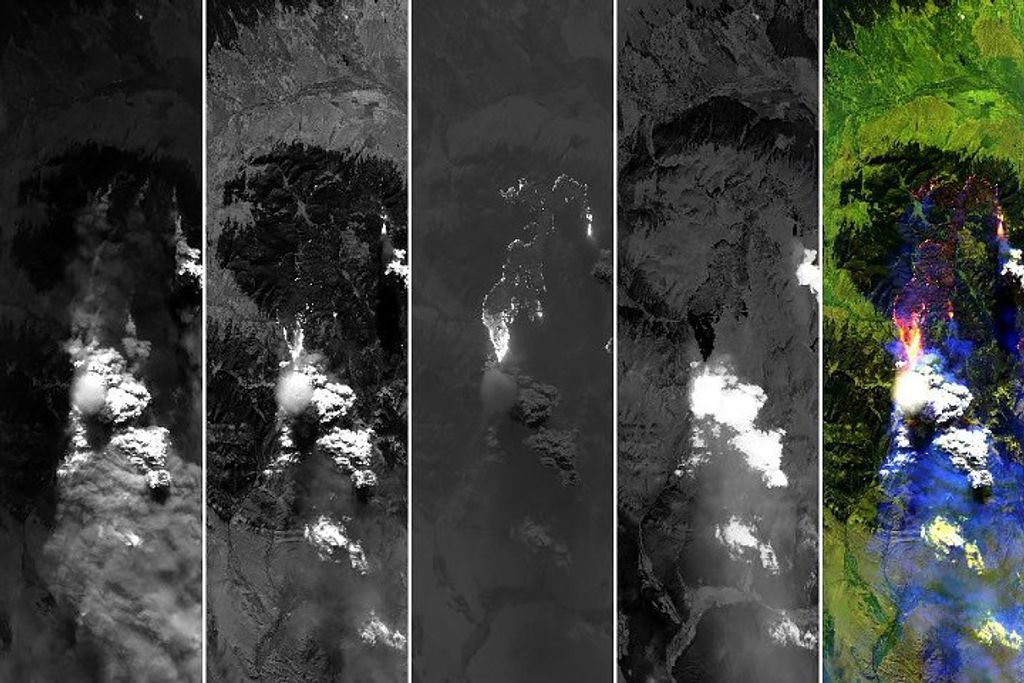
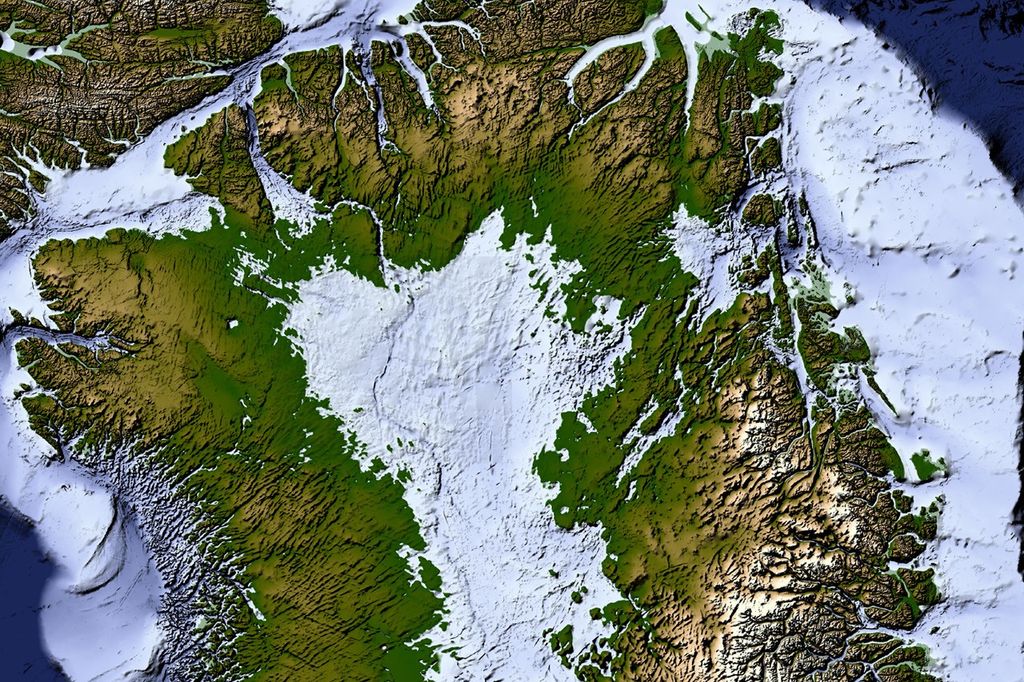





















Hurricane Ignacio has continued to threaten the Baja California peninsulawith high winds, heavy surf and the potential for flood-producing rainfall.Ignacio was declared a tropical depression at 5 am PDT (1200 UTC) on Friday,the 22nd of August, 2003 by the National Hurricane Center while it was 125miles west of Puerto Vallarta, Mexico. It was upgraded to a tropicalstorm on the 23rd of August and became a hurricane at 2 am PDT, August 24thas it continued to move slowly northwest towards the southern tip of BajaCalifornia.
The Tropical Rainfall Measuring Mission (TRMM) satellite captured theseimages of Hurricane Ignacio when it was just 50 miles off of the southeasterncoast of Baja California near the southern tip of the peninsula. The imageswere taken at 10:25 am PDT (17:25 UTC) on the 24th of August. At the timeIgnacio was classified as a category 2 hurricane by the National HurricaneCenter with sustained winds of 105 mph. The image on the left shows a plan or topdown view of the storm in terms of rainfall rates from the TRMM PrecipitationRadar (PR) in the inner swath and the TRMM Microwave Imager (TMI) in theoutter swath overlayed on TRMM Visible Infrared Scanner (VIRS) data (whiteareas). It shows that Ignacio has a closed eye but that the storm is stillvery assymmetrical with all of the intense rainfall (darker reds) on thenorth and east side of the storm, indicative of a storm that is not yetcompletely organized. The image on the right shows an east-west vertical slicetaken by the PR through the center of Ignacio that again shows the heaviestrainfall on the right or eastside of the storm (darker reds) as well as atall tower known as a chimney cloud on the eastern eye wall that indicatesthe release of a lot of heat energy which powers the storm.
References & Resources
Images produced by Hal Pierce (SSAI/NASA GSFC) and caption by Steve Lang (SSAI/NASA GSFC).