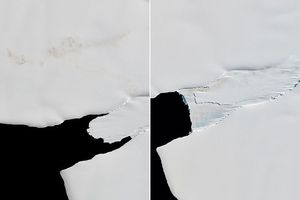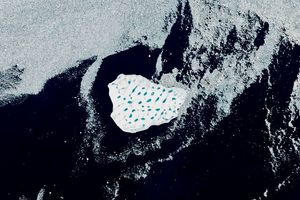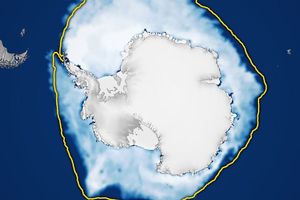


















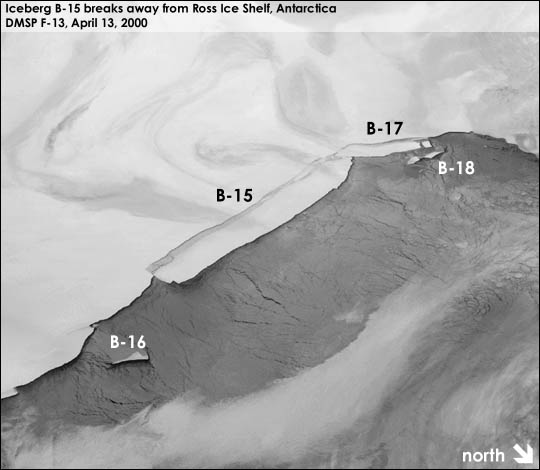
Iceberg B-15 broke from the Ross Ice Shelf in Antarctica in late March. Among the largest ever observed, the new iceberg is approximately 170 miles long x 25 miles wide. Its 4,250 square-mile area is nearly as large as the state of Connecticut.
The iceberg was formed from glacial ice moving off the Antarctic continent and calved along pre-existing cracks in the Ross Ice Shelf near Roosevelt Island. The calving of the iceberg essentially moves the northern boundary of the ice shelf about 25 miles to the south, a loss that would normally take the ice shelf as long as 50-100 years to replace.
This infrared image was acquired by the DMSP (Defense Meteorological Satellite Program) F-13 satellite on April 13, 2000.
For more images see Antarctic Meteorological Research Center
References & Resources
Image courtesy of the University of Wisconsin - Madison, Space Science and Engineering Center, Antarctic Meteorological Research Center