













large images:
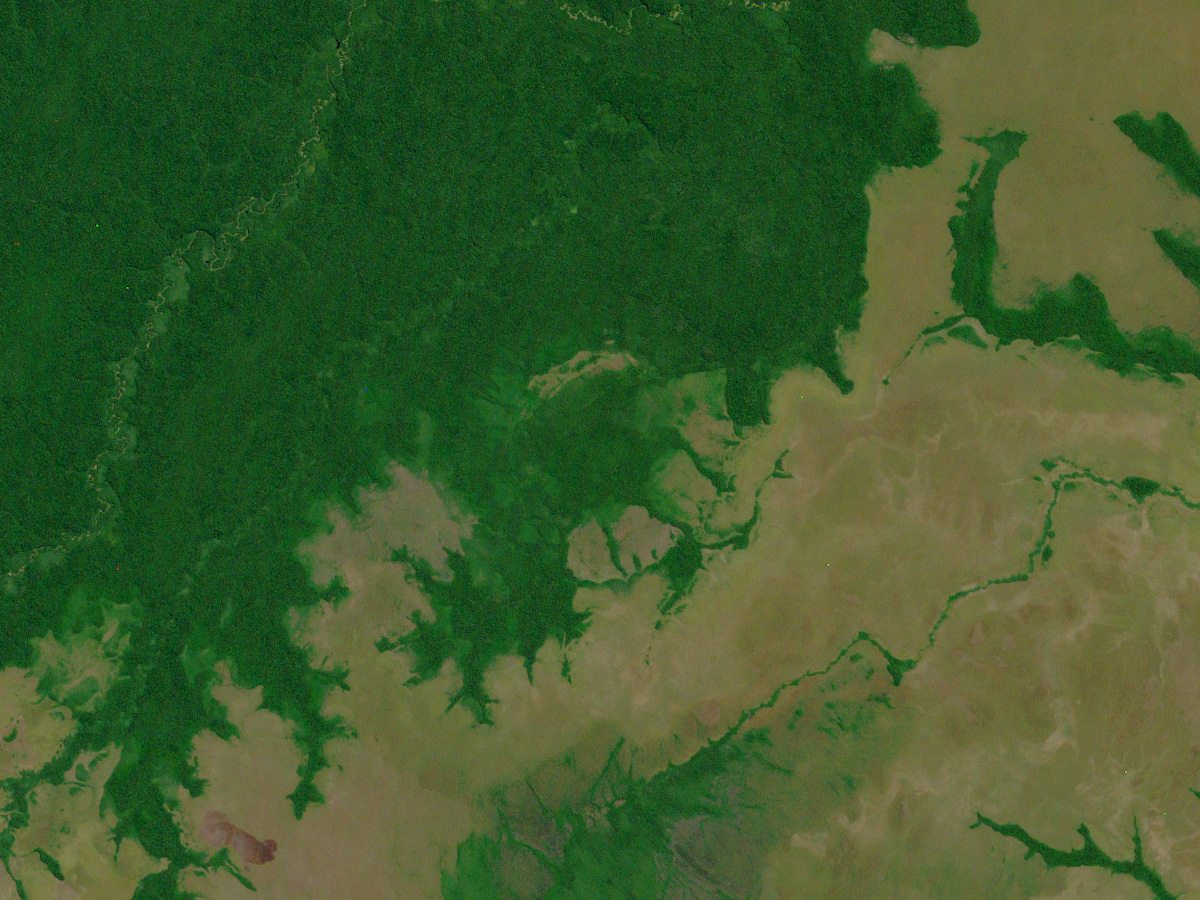
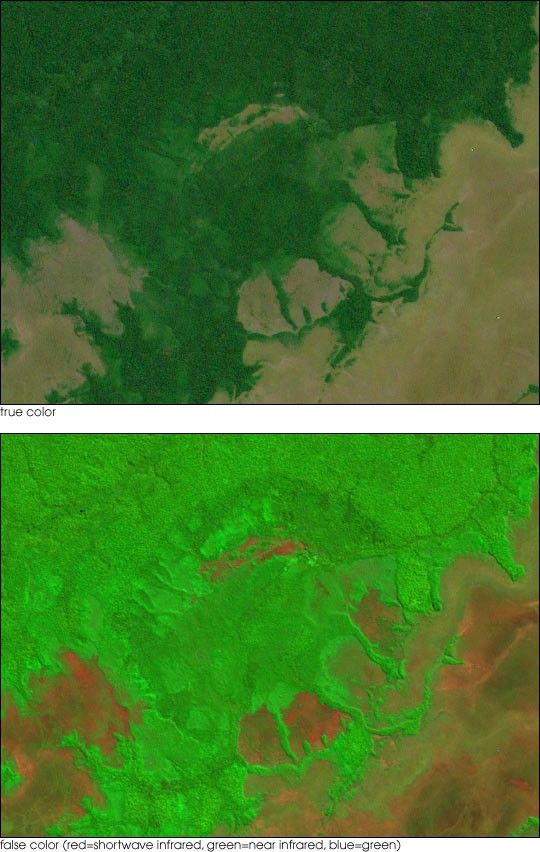
true color
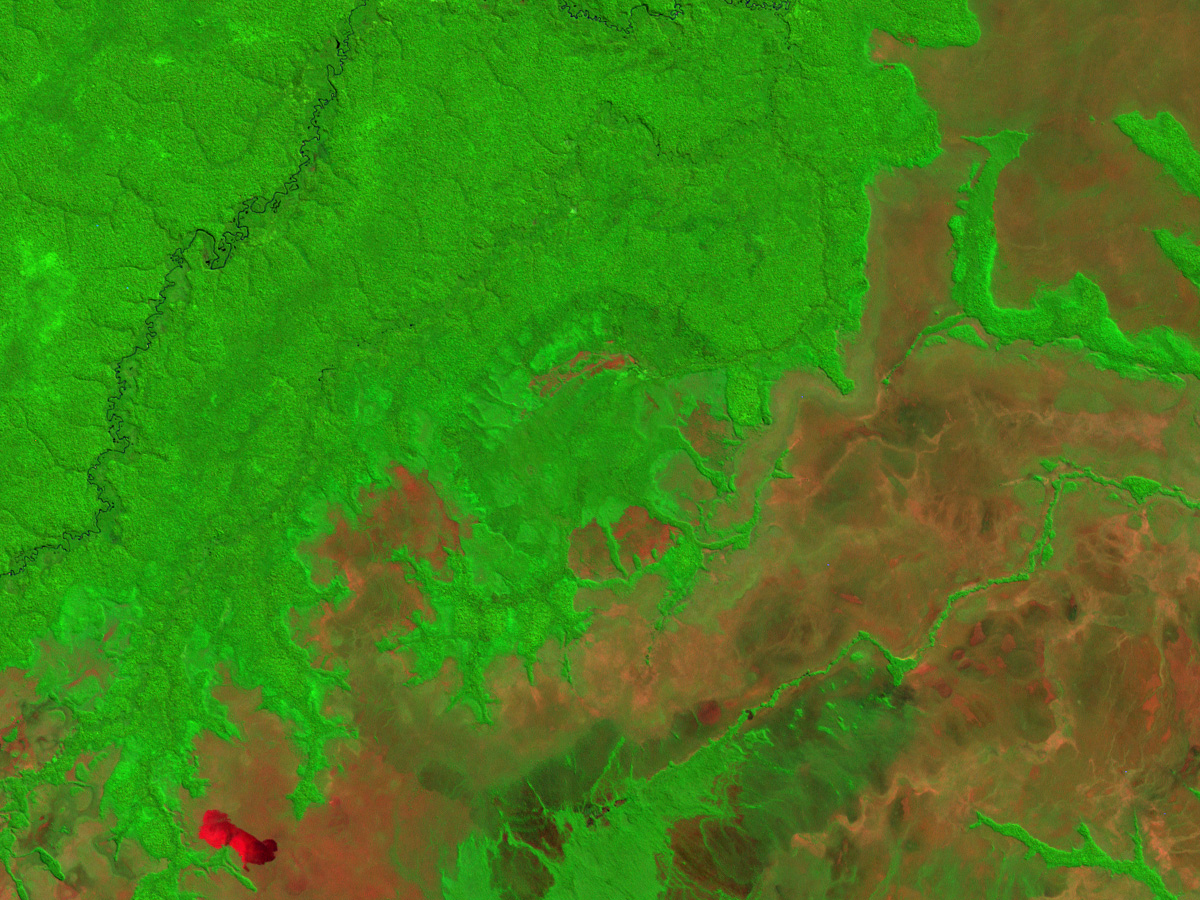
false color
NASA scientists will venture into an isolated part of the Bolivian Amazon to tryand uncover the origin of a 5 mile (8 kilometer) diameter crater there known asthe Iturralde Crater. Traveling to this inhospitable forest setting, theIturralde Crater Expedition 2002 will seek to determine if the unusual circularcrater was created by a meteor or comet.
The team intends to collect and analyze rocks and soil, look for glass particlesthat develop from meteor impacts and study magnetic properties in the area todetermine if the Iturralde site, discovered in the mid-1980s with satelliteimagery, was indeed created by a meteor.
If a meteorite is responsible for the impression, rocks in the area will haveshock features that do not develop under normal geological circumstances. Theteam will also look for glass particles, which develop from the hightemperatures of impact.
The Iturralde Crater Expedition 2002 team will extensively analyze soil in theimpact zone for confirmation of an impact. One unique aspect of the Iturraldesite is the 4-5 km deep surface sediment above the bedrock. Thus the impact wasmore of a gigantic “splat” rather than a collision into bedrock.
The large crater is only 1 meter lower in elevation than the surrounding area.Water collects within the depression, but not on the rim of the crater, which isslightly higher than both the surrounding landscape and the interior of thecrater. These subtle differences in drainage are reflected in the forest andgrassland habitats that developed on the landscape. It is precisely thesedifferences in the vegetation structure that can be observed from space andwhich led to the identification of the Iturralde Crater from Landsat Images.
Compare these images with topographic data from the Shuttle Radar Topography Mission.
For more information, visit NASA Scientists Determined to Unearth Origin of the Iturralde Craterand Iturralde Crater Expedition 2002
References & Resources
Images by Robert Simmon, based on data from the Landsat 7 Science Team and the Global Land Cover Facility
None