
















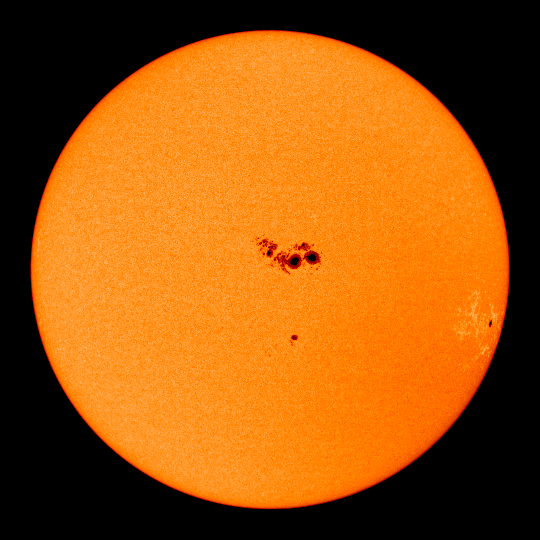
At 20 times the size of Earth, the largest sunspot observed since the November 2003 series of solar storms is now pointed directly at Earth. Its unusually large size also means that it is now visible to the naked eye (although you should never look at the Sun without a proper filter). The implications of this spot have scientists on the edge of their seats—if the active region generates coronal mass ejections (CMEs), massive explosions with a potential force of a billion megaton bombs, it will be a fairly direct hit to Earth and its satellites and power grids.
The last large solar events occurred in the fall of 2003 when seventeen major flares erupted on the Sun. Currently, sunspot group AR 10652 has generated several medium-sized flares and CMEs over the past three and a half days. This view is from the SOHO spacecraft’s Michelson Doppler Imager (MDI) instrument from July 23, 2004, at 16:00 UTC. Over the next few days, the region has the potential for unleashing more and larger solar storms.
The SOHO is located in an orbit approximately one million miles from Earth in order to gain an unobstructed view of the Sun. It carries 12 instruments and is a joint NASA / European Space Agency (ESA) mission.
- related links:
- Space Weather
- Space Environment Center
References & Resources
Image and animations courtesy NASA/ESA SOHO team
None