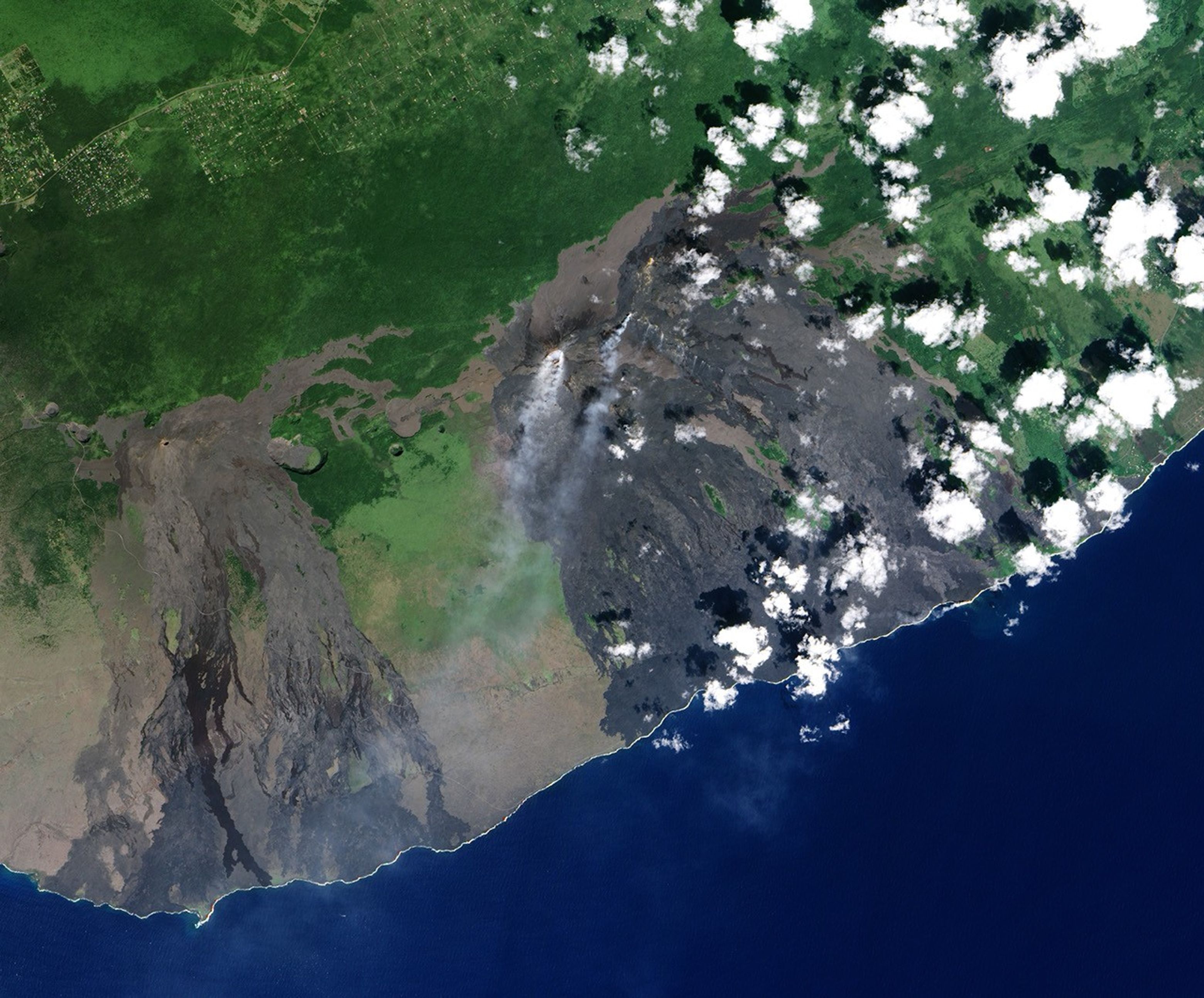







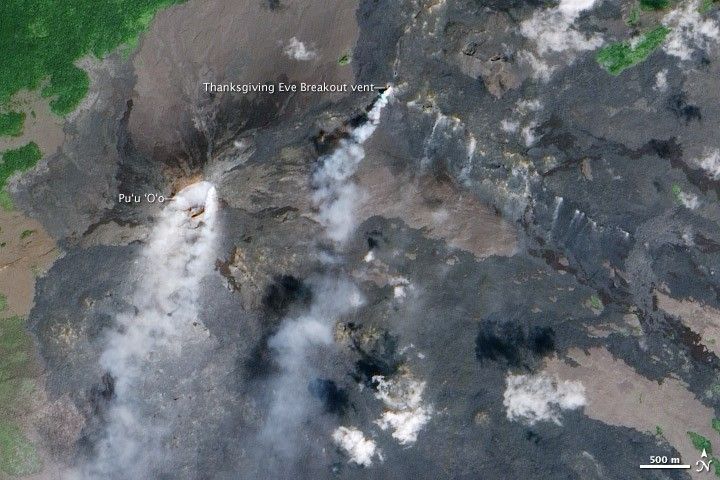
The rift zone on the eastern slopes of Hawaii’s Kilauea Volcano has been erupting since January 1983, the longest eruption in recorded history. Pu‘u ‘O‘o and the Thanksgiving Eve Breakout vent—two centers of volcanic activity—emit steam and other gases in this natural-color satellite image. Lava currently reaches the surface at the Thanksgiving Eve Breakout vent and flows southeast (towards the lower right) through a lave tube to the ocean. Small plumes of gas reveal the path of the lava. In general, the youngest lava flows are black, and older, weathered, flows are gray or brown. Surviving vegetation is bright green.
The Advanced Land Imager (ALI) on NASA’s EO-1 satellite acquired this image on November 2, 2009.
References & Resources
- USGS. (2009, November 2). Hawaiian Volcano Observatory daily update. Accessed November 5, 2009.
NASA Earth Observatory image by Robert Simmon, using EO-1 ALI data provided by the NASA EO-1 team. Caption by Robert Simmon.