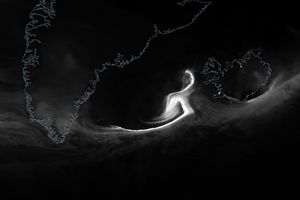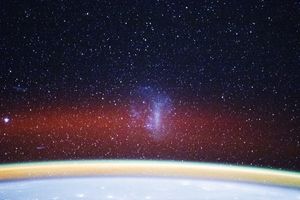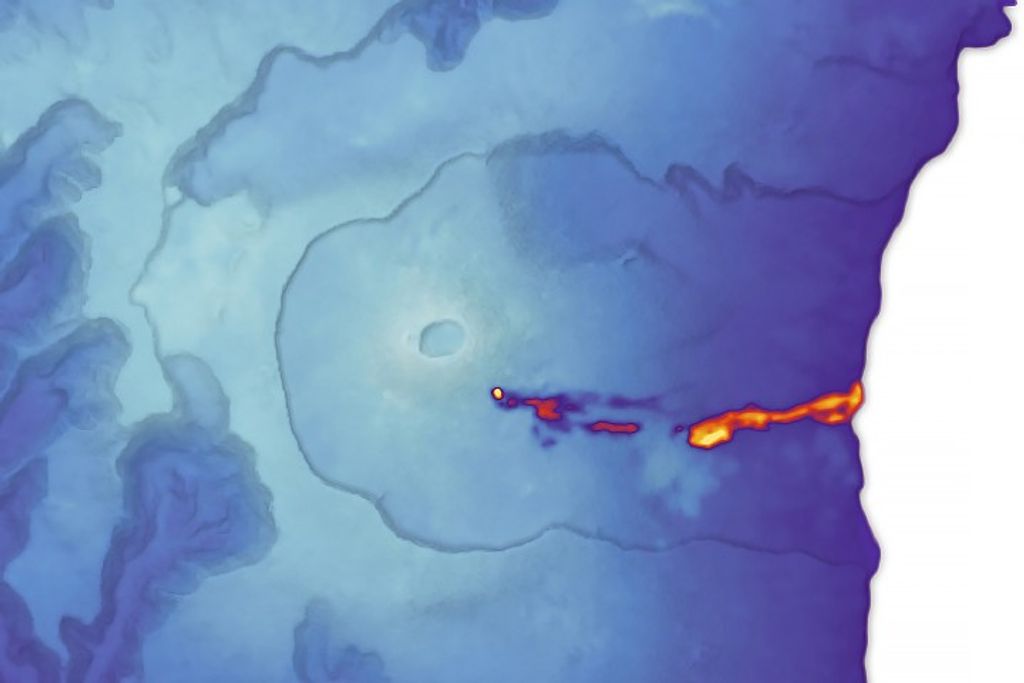
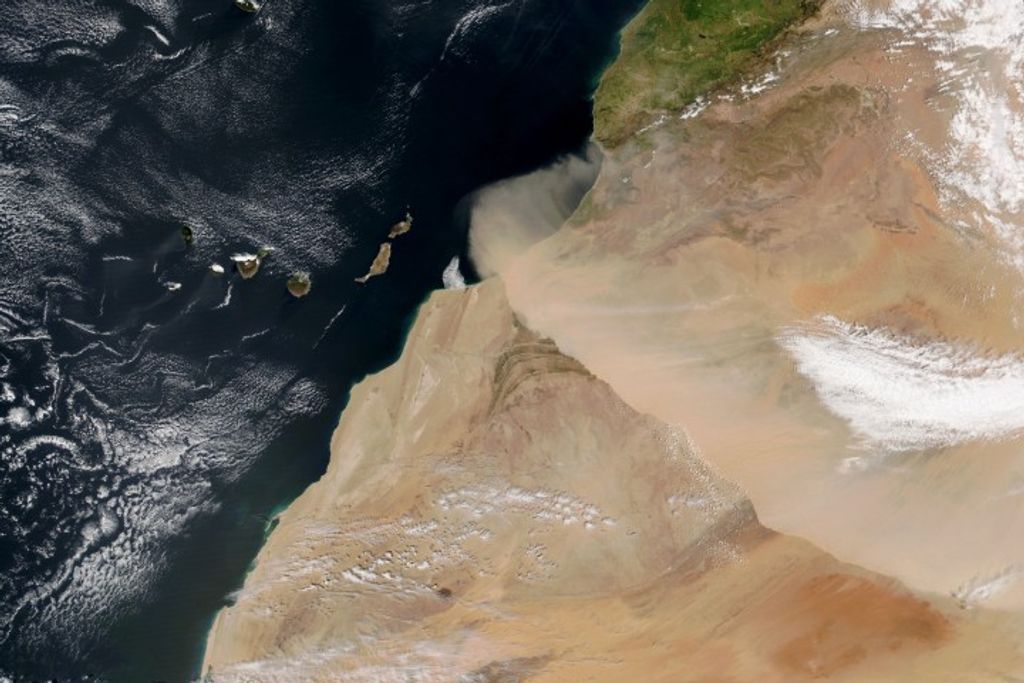
















Solar storms bombard Earth with a stream of electrons and other charged particles that interact with gases in the atmosphere to generate colorful aurora. A coronal mass ejection, a large solar storm, can expel a billion tons of matter at a million miles per hour or more. The strongest solar storms have the potential to interfere with communications, power grids, and satellites. Solar storms happen most frequently when the Sun is in the active phase of its 11-year cycle, called solar maximum.
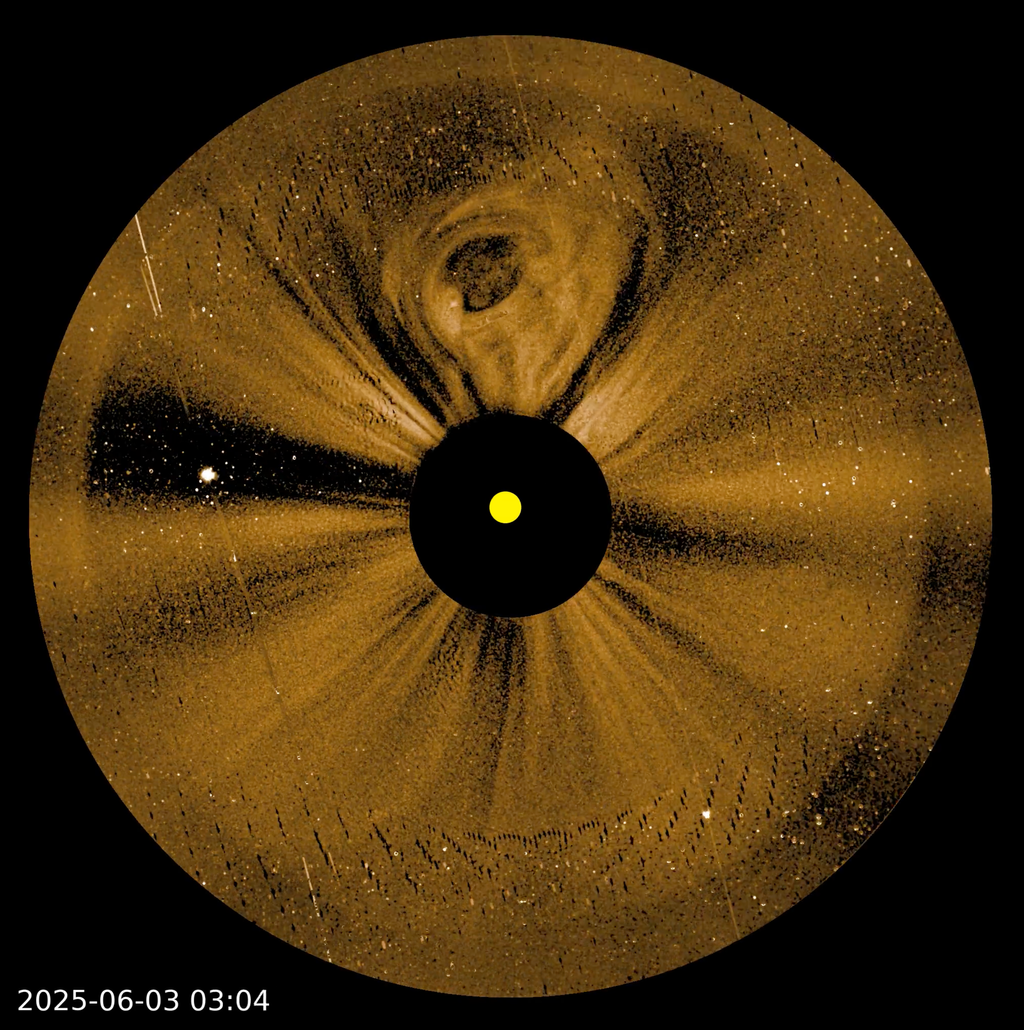
Though the Sun was expected to be entering solar maximum in 2010, it had been unusually quiet for at least two years. Despite its relative lack of activity, the Sun released a series of four coronal mass ejections between May 22 and May 24, 2010. These images show one coronal mass ejection on May 23. A movie of all four ejections is available on the Solar and Heliospheric Observatory web site.
Both images were taken by the Solar Terrestrial Relations Observations (STEREO) Ahead spacecraft. The top image is from 20:09:15 Universal Time (UT). STEREO Ahead acquired the lower image just over two hours later at 22:24:00 UT. In the top image, a bright mass of charged particles loops from the Sun’s atmosphere. Two hours later, the looped mass had expanded and was moving away from the Sun. The images show only the Sun’s corona, the outermost layer of the atmosphere. A dark disk covers the rest of the Sun, and a white circle represents the Sun’s surface.
When the charged particles from May’s coronal mass ejections reached Earth, they caused no damage, but they did generate sheets of colored light dancing across polar skies.
References & Resources
- Solar and Heliospheric Observatory Mission. (2007, August 17). SOHO Glossary. NASA and European Space Agency. Accessed June 18, 2010.
- Solar and Heliospheric Observatory Mission. (2010, May 28). Serial CMEs. NASA and European Space Agency. Accessed June 18, 2010.
NASA images courtesy the Solar Terrestrial Relations Observatory Team. Caption by Holli Riebeek.