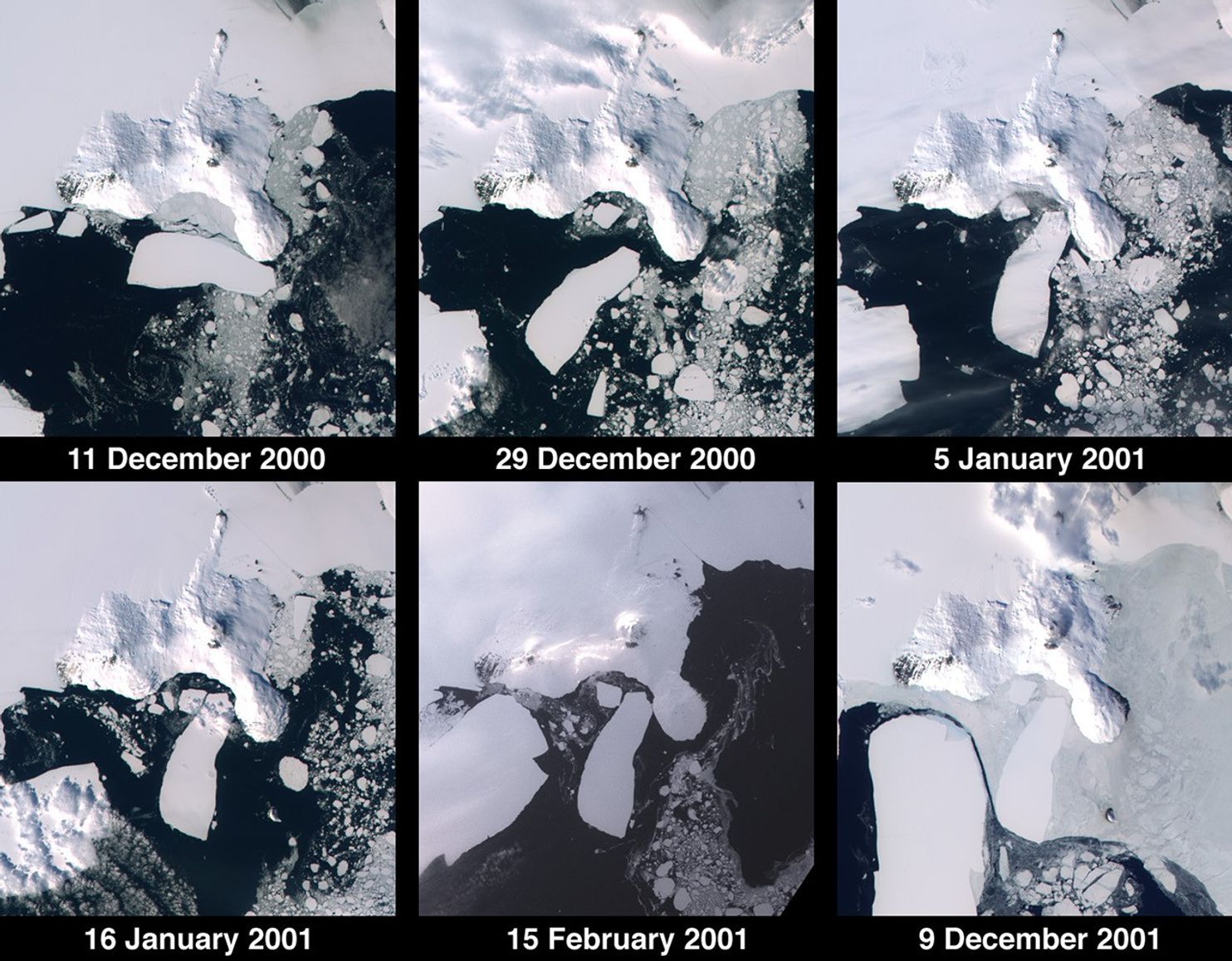















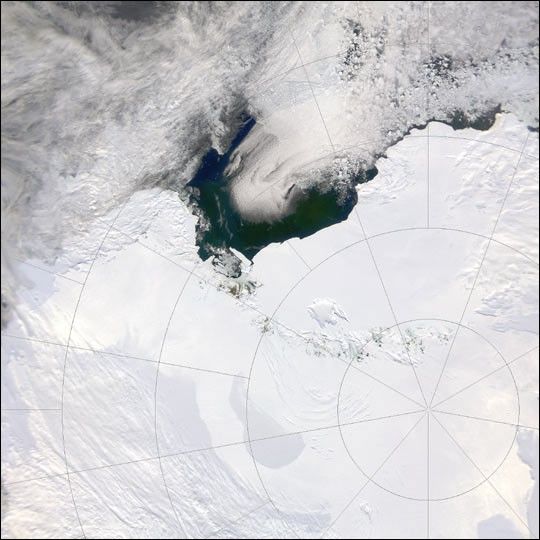
Images from the Multi-angle Imaging SpectroRadiometer (MISR), flying aboard NASA’s Terra satellite, are documenting the movement of huge icebergs and spreading sea ice in Antarctica’s Ross Sea. These natural phenomena are adversely affecting the region’s penguin population, according to a new study funded by the National Science Foundation.
Two massive icebergs, initially designated B-15 and C-16, broke away from the Ross Ice Shelf in March 2000 and migrated west to a point northeast of McMurdo Sound. The resulting barrier altered wind and current patterns. In addition, earlier this season sea ice in the region of the main U.S. Antarctic facility, McMurdo Station, expanded from its normal distance of 24 to 32 kilometers (15 to 20 nautical miles) north of the base to approximately 128 kilometers (80 nautical miles). The combination of icebergs and sea ice has made it difficult for entire colonies of penguins to return from their feeding grounds in the open sea to their breeding areas. The result is expected to be a significant reduction in regional penguin populations, with one colony in danger of extinction.
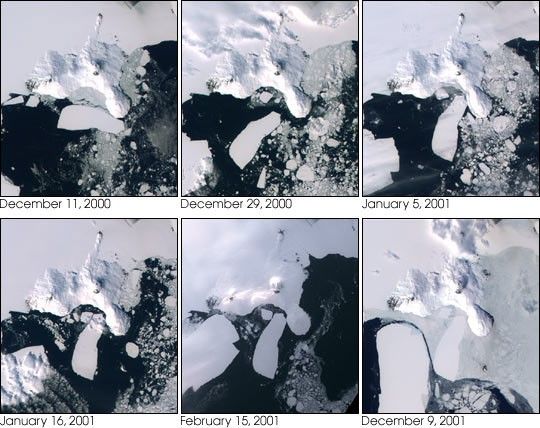
The images, taken between December 2000 and December 2001, depict the rapid motion of the C-16 iceberg in late 2000 and early 2001 and its subsequent stall, as well as the incursion of the B-15A iceberg, a large fragment of the original B-15 iceberg. The increase in sea ice is particularly pronounced in the final image.
Read the JPL press release for more information.
References & Resources
Image courtesy NASA/GSFC/LaRC/JPL, MISR Team.