






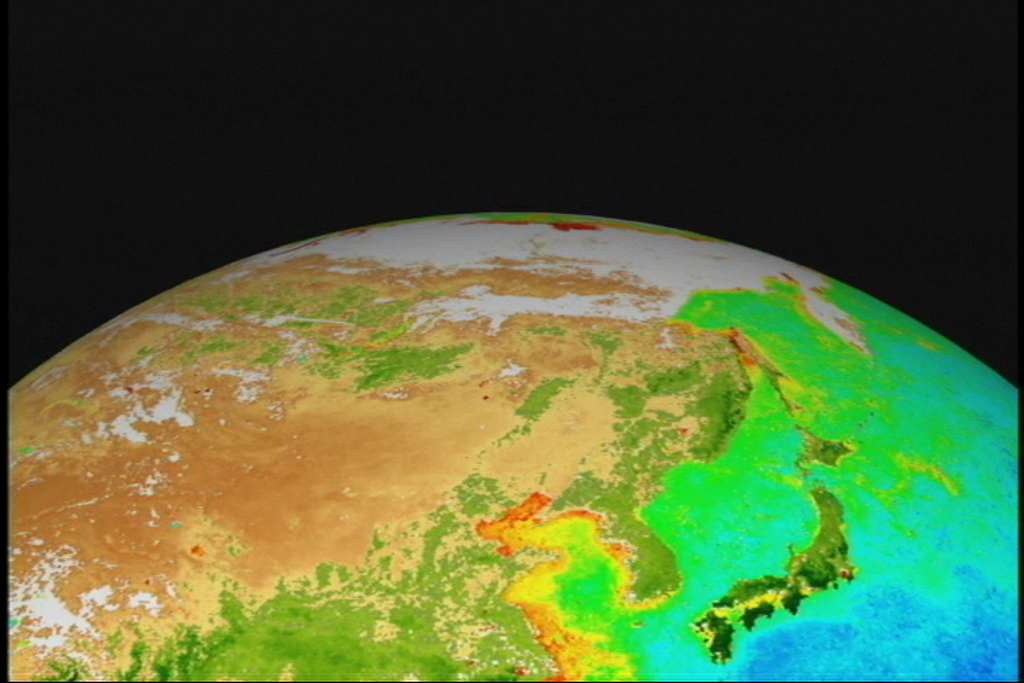




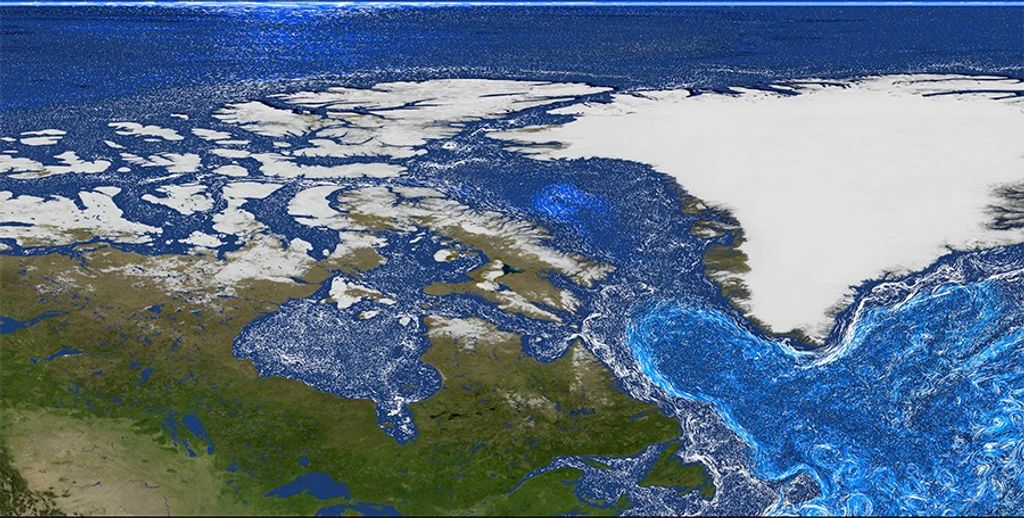













- Chlorophyll Concentrations (1.57 Mb)
- Sea Surface Temperatures (1.32 Mb)
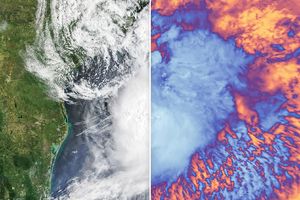
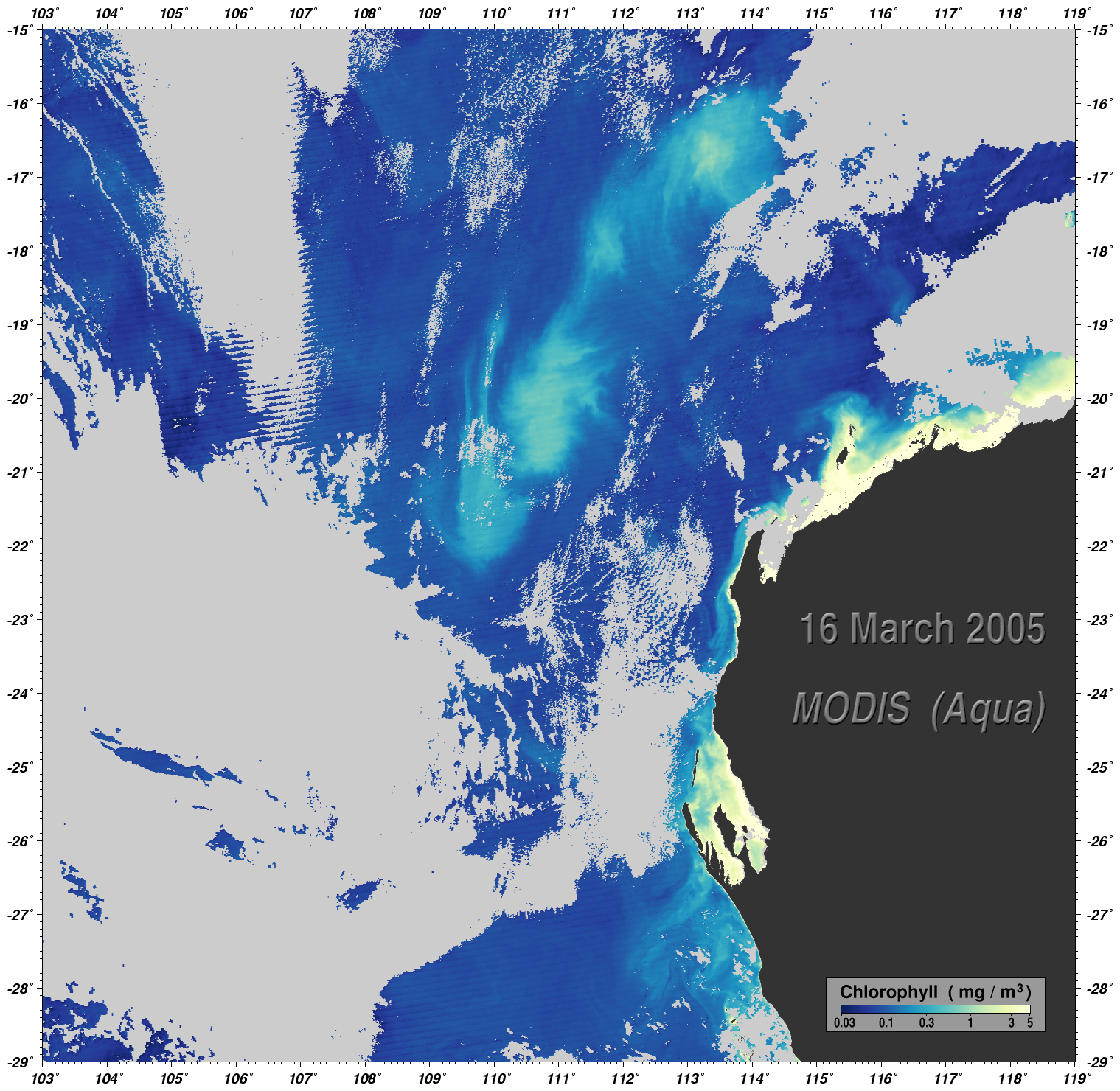
As tropical cyclones go, Cyclone Willy didnât amount to much. With winds hovering around 170 kilometers per hour (100 mph) at its strongest, the storm never made landfall, but instead skirted the western coast of Australia into the southern Indian Ocean. Despite that, Tropical Storm Willy was powerful enough to churn up ocean waters, leaving a trail of cool water and thriving plant life in its wake. The Moderate Resolution Imaging Spectroradiometer (MODIS) on NASAâs Aqua satellite recorded high chlorophyll concentrations in the cold water wake left by the storm on March 16, 2005. A diagonal strip of cooler water, shown in purple in the right image, corresponds well with the lighter blue path of high chlorophyll concentrations in the left image. The stormâs powerful winds stirred the ocean, bringing cool water and nutrients to the surface. With added nutrients in the sun-drenched surface waters, small ocean plants (phytoplankton) multiply quickly, raising chlorophyll concentrations. The profusion of plant life does not extend beyond the path of the storm, further corroborating the connection between the phytoplankton bloom and cyclone.
References & Resources
NASA image courtesy Normal Kuring, MODIS Ocean Color Team .