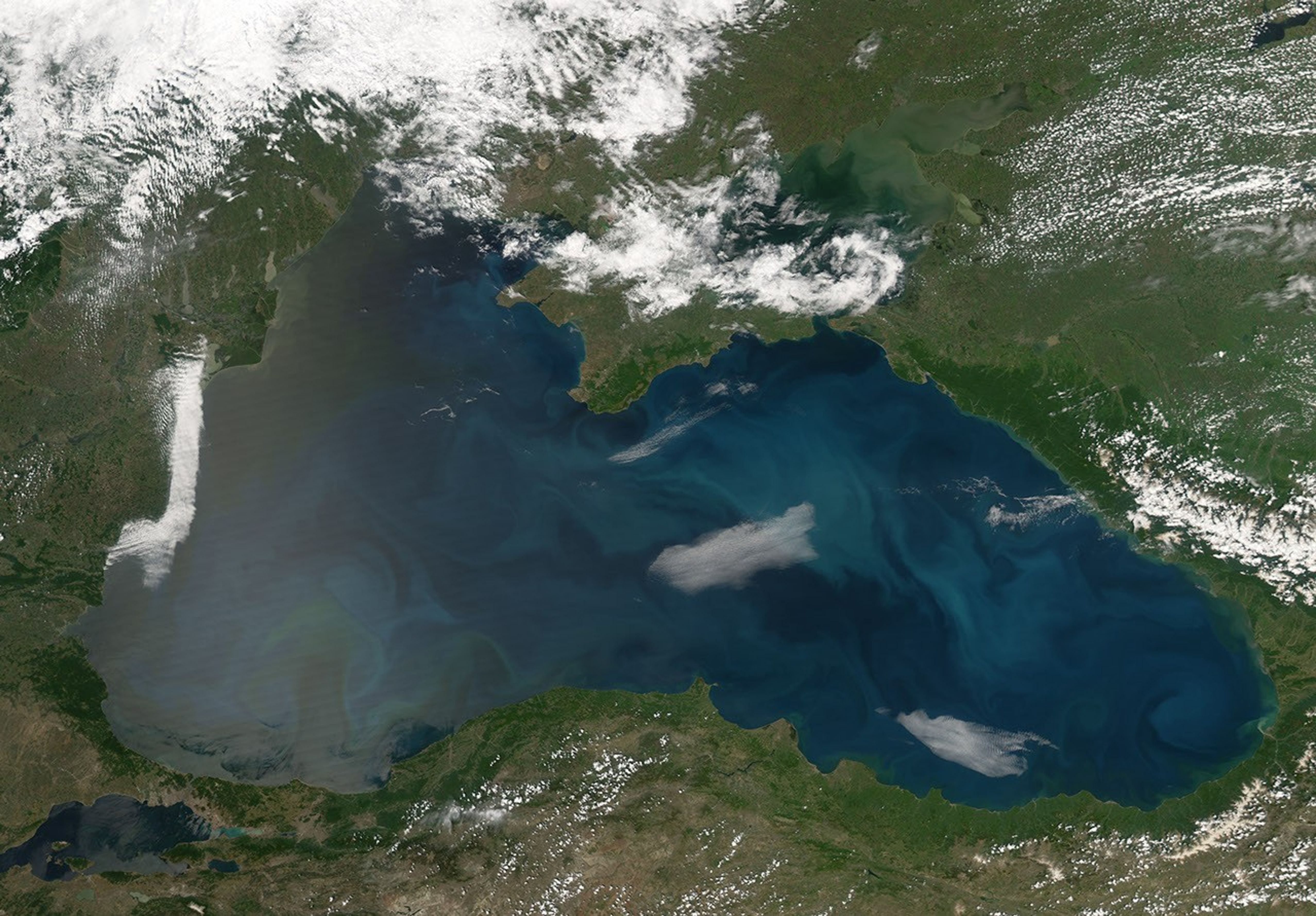


























The large volume of freshwater flowing into the Black Sea from large European rivers, including the Danube and Dnieper Rivers, makes the sea much less salty than open oceans. The freshwater flow also delivers many nutrients, which are washed into the sea from land. These nutrients support large blooms of phytoplankton: microscopic photosynthetic organisms (algae and bacteria). This image of the Black Sea on May 30, 2006, shows swirling blooms of phytoplankton coloring the surface waters blue and green. The chlorophyll and other pigments the organisms use for photosynthesis change the way light reflects off the surface, and these changes are visible in satellite imagery. This image was captured by the Moderate Resolution Imaging Spectroradiometer (MODIS) on NASA’s Aqua satellite.
References & Resources
NASA image created by Jesse Allen, Earth Observatory, using data obtained from the Goddard Earth Sciences DAAC.