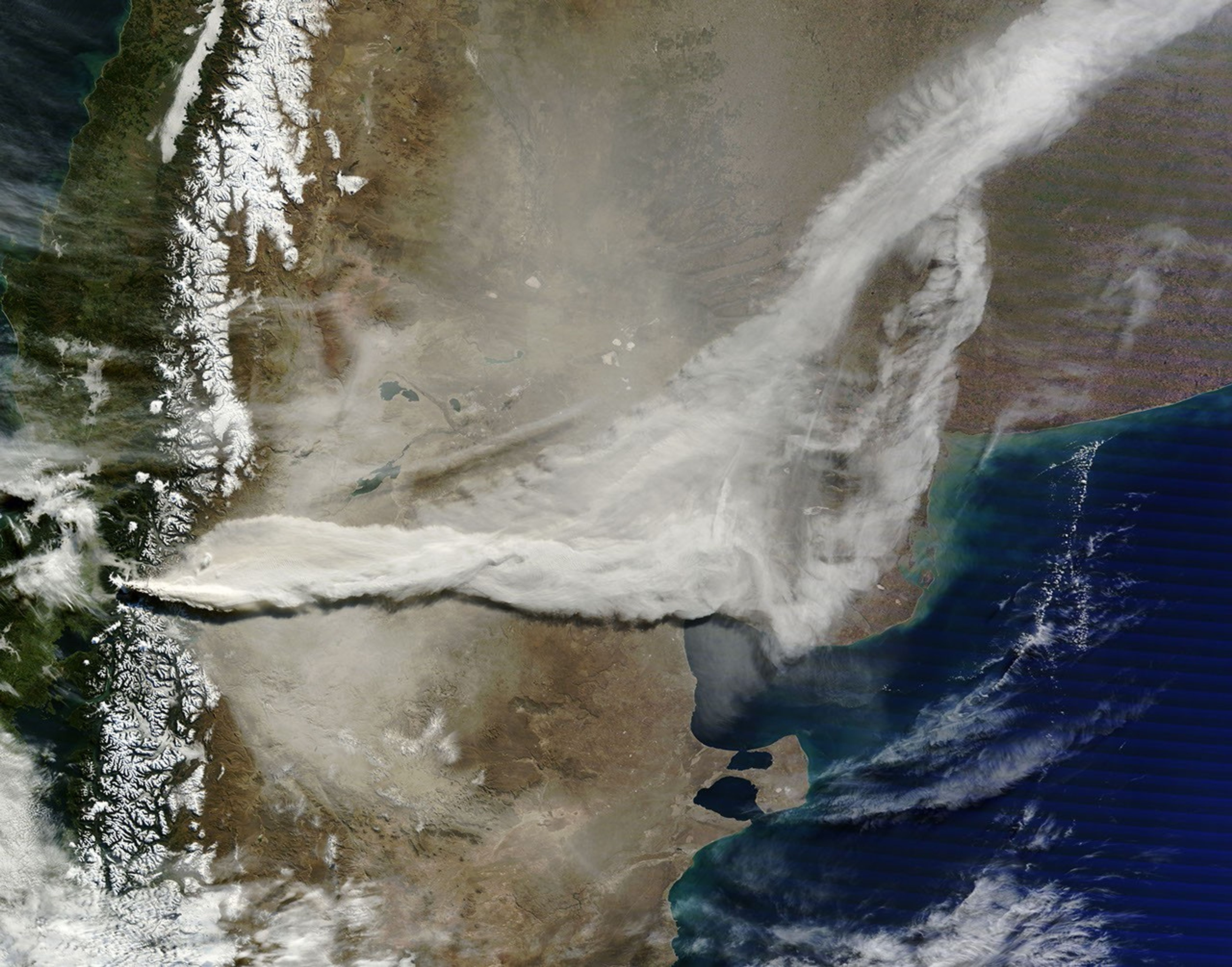

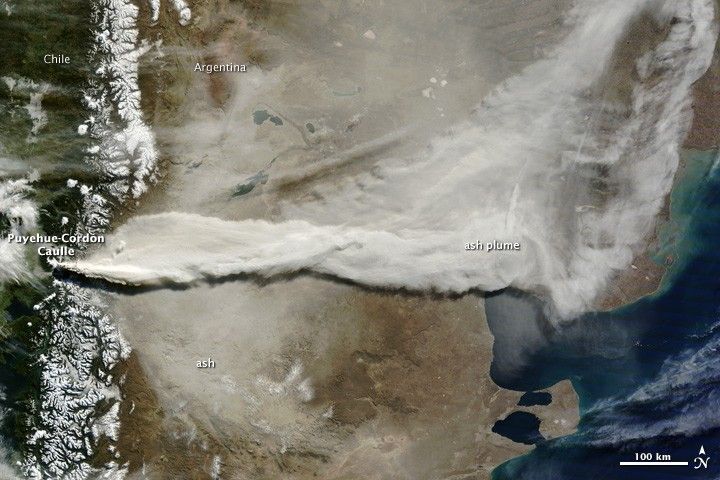
Perhaps the greatest danger posed by the erupting Puyehue-Cordón Volcano Complex in Chile is the thick layer of ash being deposited east of the volcano. This image, taken on June 13, 2011, by the Moderate Resolution Imaging Spectroradiometer (MODIS) on the Terra satellite, shows ash on the ground and a large plume streaming east from the volcano.
The pale tan coating of ash on the ground has been accumulating since June 4, when the eruption started. The Chilean Service of Minerals and Mining (SERNAGEOMIN) warned that when winter rains begin to fall in the coming weeks, the loose ash could create dangerous landslides and lahars, particularly in ash-clogged river valleys in the Andes Mountains.
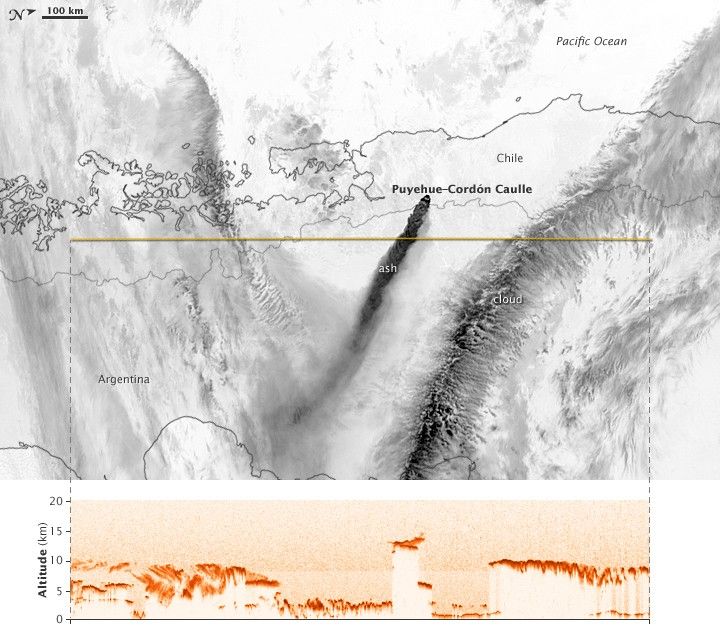
The image above also shows a large plume of volcanic ash blowing about 800 kilometers east and then northeast over Argentina. The plume has disrupted air traffic as far away as New Zealand.
Though the intensity of the eruption has decreased slightly, volcanic activity is holding steady. The plume reached between 4 and 8 kilometers in altitude on June 13, its height varying with the intensity of the eruption throughout the day.
References & Resources
- Harrington, R. (2011, June 13). Puyehue-Cordón Caulle update, 13 June 2011. The Volcanism Blog. Accessed June 14, 2011.
- Servicio Nacional de Geolog&iactuea y Minería. (2011, June 13). Reporte especial de actividad volcánica no. 38 Región de Los Ríos Complejo Volcánico Puyehue – Cordón Caulle 13 de junio de 2011 hora del reporte: 14:30 hora local. (Spanish) Accessed June 14, 2011.
NASA image courtesy Jeff Schmaltz, MODIS Rapid Response Team at NASA GSFC. Caption by Holli Riebeek.