














- August 30, 2006 (3.2 MB)
- August 26, 2003 (3.4 MB)
- August 29, 2000 (3.1 MB)
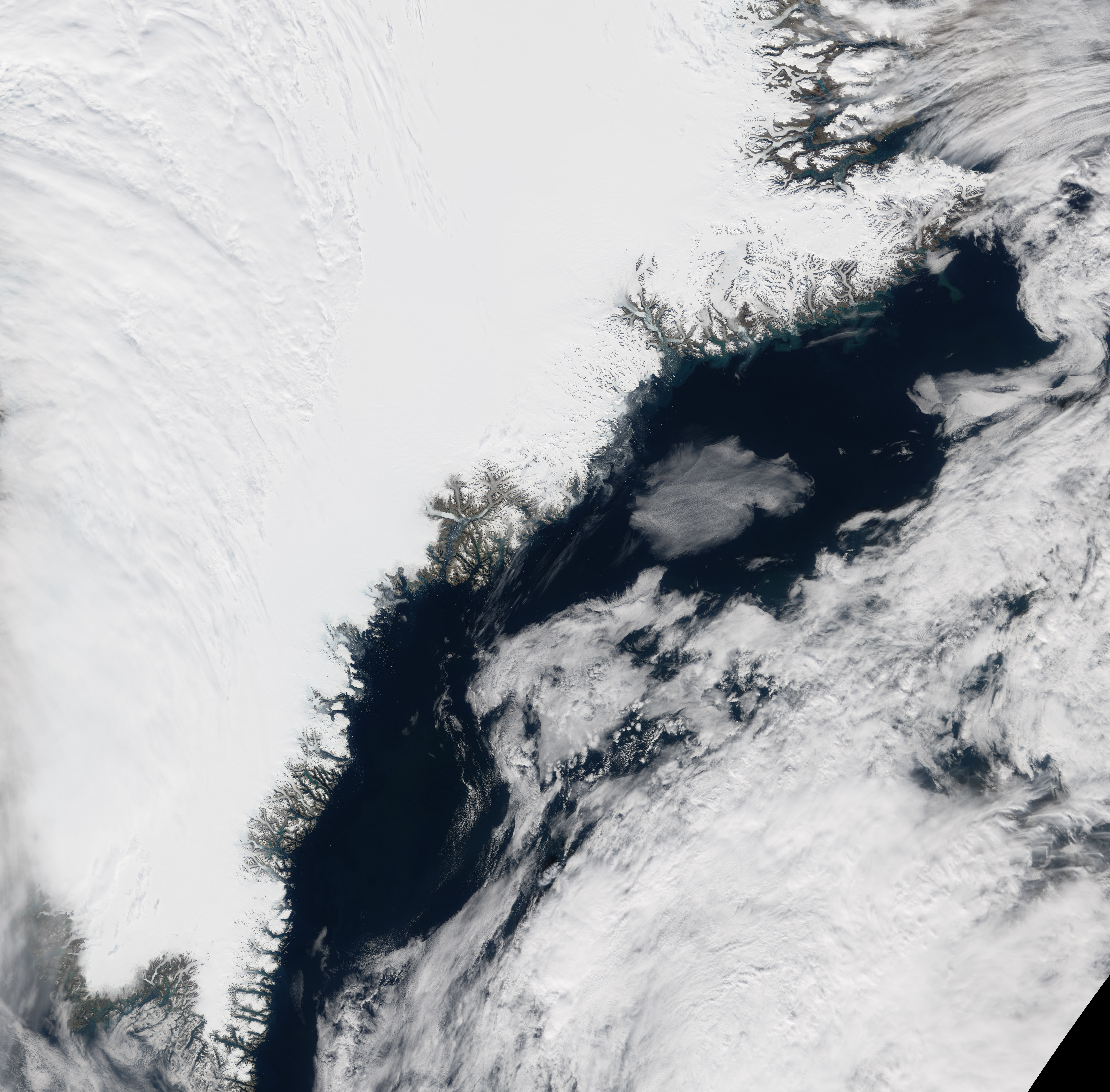
In October 2006, a study using data from NASA’s Gravity Recovery and Climate Experiment (GRACE) satellites discussed the condition of the Greenland Ice Sheet. The study determined that, although the ice sheet had gained some mass in the interior, it had lost considerably more mass along the perimeter, particularly southeastern Greenland. Ice losses in that area ranged from 5 to 25 centimeters of water equivalent per year, due to melting and iceberg calving.
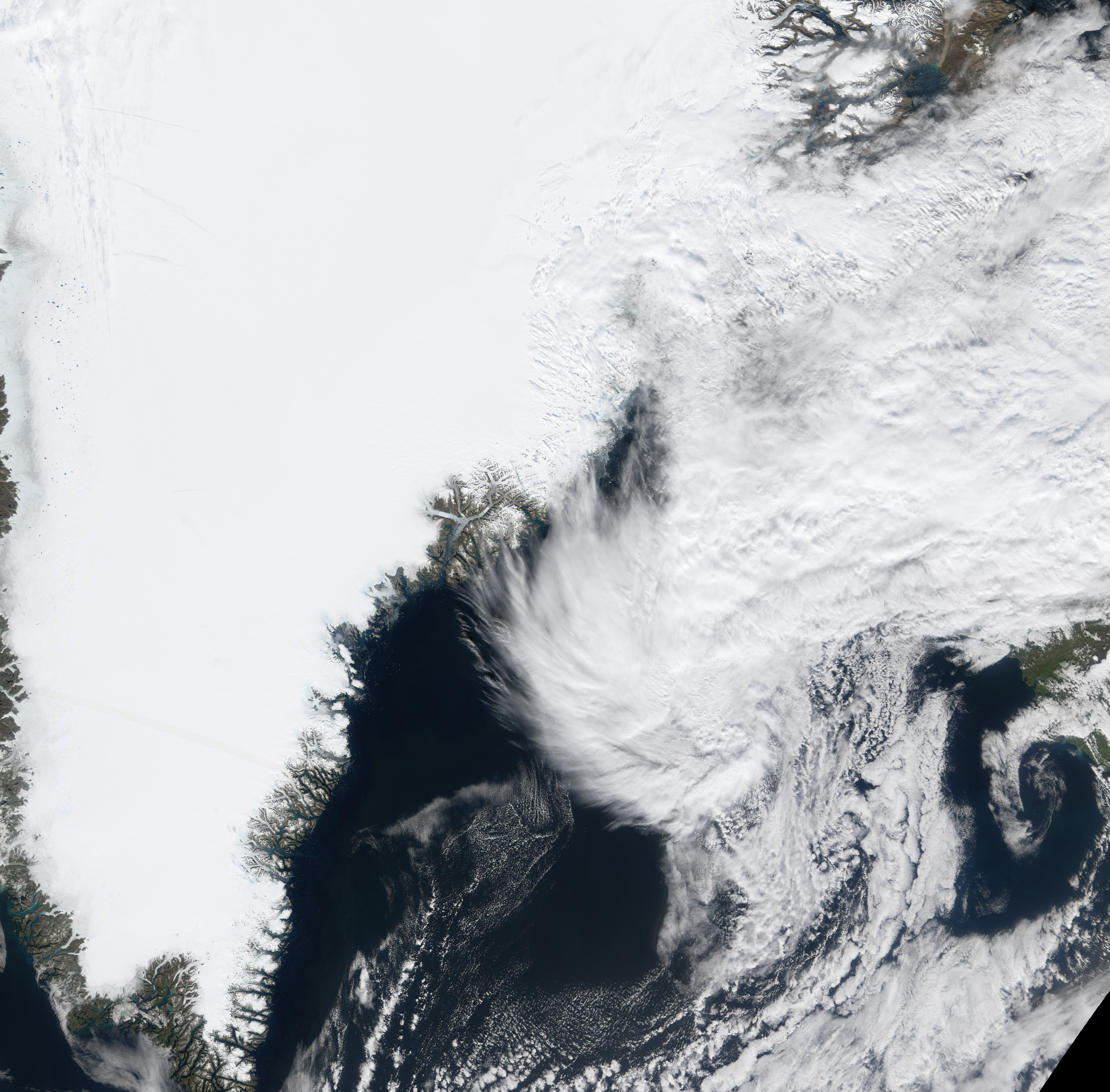
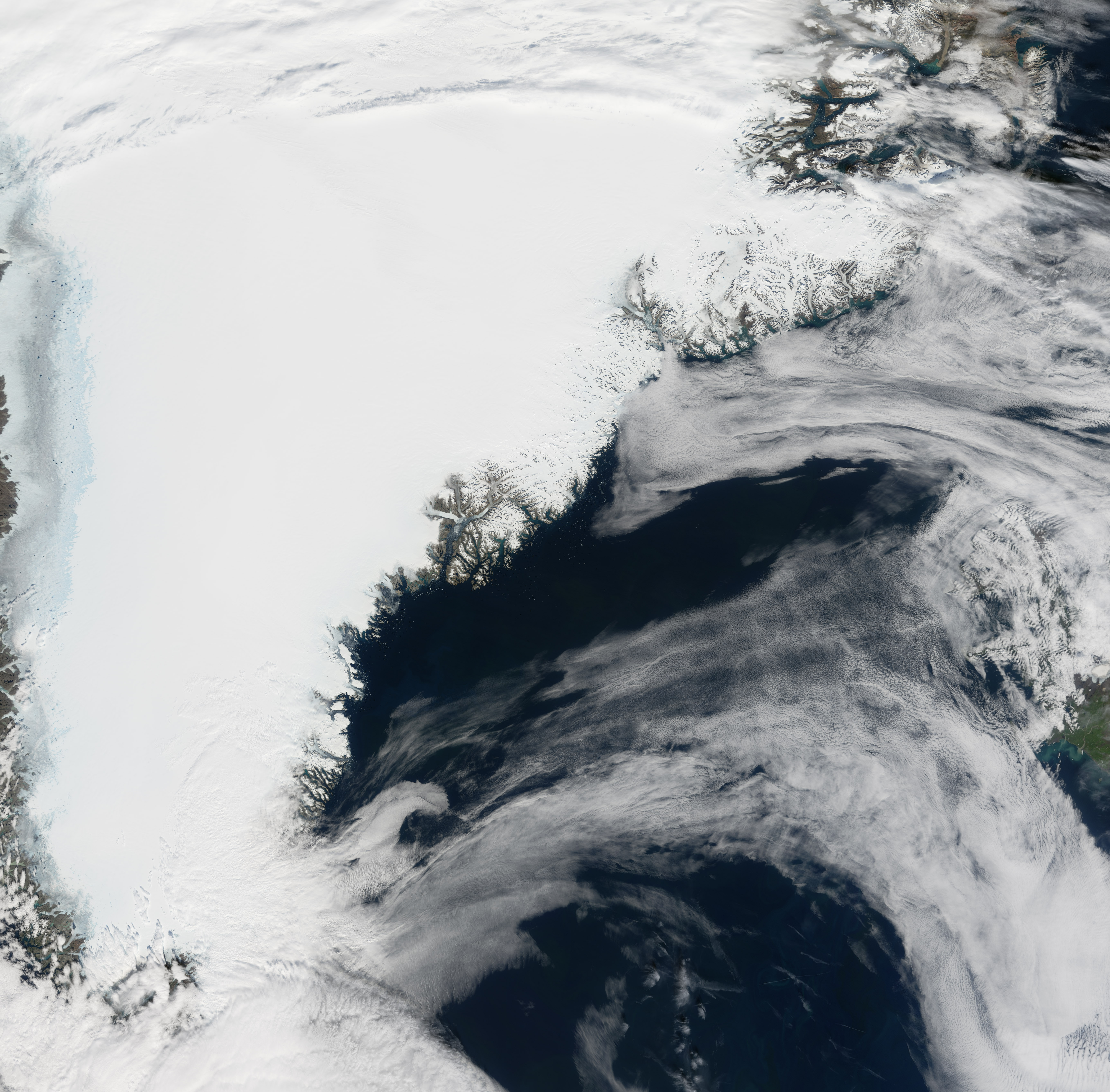
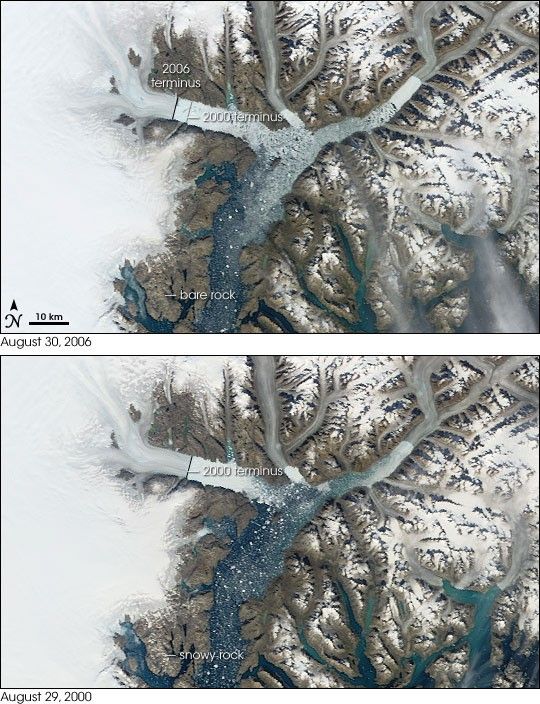
The Moderate Resolution Imaging Spectroradiometer (MODIS) flying onboard NASA’s Aqua satellite provided some more detailed views of part of southeastern Greenland. Compared to the image acquired on August 29, 2000, the image acquired on August 30, 2006, shows evidence of change. Helheim Glacier, shown in the upper left of both images, is a tidewater glacier that fills a valley and flows all the way out to sea where it calves icebergs. Between 2000 and 2006, this glacier retreated a few kilometers up the valley. Although tidewater glaciers can experience cycles of advance and retreat not related to climate, some glaciologists suspect that warming ocean waters around Greenland’s perimeter have contributed to glacier retreat. Warm ocean water can melt the underside of the glacier, making it thinner and more prone to breakup.
Another, subtler example of change in southeastern Greenland appears west of Helheim Glacier, up the valley from the glacier’s terminus. Compared to the 2000 image, the 2006 image shows a slightly expanded area of gray. One explanation for this is that as glaciers accelerate, the faster movement causes crevasses or cracks in the ice. These cracks can change the appearance of the ice from the perspective of a satellite, making it appear darker. Another possible explanation is snow melt.
A
of southeastern Greenland is available for use with
References & Resources
NASA image by Jesse Allen, Earth Observatory. Image interpretation provided by Ian Joughin, University of Washington; and Ted Scambos, National Snow and Ice Data Center.
None