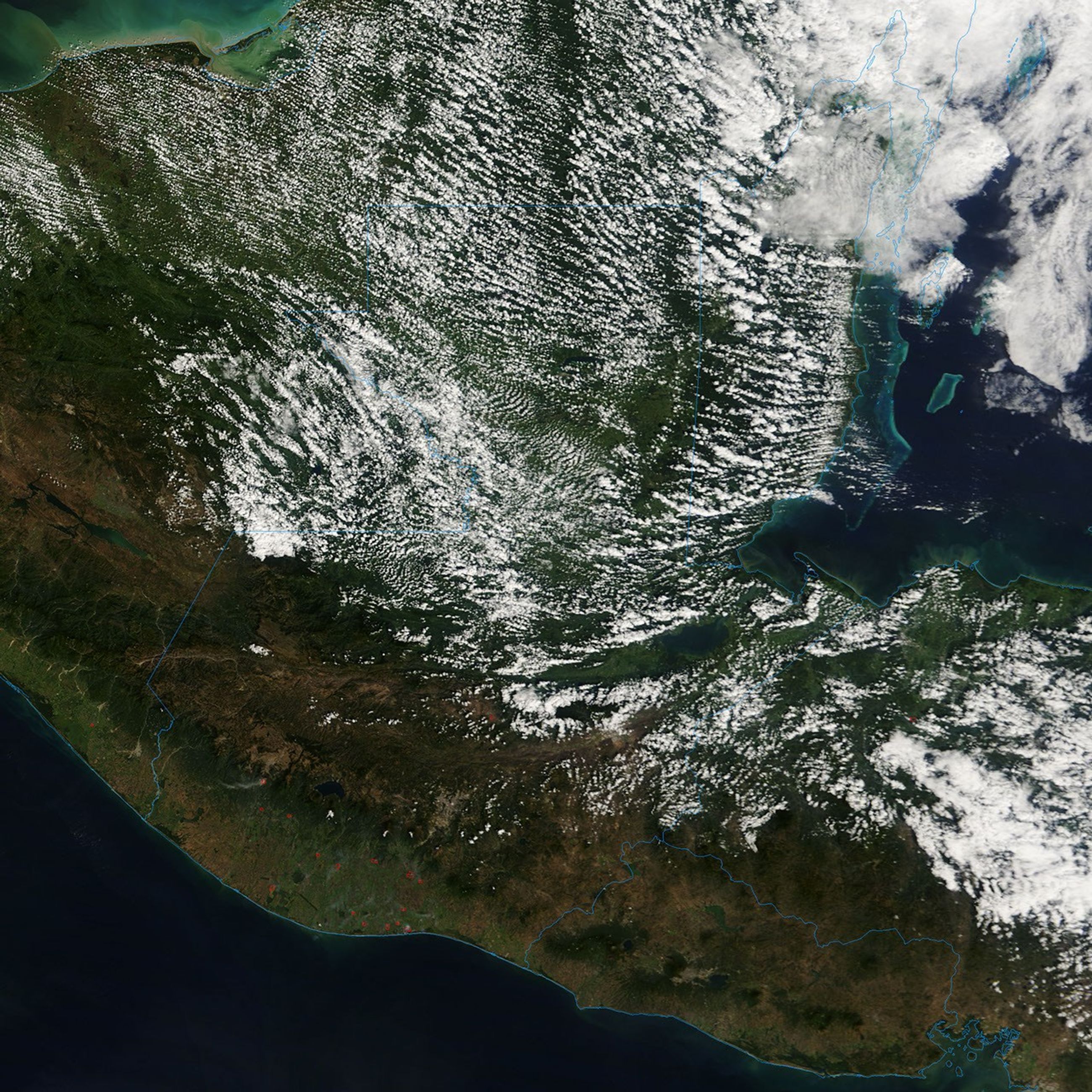













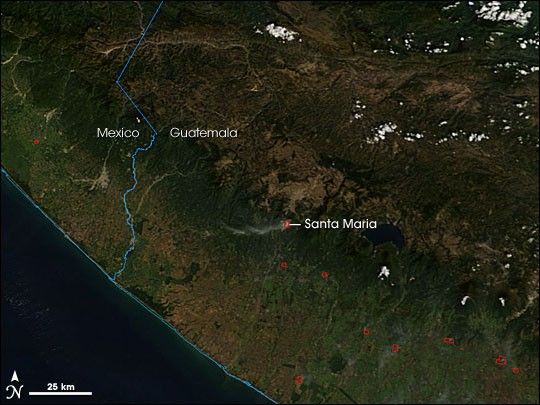
On January 15, 2007, the Santa Maria Volcano in Guatemala released a faint plume. The Moderate Resolution Imaging Spectroradiometer (MODIS) flying onboard NASA’s Terra satellite took this picture the same day. This image shows the plume blowing west, toward the border with Mexico. At the volcano’s summit is a hotspot outlined in red, where MODIS detected unusually warm surface temperatures. Other red-outlined hotspots dot the region; most are probably fires.
Santa Maria is a 3,772-meter (12,375-foot)-tall stratovolcano consisting of alternating layers of hardened ash, lava, and rock. A catastrophic eruption in 1902 caused severe damage throughout southwestern Guatemala and carved a crater on the volcano’s flank.
References & Resources
NASA image courtesy the MODIS Rapid Response Team at NASA GSFC. The Rapid Response Team provides daily images of this region.