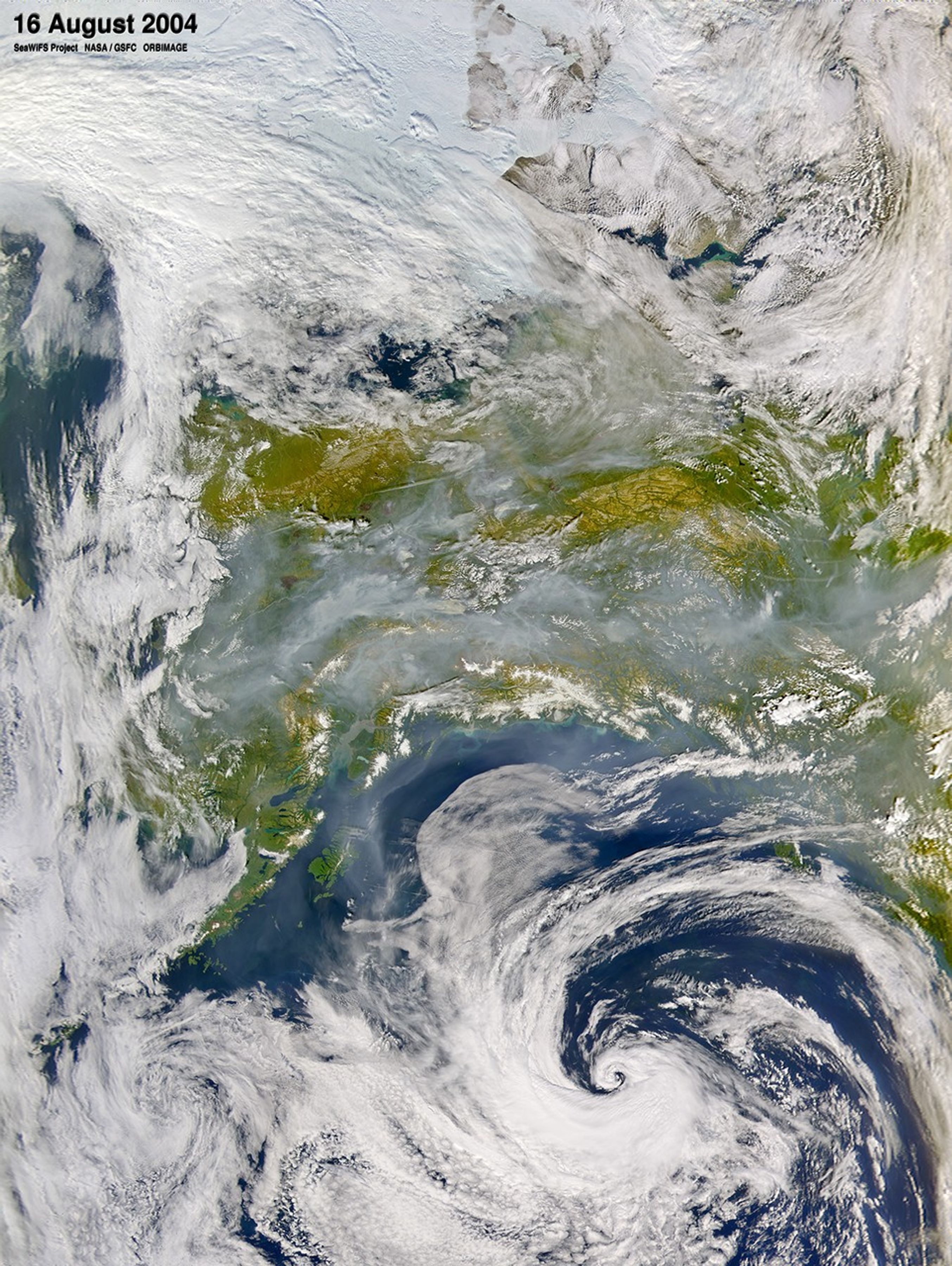


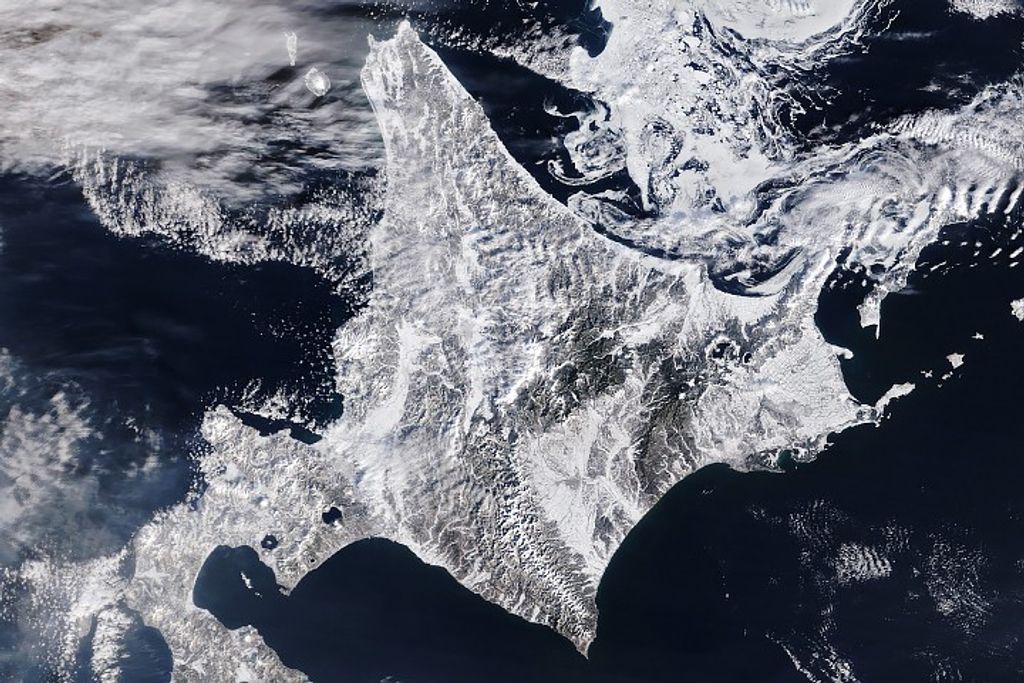








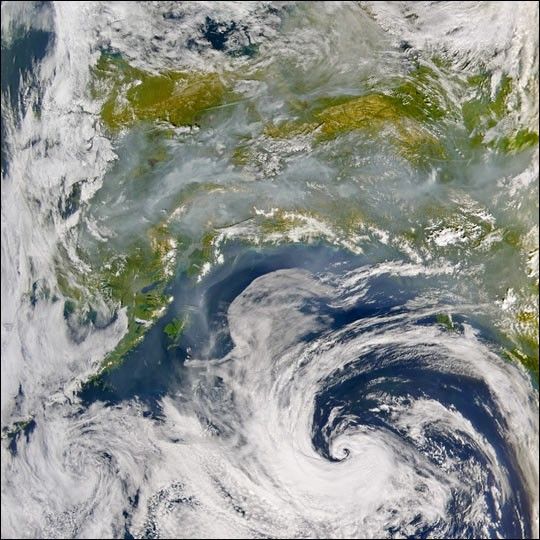
Clouds of smoke covered much of Alaska on August 16, 2004, when the Sea-viewing Wide Field-of-view Sensor (SeaWiFS) on the Orbview-2 satellite snapped this image. Extensive wildfires have been burning in Alaska since mid-June. To the south, a low-pressure system is beginning to form over the Gulf of Alaska. The clouds are beginning to swirl in an upside-down apostrophe as warm air from the Earth’s surface meets cool air from the upper atmosphere.
Generally, high- and low-pressure systems form when air mass and temperature differences between the surface of the Earth and the upper atmosphere create vertical currents. In a low-pressure system, these vertical winds travel upwards and suck air away from the surface of the Earth like a giant vacuum cleaner, decreasing the air pressure above the ground or sea. This decrease in surface air pressure in turn causes atmospheric currents moving parallel to the surface of the Earth near the base of the low to spin counter clockwise (clockwise in the Southern Hemisphere). Lows function like giant slow-moving hurricanes. The lower in pressure a low-pressure system gets, the more robust and larger this spinning circulation pattern becomes.
References & Resources
Image provided by the SeaWiFS Project, NASA/Goddard Space Flight Center, and ORBIMAGE