






Snow is not unusual in Afghanistan; in fact, a deep snowpack is necessary if the country is to have water during the dry summermonths. But January 2006 hit the Central Asian country harder than normal.Heavy snow and extreme cold destroyed or damaged at least 86 homes andkilled 17 people, with twice as many more injured, reported theInternational Federation of Red Cross and Red Crescent Societies.
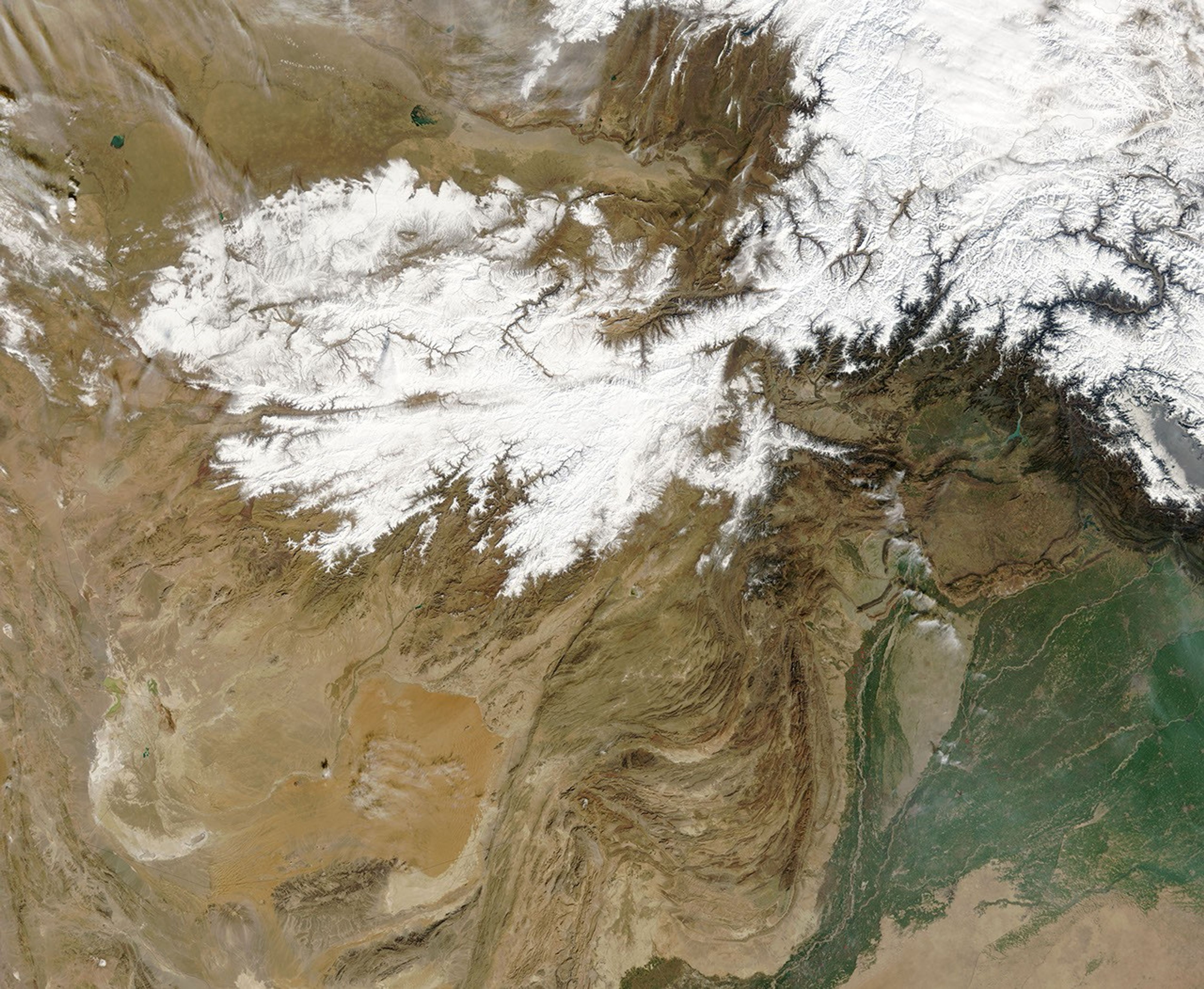
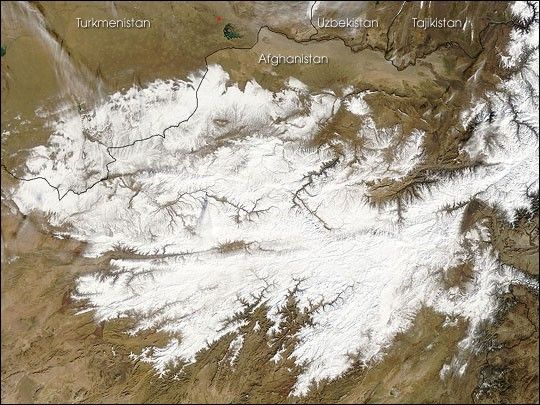
Much of the damage occurred after a blizzard hit the northernmostprovinces particularly hard on January 31. On February 3, the ModerateResolution Imaging Spectroradiometer (MODIS) on NASA’s Terra satellite captured this clear viewof Afghanistan covered in snow. In addition to covering the ruggedmountains that run down the spine of the country, the snow stretches acrossthe populated northern plains where the damage was reported.
Despite the problems the January 2006 storms caused, Afghanistan needsits winter snow. Like the U.S. West, water during the summer comes from themelting snow pack in the mountains. Without the snow, farmers would have noway to irrigate summer crops. The snow is such an essential ingredient tothe success of crops in Afghanistan that the Famine Early Warning Network(FEWS NET) monitors snow cover to help gauge how much food aid might beneeded after the next growing season and harvest.
MODIS images such as thisone help analysts at FEWS NET determine the extent of snow cover inAfghanistan. Knowing how much snow is in the mountains can reveal how muchwater will be available for crops during the next summer. If insufficientsnow falls during the winter, FEWS NET can issue a warning to aid agenciesand the government to alert them to the potential crop failure and apossible future need for food aid. The advance warning gives agencies andthe government time to gather the resources they need to prevent a crisis. Toread more, see AidingAfghanistan on the Earth Observatory.
Daily MODIS images of Afghanistan are available from the MODIS Rapid Response Team.
References & Resources
NASA image courtesy the MODIS Rapid Response Team at NASA GSFC.