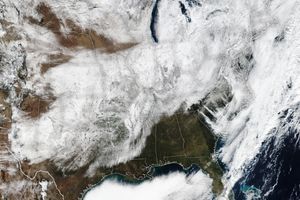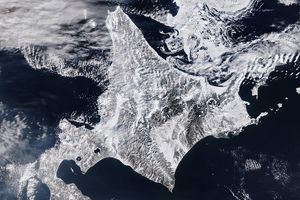


















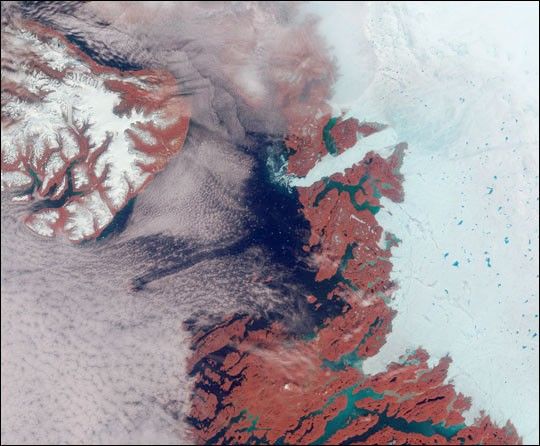
New research from NASA and Columbia University climate scientists shows that more than 25 percent of the increase in average global temperature between 1880 and 2002 may be due to soot contamination of snow and ice worldwide. Pure snow and ice can be blindingly bright, reflecting large amounts of incoming radiation back into space, whereas snow and ice that is contaminated with black carbon absorbs incoming solar radiation. The scientists estimate that a soot content of only a few parts per billion (ppb) can reduce snow’s ability to reflect incoming radiation by 1 percent. In North American, soot has reduced snow’s reflectivity by 3 percent.
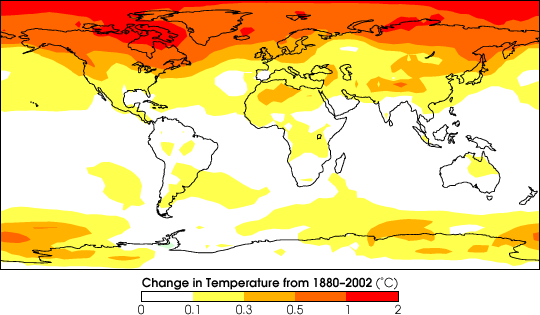
This image shows the results of computer models of the impact of soot on global temperatures between 1880 and 2002. Soot has caused the greatest increase in temperature in the high northern latitudes, as shown by the large swaths of red, orange, and gold across the top of this image.
In addition to its contribution to global warming, soot also speeds up melting of snow and ice, meaning it is probably partly responsible for the rapid decline in the world’s glaciers. Soot in the atmosphere causes regional haze that depresses plant (including crop) productivity, and it is a significant health hazard. For more on this story, read the GSFC press release.
References & Resources
Image courtesy NASA Goddard Institute for Space Studies