

















- high-resolution images:
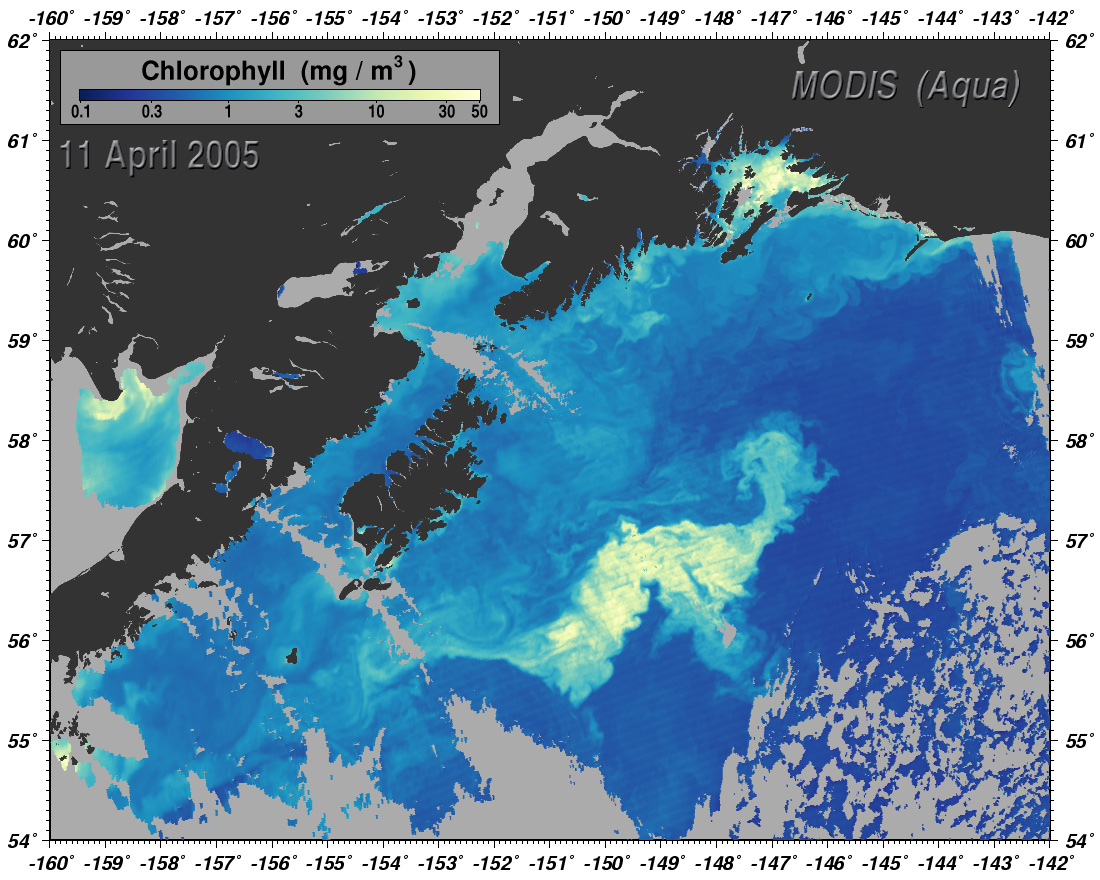
- Chlorophyll (470 kB JPEG)
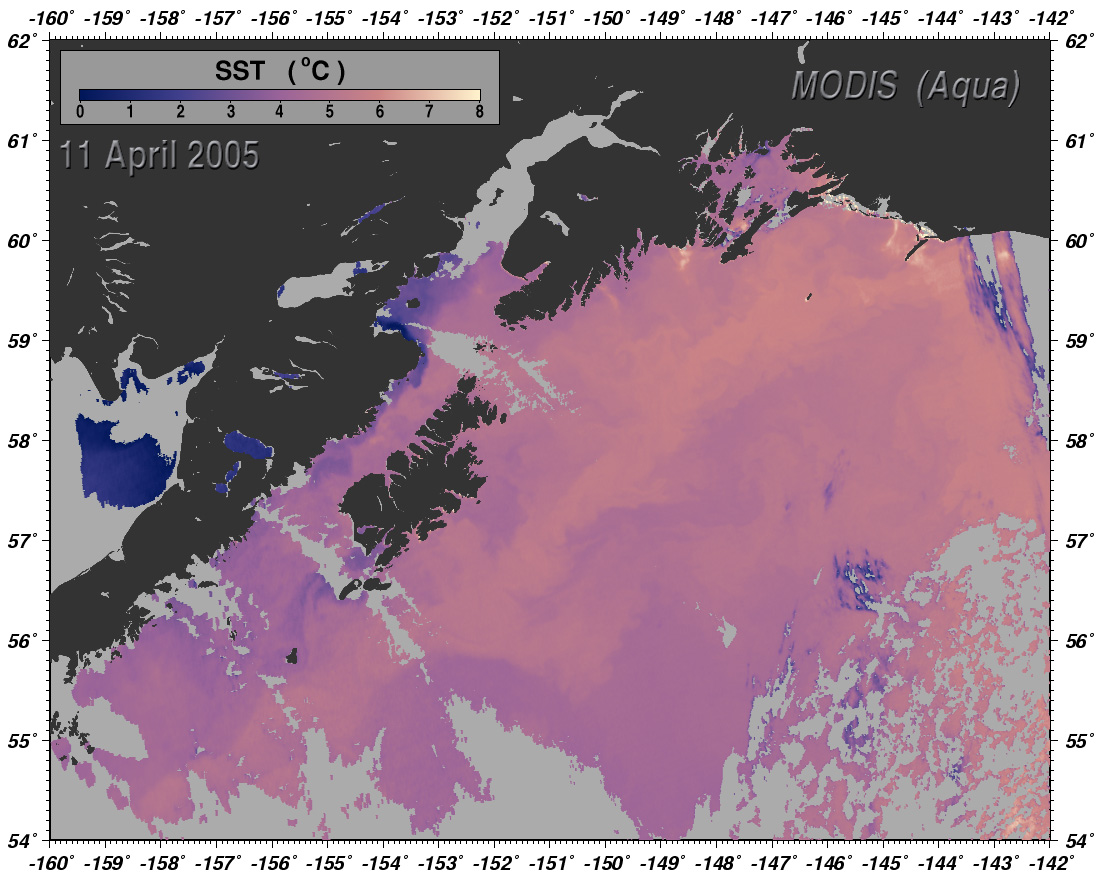
- Sea Surface Temperature (380 kB JPEG)
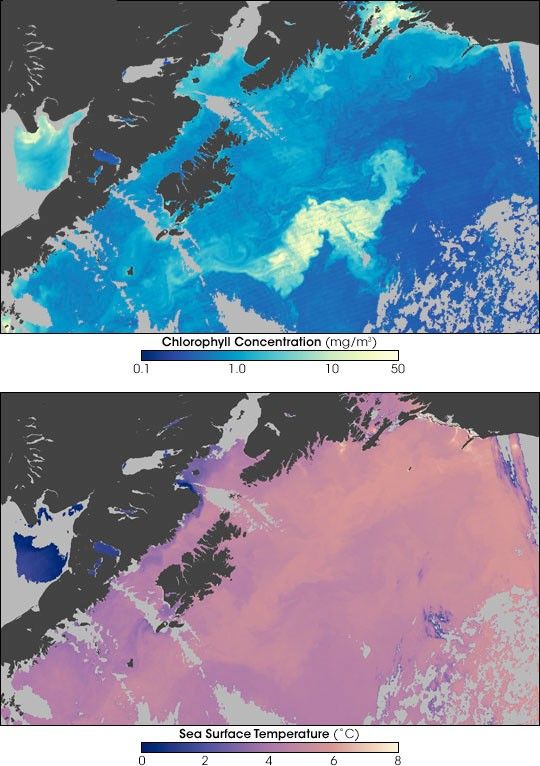
On April 11, 2005, the Gulf of Alaska was showing signs of spring. These colorful images from the Moderate Resolution Imaging Spectroradiometer (MODIS) on the Aqua satellite show a bloom of ocean plant life along a weak temperature front (a boundary between waters of different temperatures). The highest chlorophyll levels, indicating the most plant life (yellow in the top image), are often located in the areas with cooler water (purple in the lower image).
Blooms of these tiny plants, called phytoplankton, often occur in these latitudes at this time of year when the day length and solar elevation angle are increasing. The increasing amount of light spurs photosynthesis and takes the winter chill off the surface waters. The warming causes the top layers of the surface waters to be less dense, and so they float on the surface, becoming less likely to mix with deeper water. The suppression of mixing keeps phytoplankton close to the well-lit surface, where they produce the complex carbohydrates on which other marine life depends.
Eventually, however, the phytoplankton will use up the available nutrients, and if cold, nutrient-rich water doesn’t well up from below, the bloom wanes. At the time of these images, the surface waters of the Gulf of Alaska were probably still fairly well stocked with nutrients mixed up from deeper waters by recent storms.
References & Resources
NASA images coutesy Norman Kuring, NASA GSFC Ocean Color Team
None