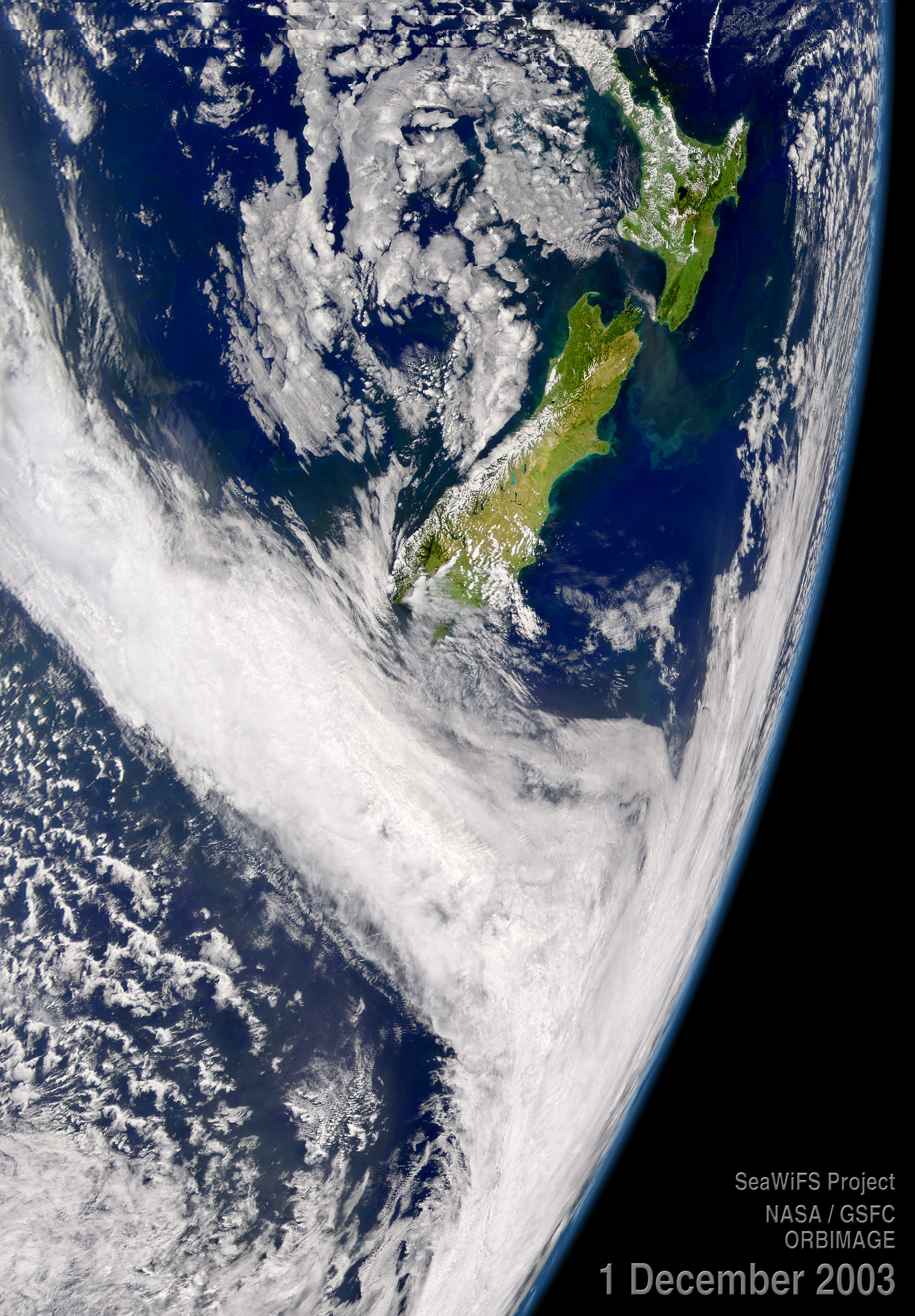


















- True Color (1.9 MB JPEG)
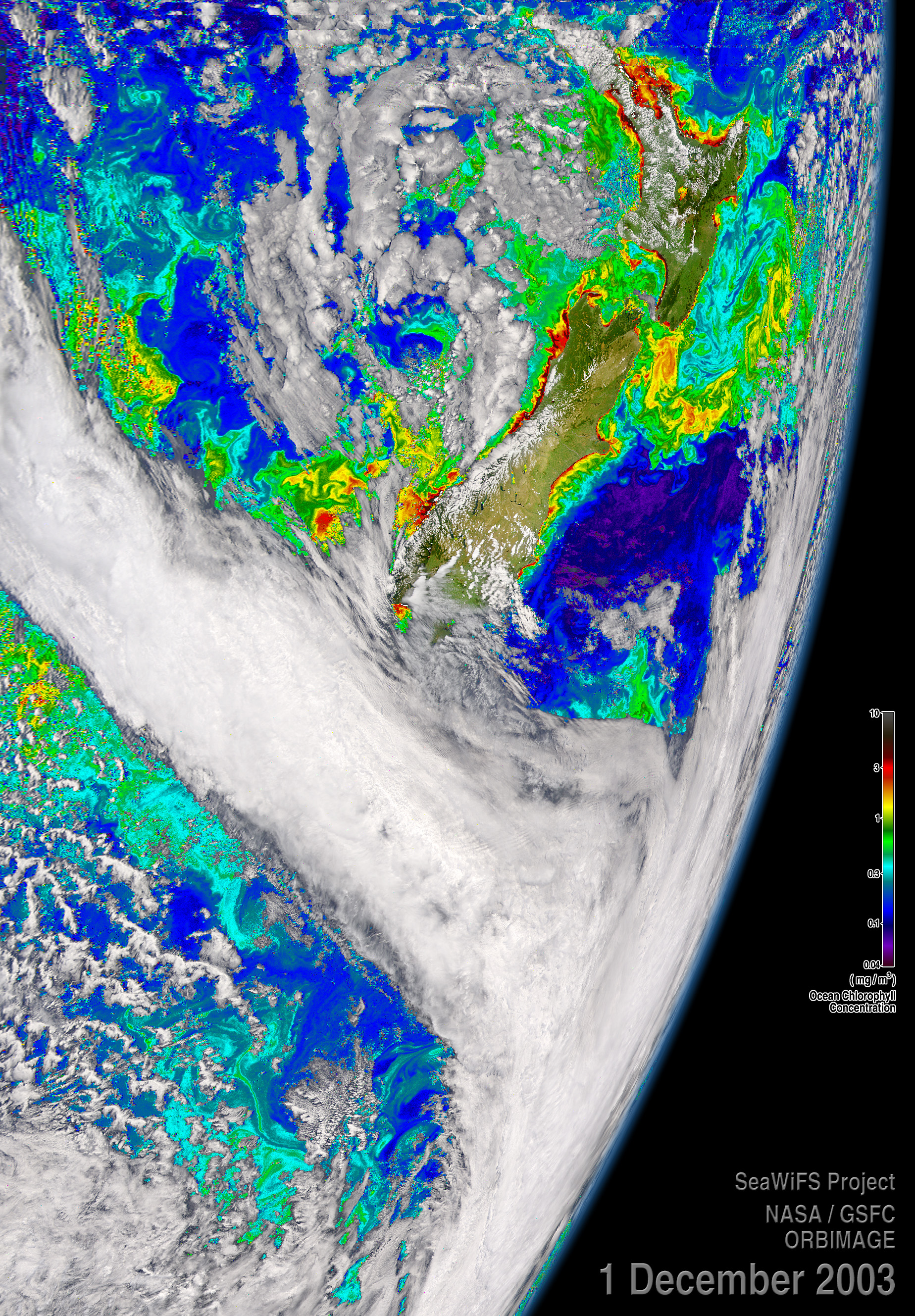
- False Color (3.2 MB JPEG)
Late spring is arriving in New Zealand and plant life in the ocean all around the island nation is in full bloom. These two Sea-viewing Wide Field-of-view Sensor (SeaWiFS) views collected on December 1, 2003, show the distribution of chlorophyll-bearing phytoplankton in the surrounding ocean.
The image on the left is a quasi-natural colorview. The second view replaces the oceanswith a pseudo-color representation of chlorophyllconcentration, showing much more detail in theocean. Reds show very high concentrations (up to 3 milligrams per cubic meter of water) of chlorophyll, while greens show intermediate values and blues and purples show low values.
Scientists study phytoplankton concentrations in the ocean for many reasons. Not only do the microscopic marine plants provide insight into changes in the ocean’s surface, but they can absorb vast amounts of carbon dioxide out of the atmosphere during photosynthesis. Thus, these organisms play a significant role in the Earth’s climate.
[Editor’s note: Some noise introduced during transmission of the satellite signal to the ground station in Hobart is evident near the top of the high-resolution images.]
References & Resources
Image courtesy SeaWiFS Project, NASA/Goddard Space Flight Center, and ORBIMAGE
None