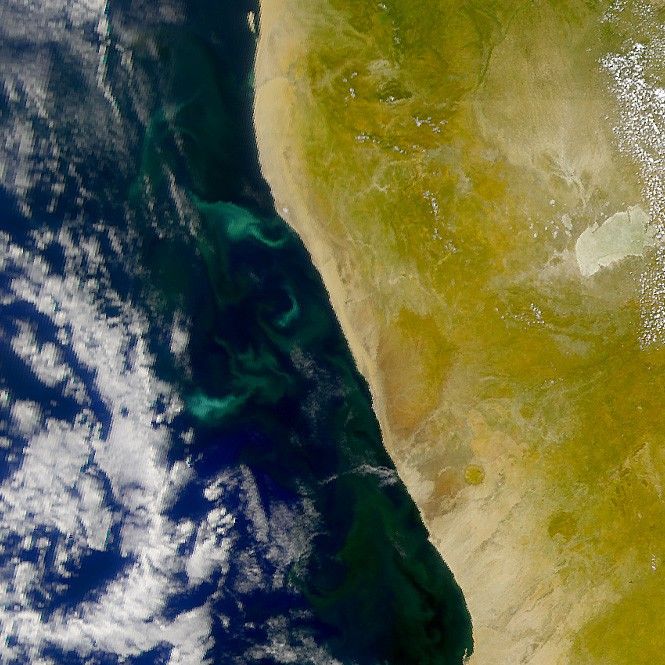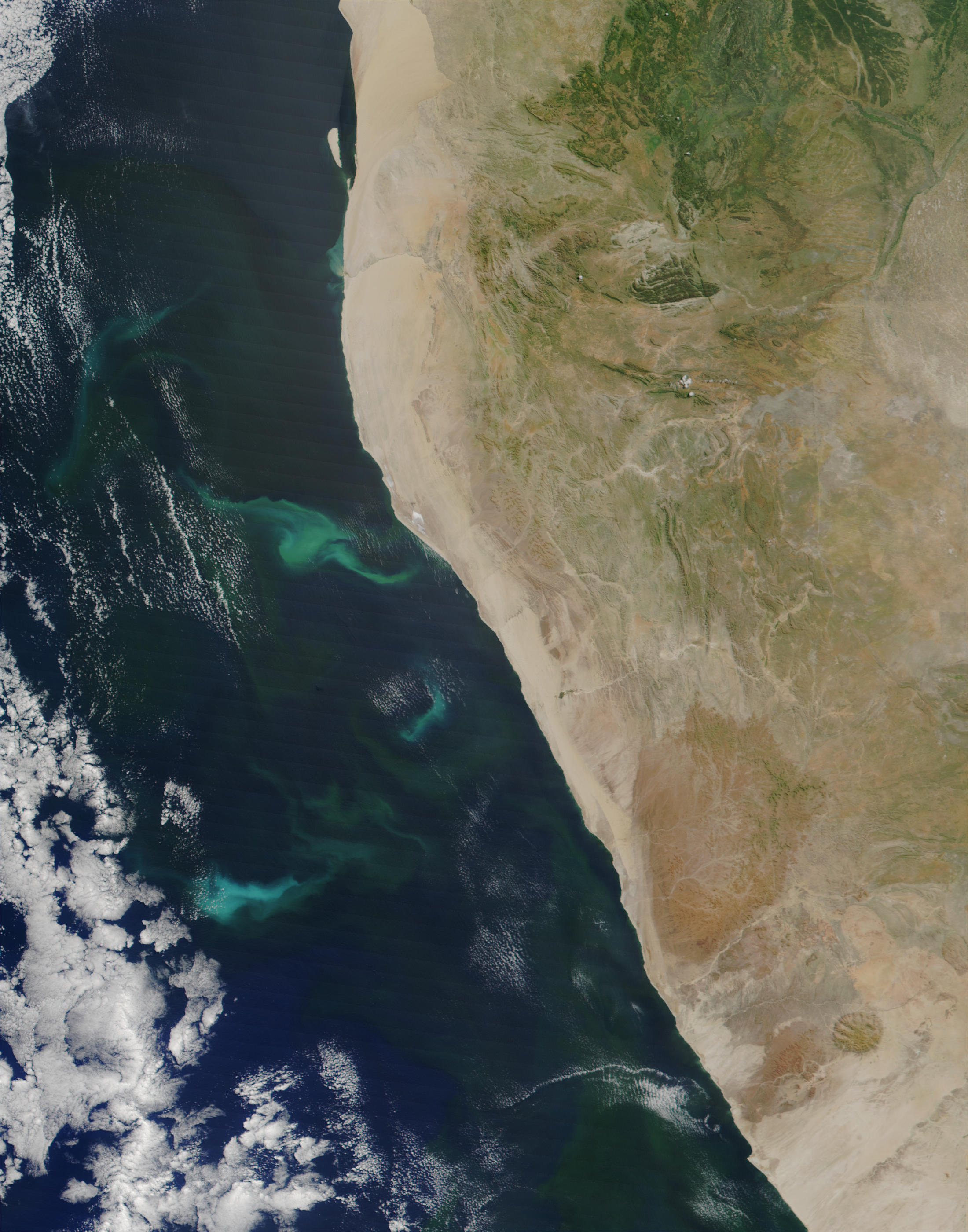

















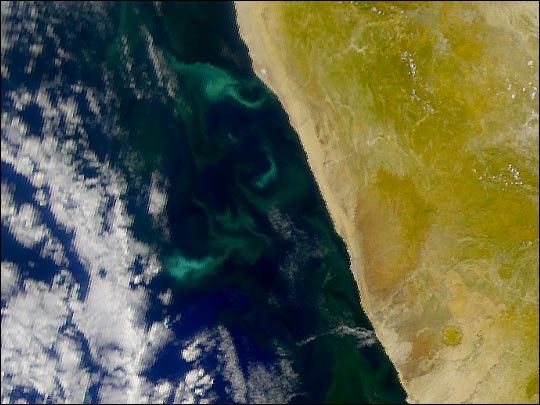
Though these aquamarine clouds in the waters off the coast of northern Namibiamay look like algae blooms, they are in fact clouds of sulfur produced byanaerobic bacteria on the ocean’s floor. This image of the sulfur-filled waterwas taken on April 24, 2002, by the Sea-viewing Wide Field-of-View Sensor(SeaWiFS), flying aboard the Orbview-2 satellite.
The anaerobic bacteria (bacteria that can live without oxygen) feed uponalgae carcasses that exist in abundance on the ocean’s floor off of Namibia. Asthe bacteria ingest the algae husks, they produce hydrogen sulfide, which slowlybuilds up in the sea-floor sediments. Eventually, the hydrogen sulfide reachesthe point where the sediment can no longer contain it, and it bubbles forth.When this poisonous chemical reaches the surface, it combines with the oxygen inthe upper layers of the ocean to create clouds of pure sulfur. The sulfurcauses the Namibian coast to smell like rotten eggs, and the hydrogen sulfidewill often kill fish and drive lobsters away.
For more information, read: A Bloom By Any Other Name
A high-resolution (250 meters per pixel) image earlier on the 24th taken fromthe Moderate-Resolution Imaging Spectroradiometer (MODIS) shows additional detailin the plumes.
References & Resources
Image courtesy the SeaWiFS Project, NASA/Goddard Space Flight Center, and ORBIMAGE. MODIS image courtesy Jacques Descloitres, MODIS Land Rapid Response Team at NASA GSFC