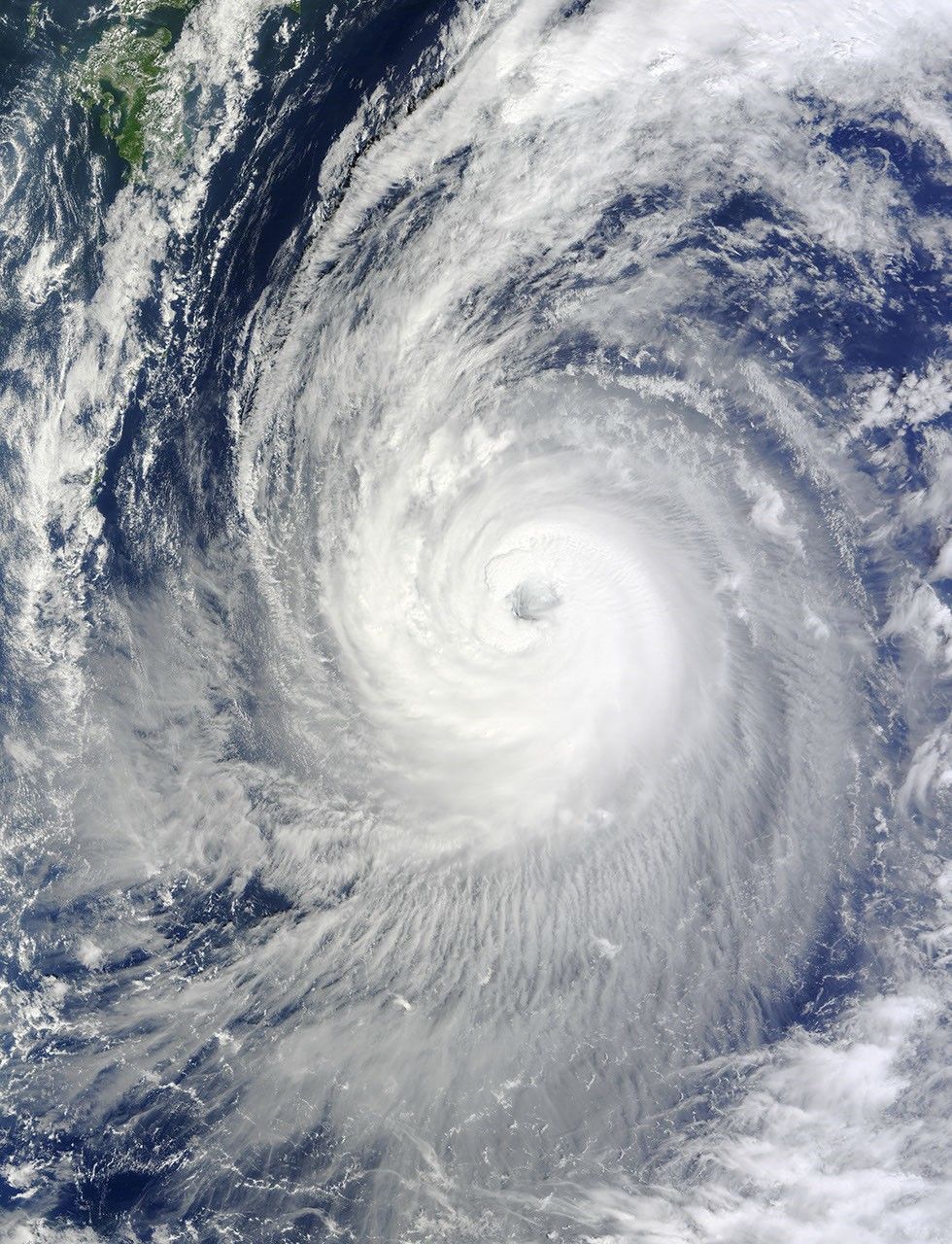














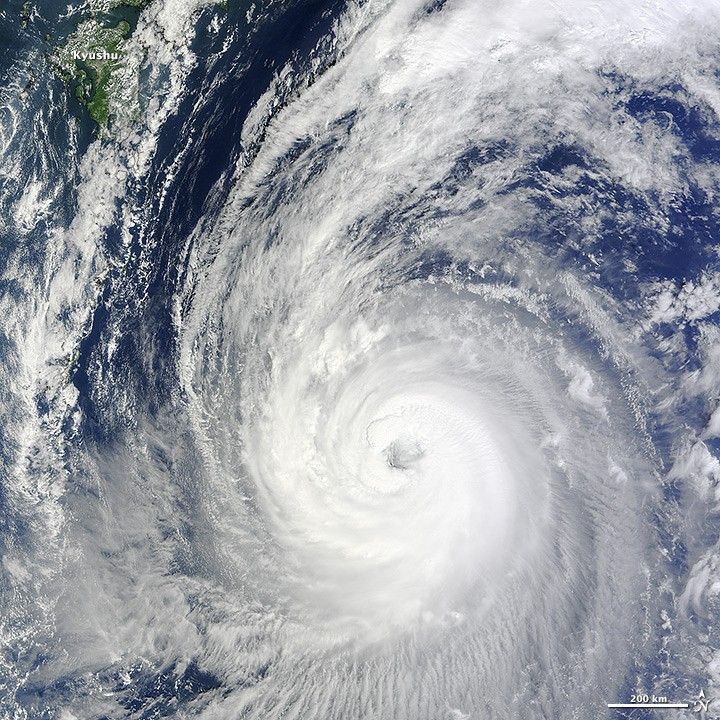
Forecasts indicate that Japan can expect widespread rain as Typhoon Phanfone nears the nation over the weekend. The Moderate Resolution Imaging Spectroradiometer (MODIS) on NASA's Terra satellite acquired this natural-color view of the category 3 storm at 10:55 a.m. Japan Standard Time (01:55 Universal Time) on October 3, 2014.
Near the time of this image, maximum sustained winds were estimated at 204 kilometers (127 miles) per hour, according to Unisys Weather. At 12:12 p.m. Japan Standard Time (03:12 Universal Time) that day, maximum significant wave height was 13 meters (44 feet), according to the U.S. Navy's Joint Typhoon Warning Center. The typhoon was centered at 24.4° North latitude, 133.7° East longitude, about 1,370 kilometers (850 miles) south-southwest of Yokosuka, Japan.
According to a blog post by Weather Underground's Jeff Masters, the widespread rain is likely to cause flash floods and landslides in Japan. That's of particular concern to areas around Mt. Ontake, which erupted unexpectedly on September 27. Rainfall-triggered mudflows from Phanfone could complicate the search for victims of the eruption.
Some sports fans also have their eyes on the storm because rain from Phanfone is threatening the Japanese Formula One Grand Prix on October 5.
References & Resources
- Japan Meteorological Agency (2014, October 3) Weather, Climate & Earthquake Information. Accessed October 3, 2014.
- Jeff Masters WunderBlog, via Weather Underground (2014, October 3) Typhoon Phanfone a Heavy Rainfall Threat for Japan. Accessed October 3, 2014.
- NASA Earth Observatory (2014, September 27) Ontake Erupts.
- Reuters (2014, October 2) Typhoon Threatens Formula One's Japanese Grand Prix. Accessed October 3, 2014.
- Unisys Weather (2014, October 3) Typhoon-4 Phanfone. Accessed October 3, 2014.
- USNO Joint Typhoon Warning Center (2014, October 3) Typhoon 18W (Phanfone) Warning #20. Accessed October 3, 2014.
NASA image by Jeff Schmaltz, LANCE/EOSDIS Rapid Response. Caption by Kathryn Hansen.