


















large images:
September 24, 2001
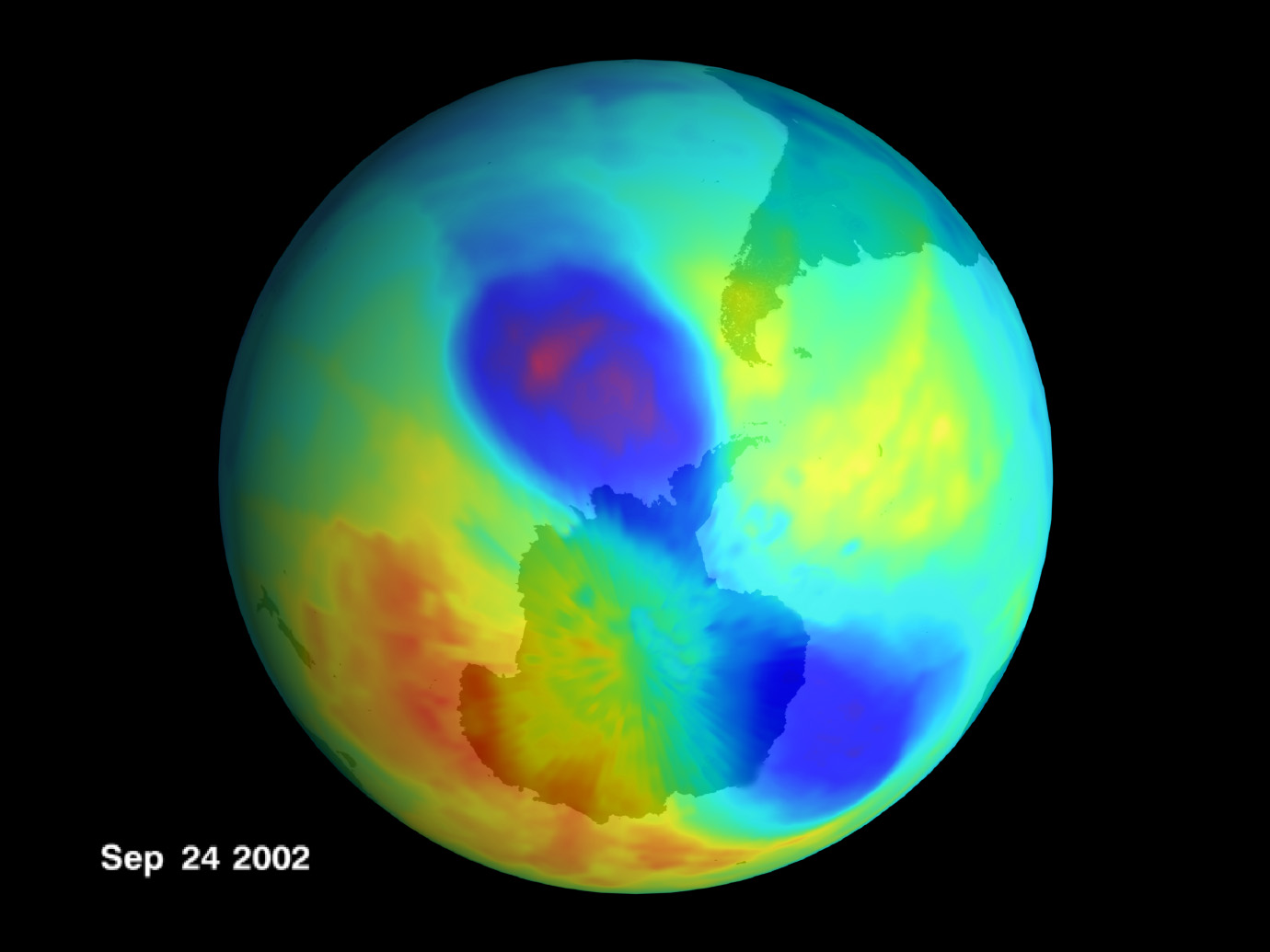
September 24, 2002
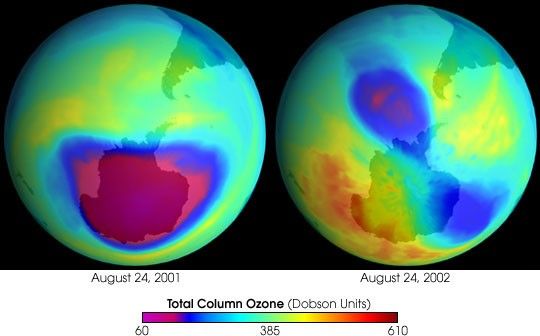
Scientists from NASA and the National Oceanic andAtmospheric Administration (NOAA) have confirmed the ozone hole over theAntarctic this September is not only much smaller than it was in 2000 and 2001,but has split into two separate “holes.”
The researchers stressed the smaller hole is due to this year’s peculiarstratospheric weather patterns and that a single year’s unusual pattern does notmake a long-term trend. Moreover, they said, the data are not conclusive thatthe ozone layer is recovering.
Paul Newman, a lead ozone researcher at NASA’s Goddard Space Flight Center,Greenbelt, Md., said this year, warmer-than-normal temperatures around the edgeof the polar vortex that forms annually in the stratosphere over Antarctica areresponsible for the smaller ozone loss.
Estimates for the last two weeks of the size of the Antarctic Ozone Hole (theregion with total column ozone below 220 Dobson Units), from the NASA EarthProbe Total Ozone Mapping Spectrometer (EPTOMS) and the NOAA-16 SolarBackscatter Ultraviolet instrument (SBUV/2), are around 15 million squarekilometers (6 million square miles). These values are well below the more-than24 million sq. km. (9 million sq. mi.) seen the last six years for the same timeof year.
On September 24, 2002, the Antarctic ozone hole split into two holes for thefirst time since satellite measurements have been taken. In the image above, based ondata acquired by EPTOMS, Dark blue and violet colors indicate thehole, an area with at least 20% less ozone than normal.
For more information, read:Unusually Small Antarctic Ozone Hole this YearAttributed to Exceptionally Strong Stratospheric Weather Systems
References & Resources
Image by Greg Shirah, NASA GSFC Scientific Visualization Studio, based on data from EPTOMS.
None