
















In the last five years, scientists have been able to monitor our changing planetin ways never before possible. The Sea-viewing Wide Field-of-View Sensor(SeaWiFS), aboard the OrbView-2 satellite, has given researchers anunprecedented view of the biological engine that drives life on Earth—thecountless forms of plants that cover the land and fill the oceans.
“There is no question the Earth is changing. SeaWiFS has enabled us, for thefirst time, to monitor the biological consequences of that change—to see howthe things we do, as well as natural variability, affect the Earth’s ability tosupport life,” said Gene Carl Feldman, SeaWiFS project manager at NASA’s GoddardSpace Flight Center, Greenbelt, Md.
SeaWiFS data, based on continuous daily global observations, have helpedscientists make a more accurate assessment of the oceans’ role in the globalcarbon cycle. The data provide a key parameter in a number of ecological andenvironmental studies as well as global climate-change modeling. The images ofthe Earth’s changing land, ocean and atmosphere from SeaWiFS have documentedmany previously unrecognized phenomena.
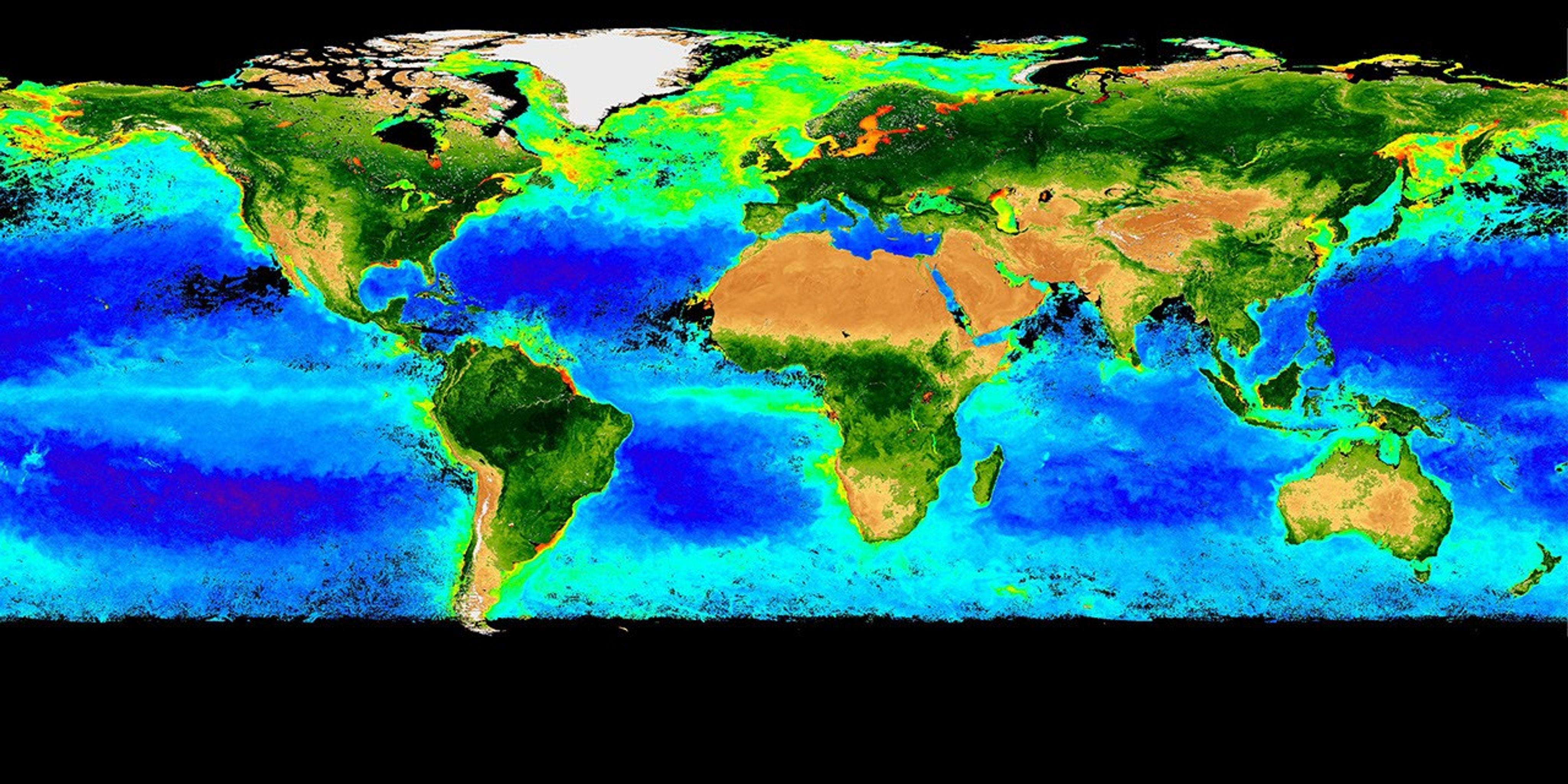
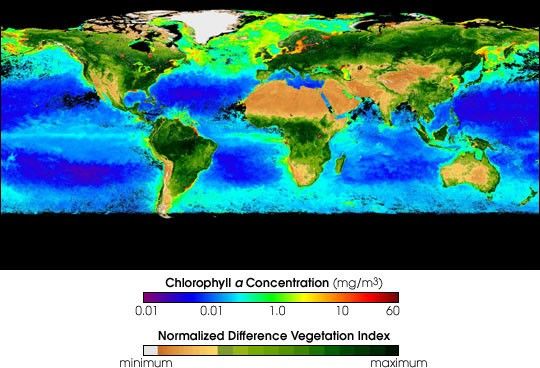
The image above shows the global biosphere from June 2002measured by SeaWiFS. Data in the oceans is chlorophyll concentration, a measure of the amount ofphytoplankton (microscopic plants) living in the ocean. On landSeaWiFS measures Normalized Difference Vegetation Index, an indication of the density of plant growth.
For more information and images, read: SeaWiFS Sensor Marks Five YearsDocumenting Earth’S Dynamic Biosphere
References & Resources
Image courtesy SeaWiFS project and copyright Orbimage.